Sagittal fossae (Latin: fossae sagittales)
Also called the sagittal fissures or the longitudinal fissures of liver
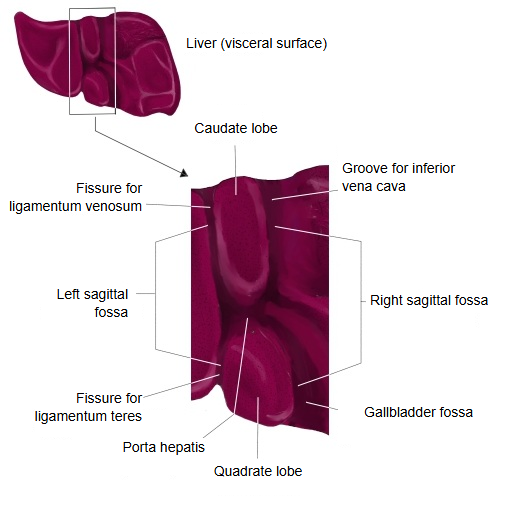
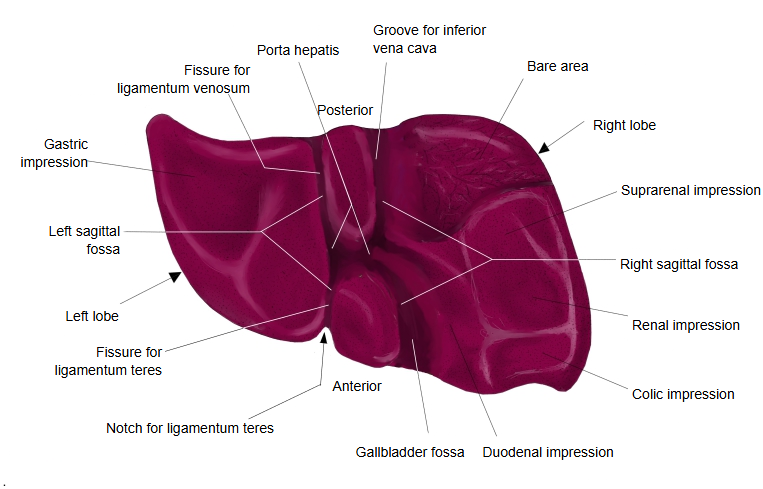
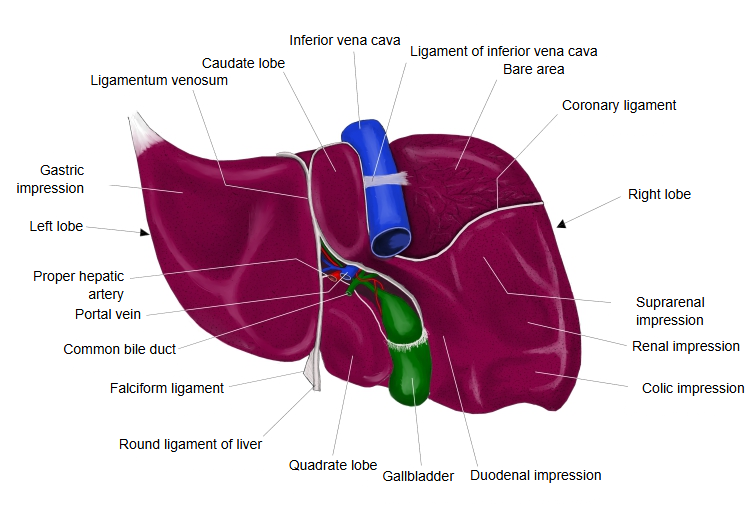
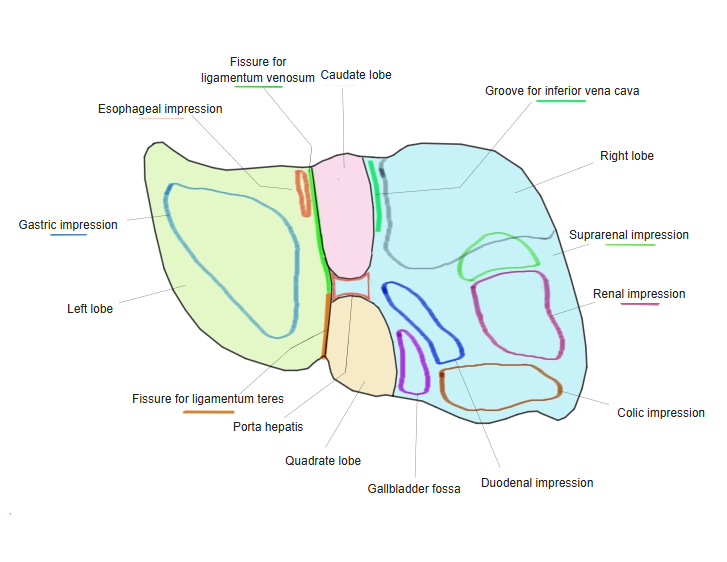
The sagittal fossae are the two grooves that run lengthwise (from front to back) on the visceral (inferior) surface of the liver, one on each side of the porta hepatis. See each term for details.
· Right sagittal fossa · Left sagittal fossa
· The right sagittal fossa is made up of the fossa for the gallbladder in front and the groove for the inferior vena cava behind.
· The left sagittal fossa is made up of the fissure for ligamentum teres in front and the fissure for ligamentum venosum behind.
· Together with the porta hepatis as the crossbar, the two fossae form the H-shaped pattern of the visceral surface. Between them lie the quadrate lobe (in front of the porta hepatis) and the caudate lobe (behind it).
The name is not used in Terminologia Anatomica; current texts describe each groove and fissure separately.
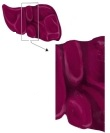 Left and right sagittal fossae
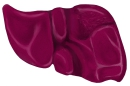 Liver (visceral surface)
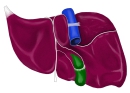 Liver (visceral surface)
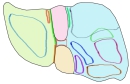 Features of the visceral surface
Related terms
- Right sagittal fossa
- Left sagittal fossa
- Porta hepatis
- Quadrate lobe
- Caudate lobe
- Fossa for gallbladder
- Fissure for ligamentum teres
References and sources
- Further reading: Liver, Wikipedia.
- Federative International Programme for Anatomical Terminology (FIPAT). Terminologia Anatomica, 2nd ed. (TA2), 2019.