Latin: musculus abductor pollicis brevis
Overview
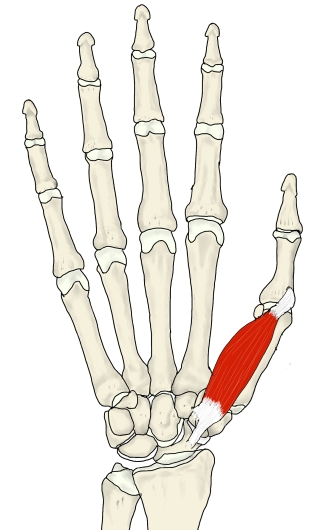
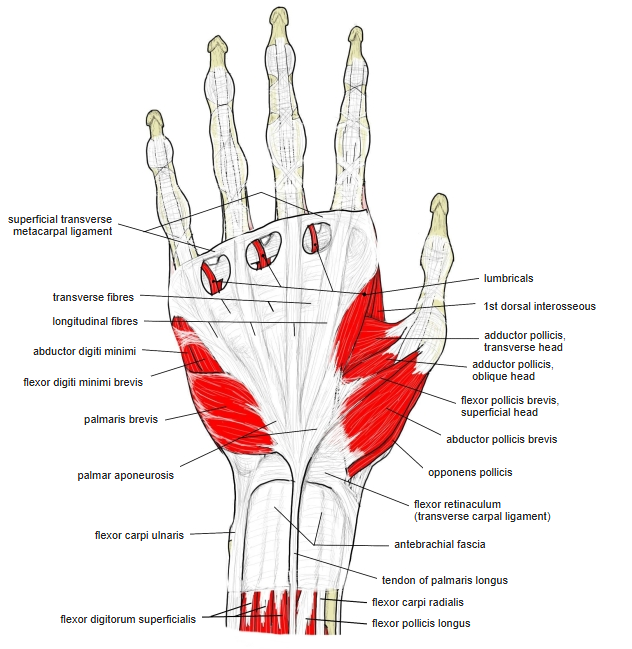
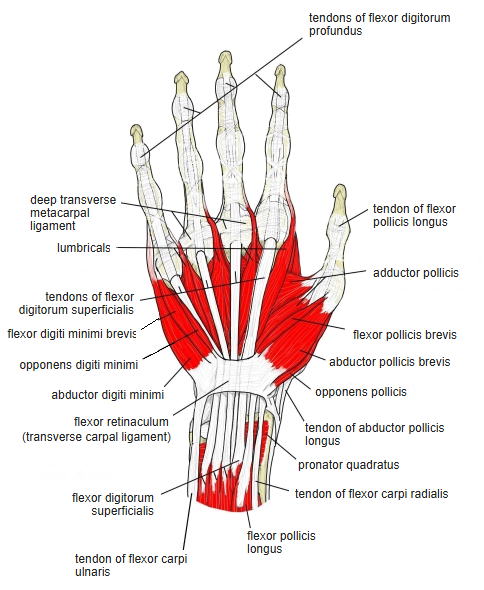
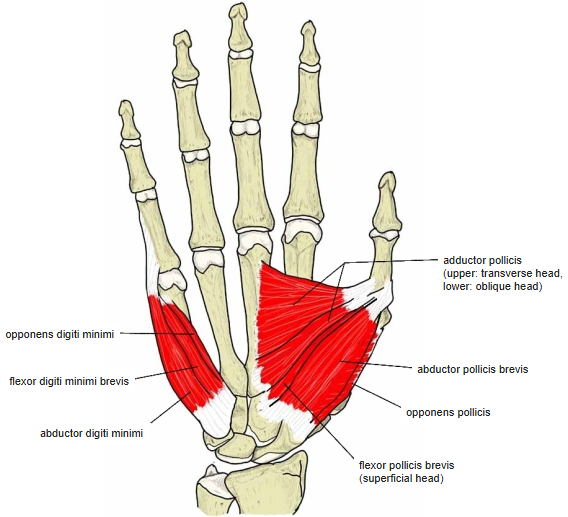
- A flat, thin thenar muscle just under the skin; it almost completely covers the opponens pollicis.
- It is the most lateral and most superficial of the thenar muscles, but hard to feel on its own because the whole eminence tightens when the thumb moves.
Position in the classification
Upper Limb › Hand › Thenar muscles
- Adductor pollicis
- Abductor pollicis brevis
- Flexor pollicis brevis
- Opponens pollicis
Illustrations
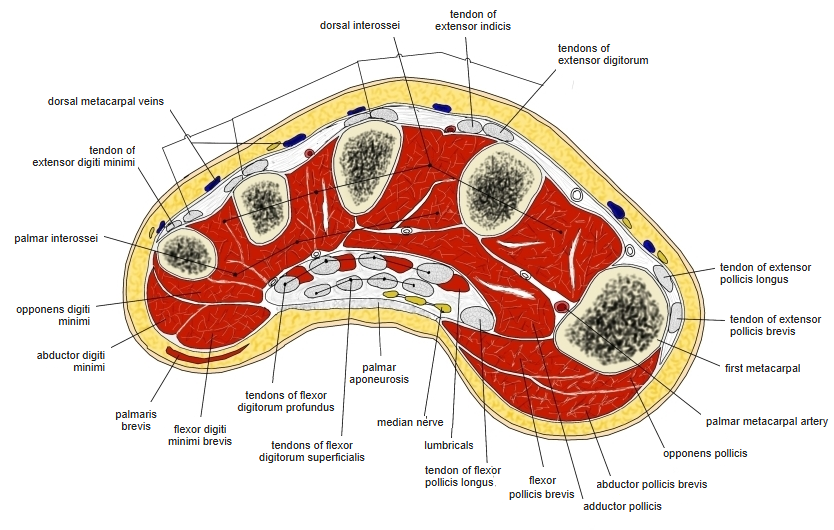
Origin / insertion
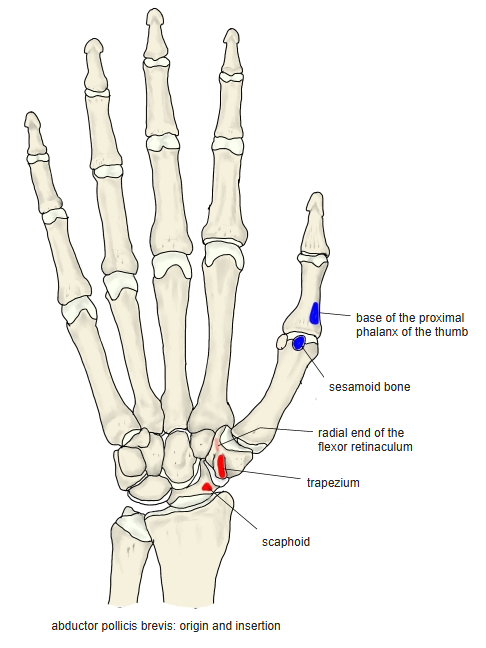
- Origin: tubercle of the scaphoid and radial end of the flexor retinaculum; some sources add the trapezium (probably its tubercle)
- Insertion: lateral (radial) side of the base of the proximal phalanx of the thumb, by way of the radial sesamoid bone, blending with the capsule of the metacarpophalangeal joint
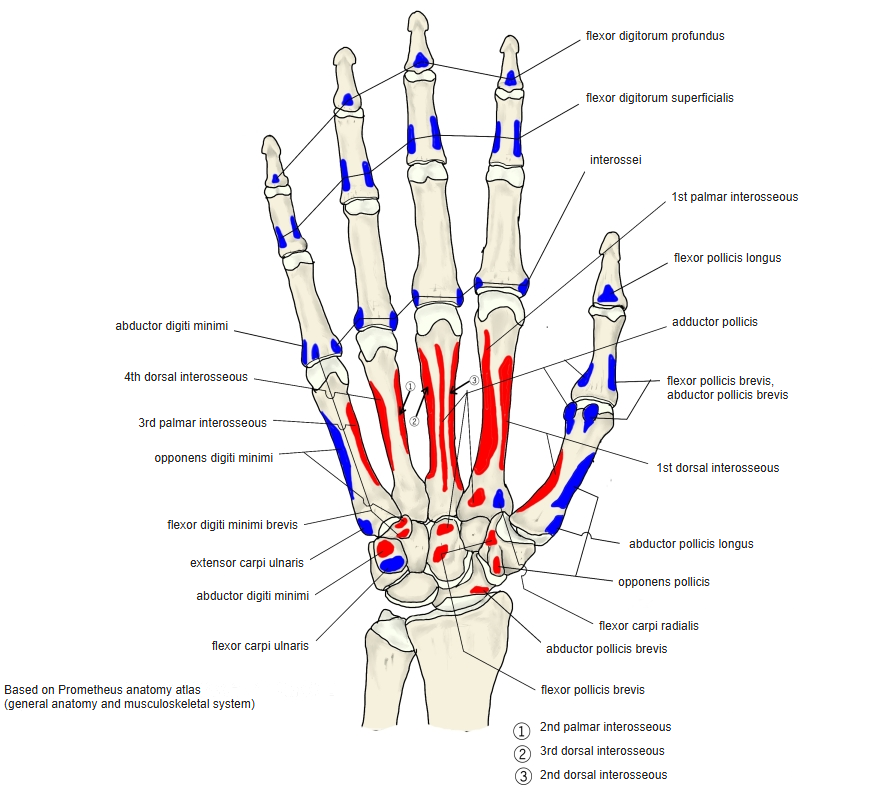
Action
- Abducts the thumb (moves it forward, away from the palm)
- Helps with opposition and extension of the thumb
Innervation
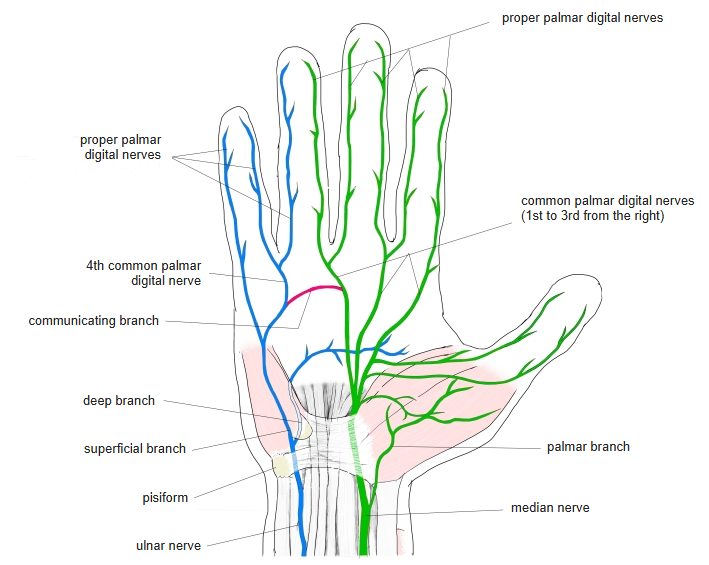
- Median nerve (recurrent branch; C8–T1)
Blood supply
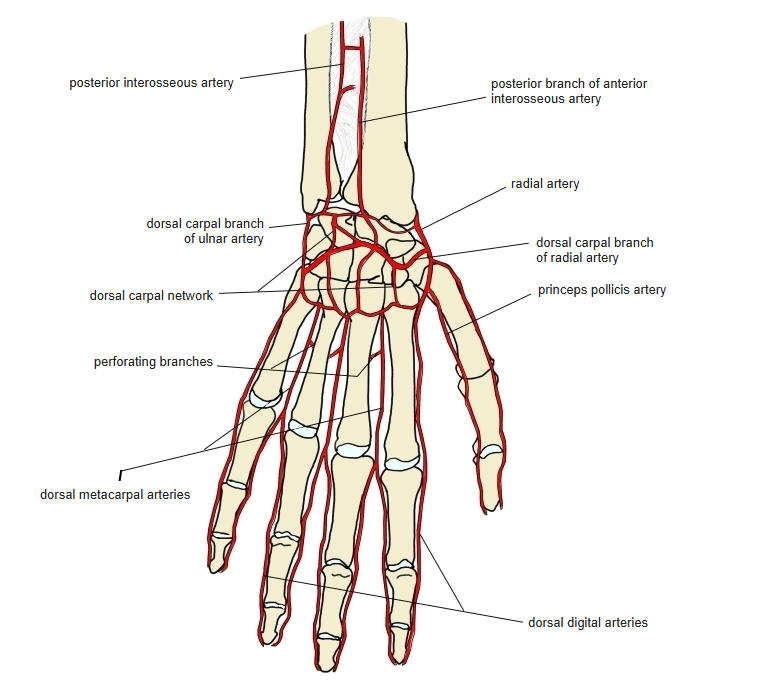
- Superficial palmar branch of the radial artery
Related terms
- Flexor pollicis brevis
- Opponens pollicis
- Adductor pollicis
- Scaphoid
- Flexor retinaculum
- Median nerve
- Radial artery
References and sources
- Further reading: Abductor pollicis brevis muscle, Wikipedia.