Latin: musculus biceps brachii
Overview
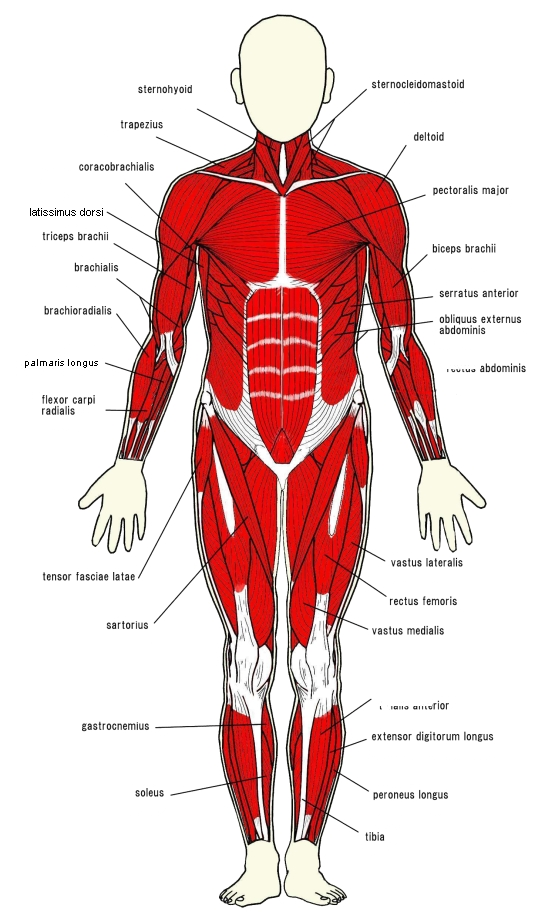
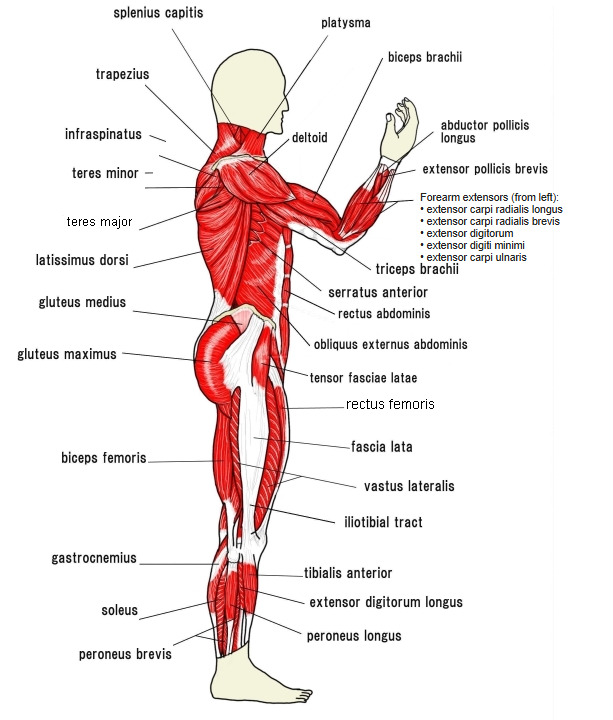
- One of the 3 flexor muscles of the arm; the large muscle on the front of the upper arm.
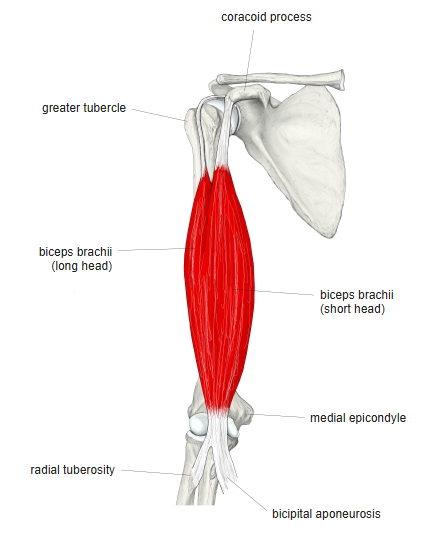
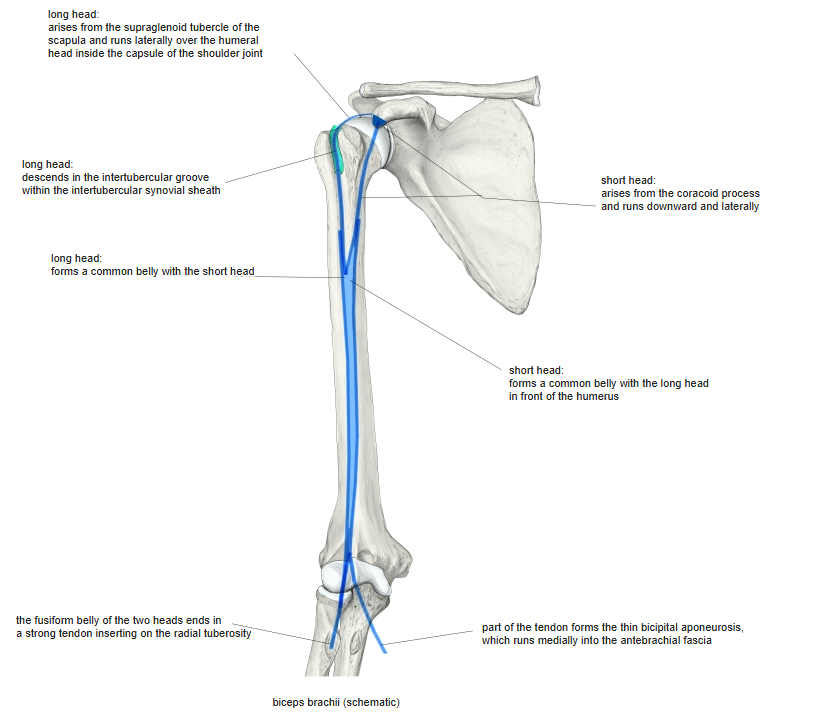
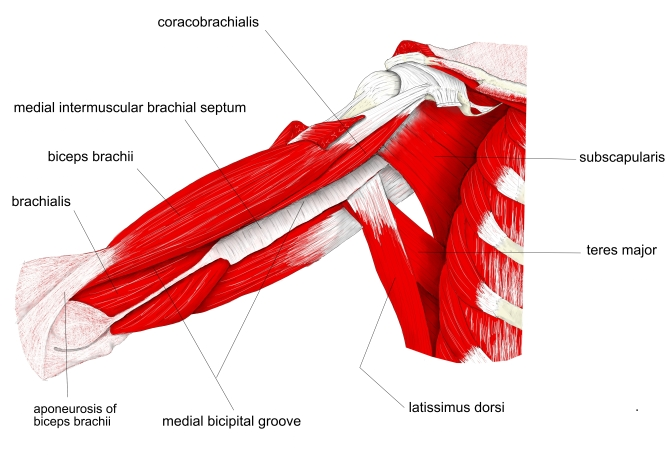
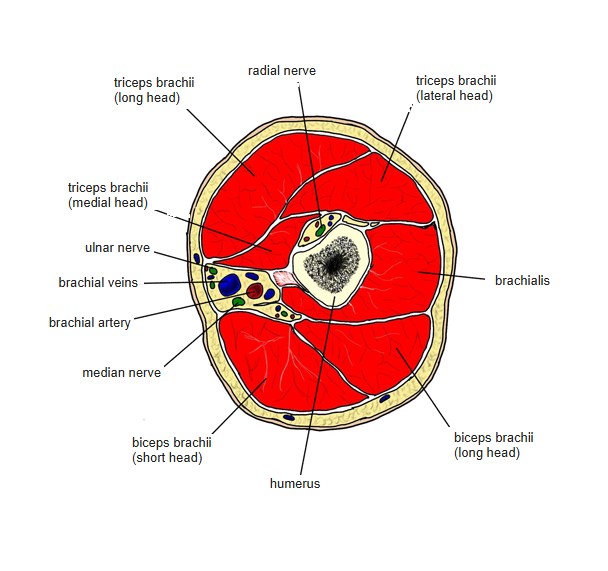
- Two heads (long and short) arise from the scapula and join in a common fusiform belly, usually near the level of the deltoid tuberosity; several anatomical studies, however, find that the two bellies remain separate, with no fibres passing between them.
- The long-head tendon runs over the head of the humerus inside the shoulder-joint capsule and down the intertubercular groove in its synovial sheath, where the transverse humeral ligament holds it in place.
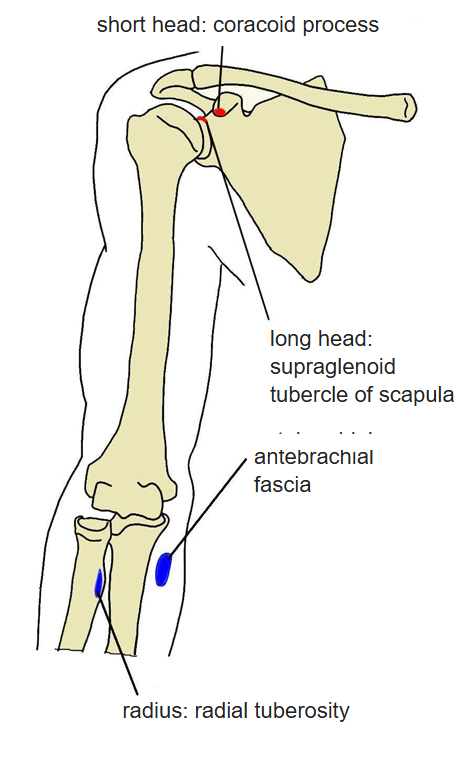
- The common tendon ends on the radial tuberosity; part of it forms the bicipital aponeurosis, which runs medially into the antebrachial fascia.
- Crosses both the shoulder and elbow; its main action is at the elbow.
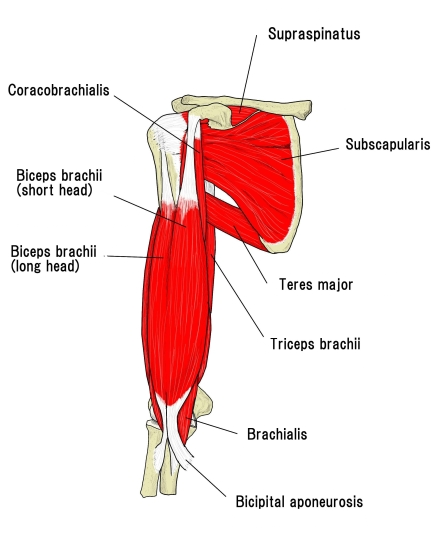
- Continuous in places with the flexor digitorum superficialis, pronator teres, coracobrachialis, flexor carpi radialis, palmaris longus and flexor digitorum profundus.
Tendons
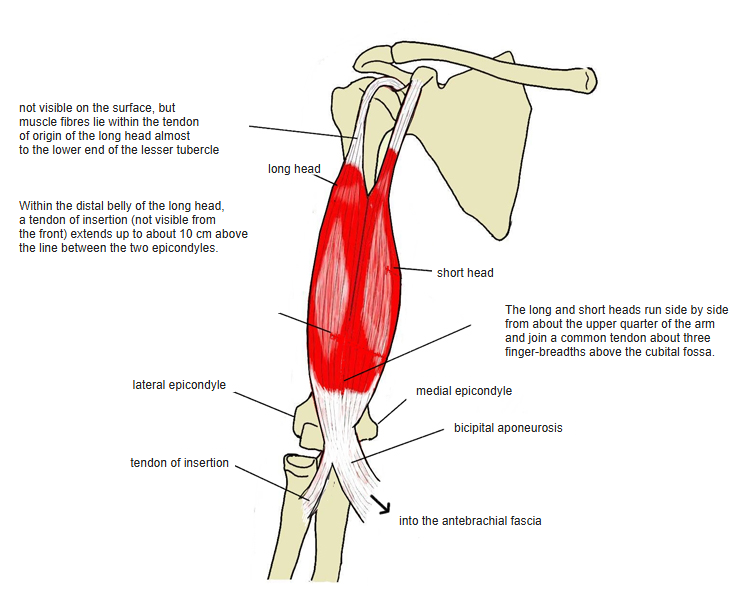
- Muscle fibres lie inside the origin tendon of the long head almost to the lower end of the lesser tubercle.
- Inside the belly, part of the insertion tendon, hidden from the front, extends up to about 10 cm above the line joining the epicondyles.
- The two heads run side by side from about the upper quarter of the arm; their tendons unite into the common tendon about three finger-breadths above the cubital fossa.
Position in the classification
Upper Limb › Arm › Flexor group
- Biceps brachii
- Coracobrachialis
- Brachialis
Illustrations
Origin / insertion
- Origin:
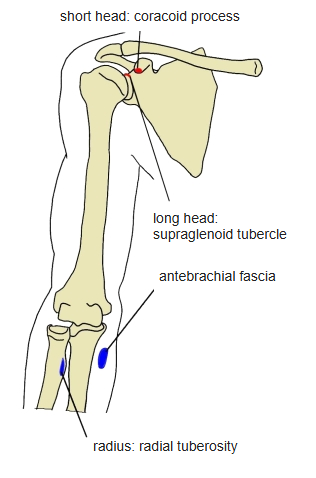
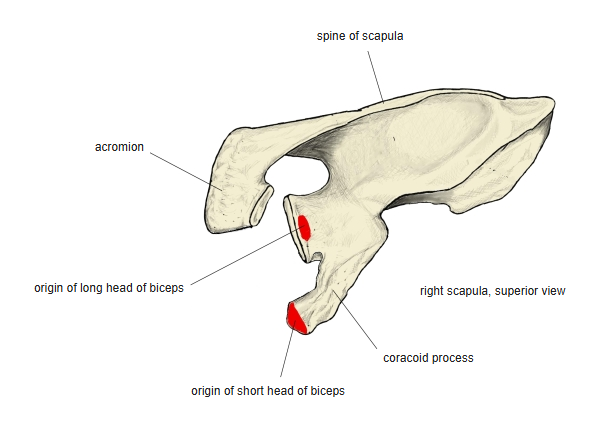
- Long head: supraglenoid tubercle of the scapula and the glenoid labrum
- Short head: coracoid process of the scapula
- Insertion: radial tuberosity, and the antebrachial fascia via the bicipital aponeurosis
Action
- Whole muscle: flexes the elbow and supinates the forearm (as when using a corkscrew)
- Long head: abducts the arm; short head: adducts the arm
Innervation
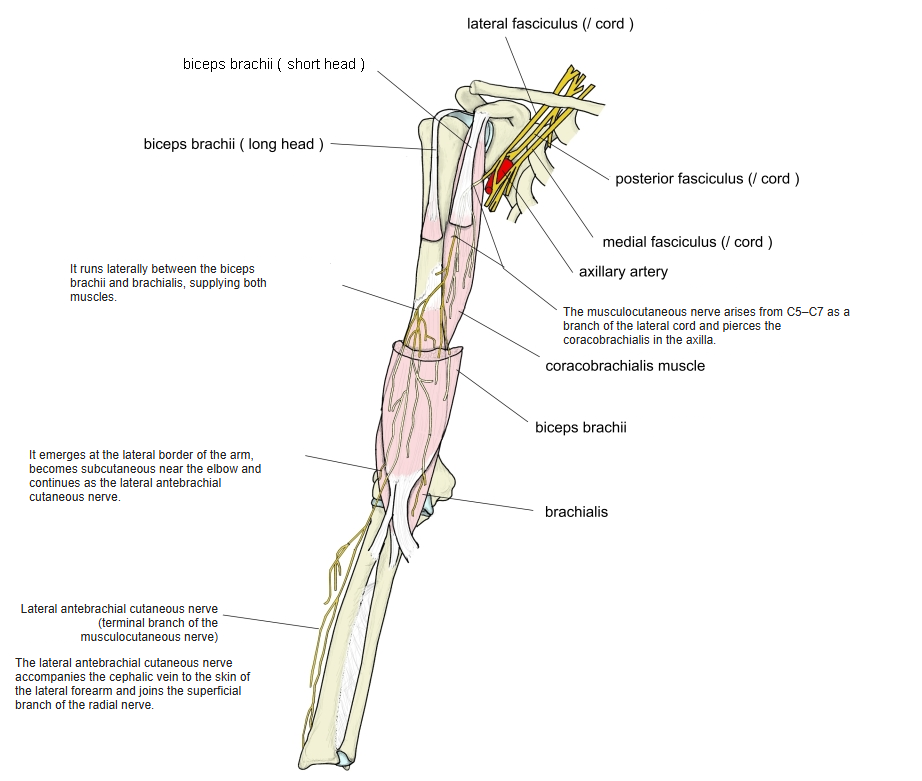
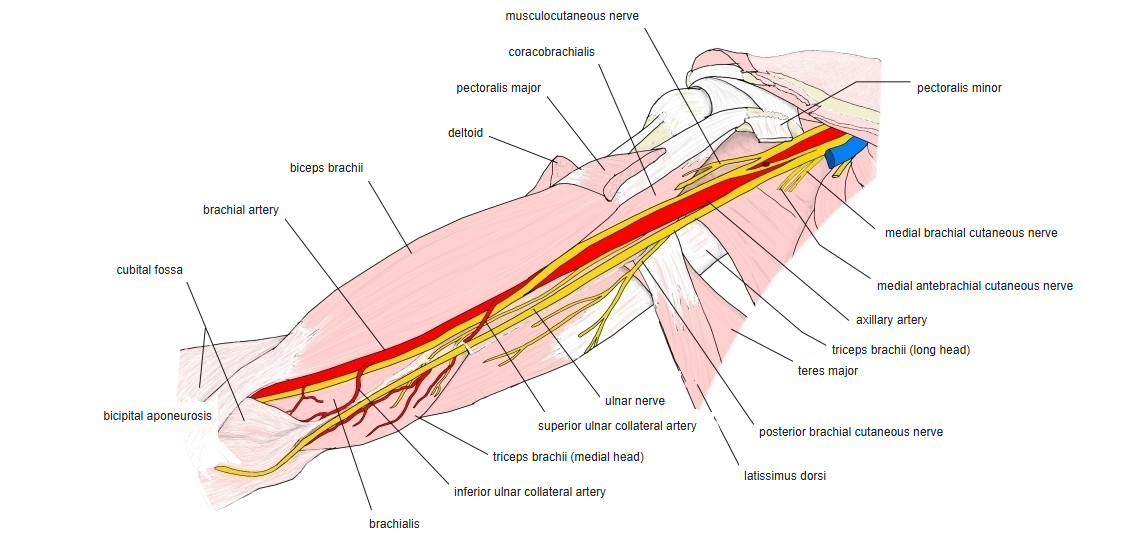
- Musculocutaneous nerve (C5–C6; some sources C5–C7)
Blood supply
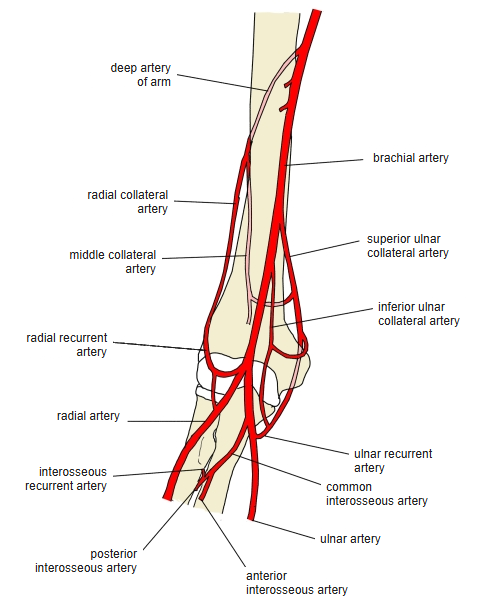
- Branches of the axillary and brachial arteries
Anatomical variations
- The long or short head, or the anterior part, may be missing
- The two heads may be almost independent, or further divided
- A third head may arise from the scapula or humerus
Related terms
- Brachialis
- Coracobrachialis
- Triceps brachii
- Supraglenoid tubercle
- Coracoid process
- Intertubercular groove
- Radial tuberosity
- Bicipital aponeurosis
- Musculocutaneous nerve
- Brachial artery
References and sources
- Further reading: Biceps, Wikipedia.