Latin: musculus flexor carpi ulnaris
Overview
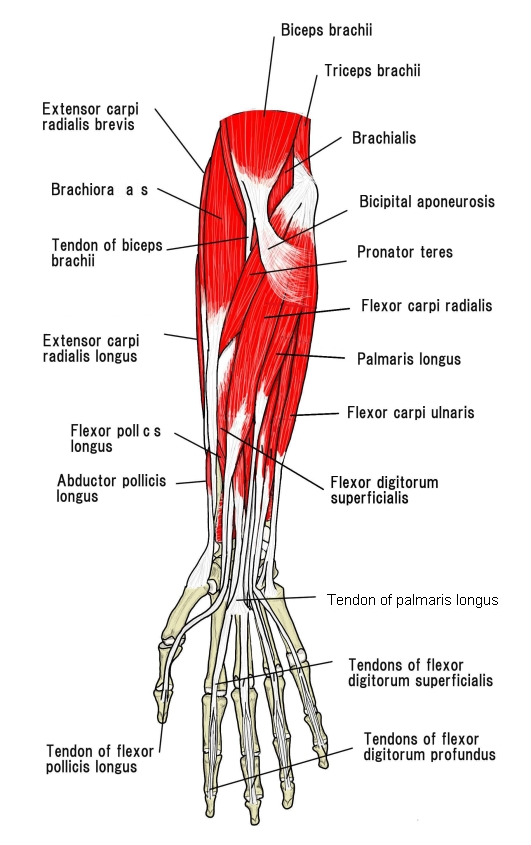
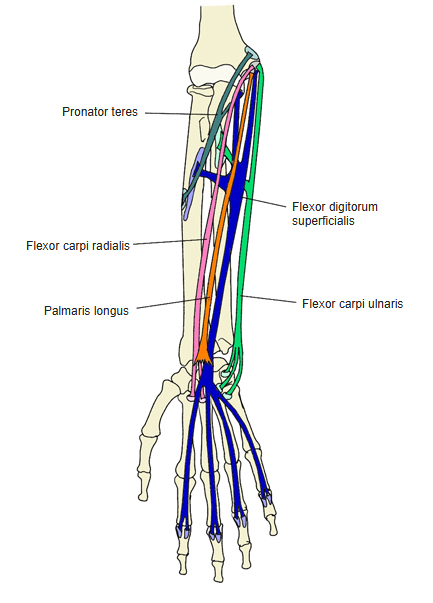
- One of the 8 flexor muscles of the forearm, in the first (superficial) layer with the pronator teres, flexor carpi radialis and palmaris longus.
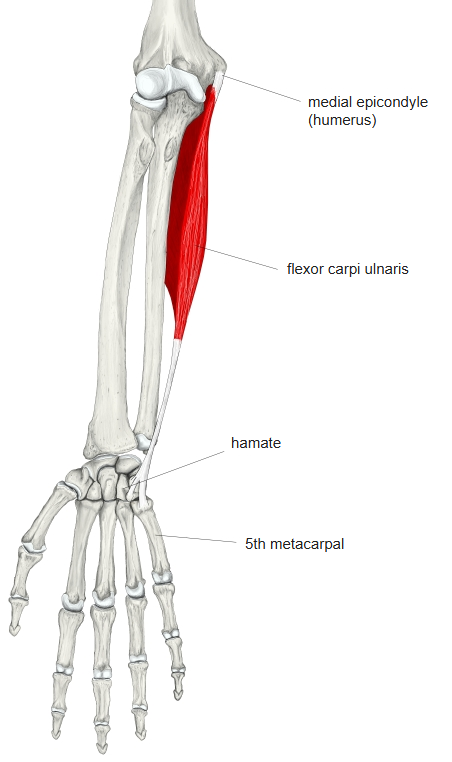
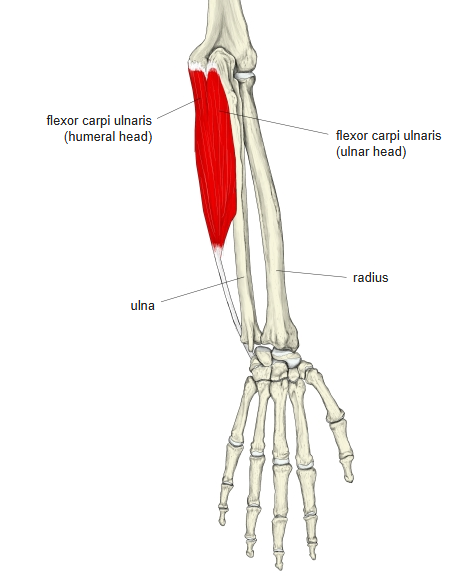
- The most medial (ulnar) of the forearm flexors; a semipennate muscle with two heads (humeral and ulnar).
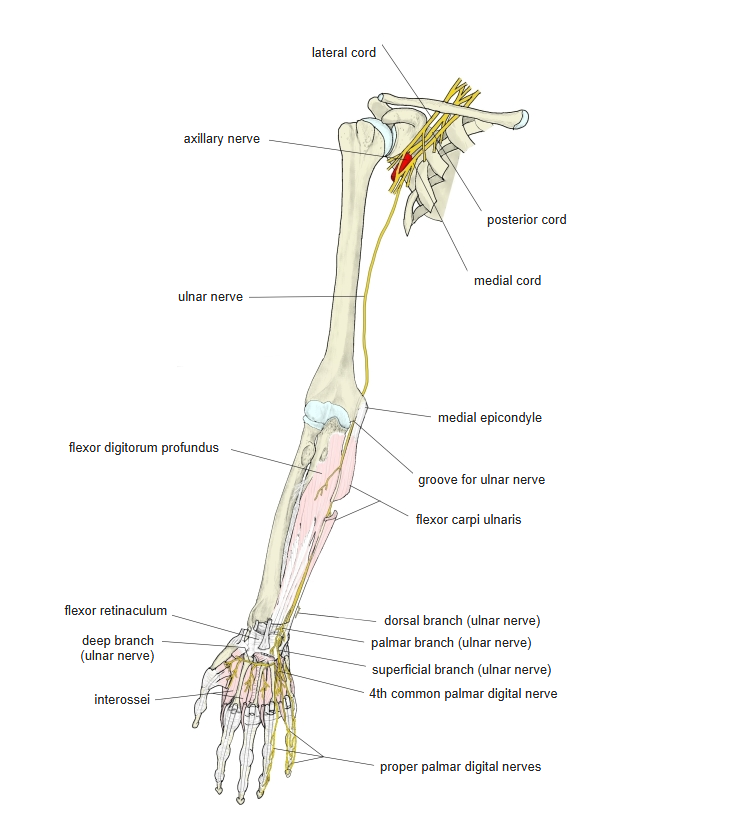
- The two heads are joined by a tendinous arch; the ulnar nerve and the posterior ulnar recurrent artery pass beneath it into the front of the forearm.
- Its tendon lies along the medial side of the ulnar neurovascular bundle of the forearm (ulnar nerve, artery and veins).
- The tendon can be seen at the front of the wrist as the most medial of the two or three tendons there (the others: palmaris longus, flexor carpi radialis).
- The radial part of the belly is about 1 cm thick; the ulnar part is thin.
- Continuous in places with the flexor digitorum profundus and flexor digitorum superficialis.
Position in the classification
Upper Limb › Forearm › Flexor group › First layer
- Pronator teres
- Flexor carpi radialis
- Palmaris longus
- Flexor carpi ulnaris
Illustrations
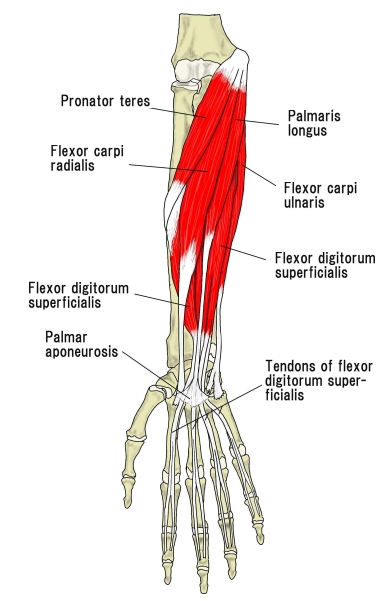
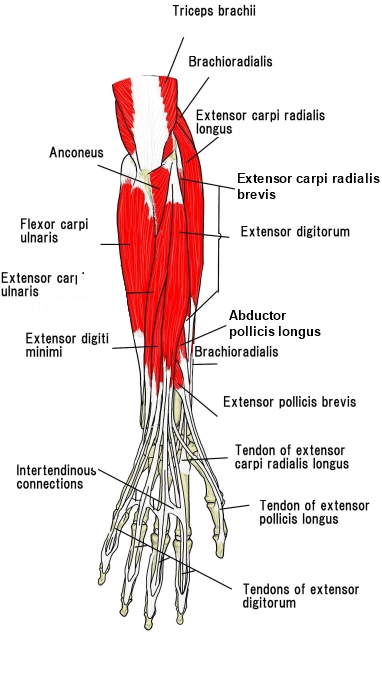
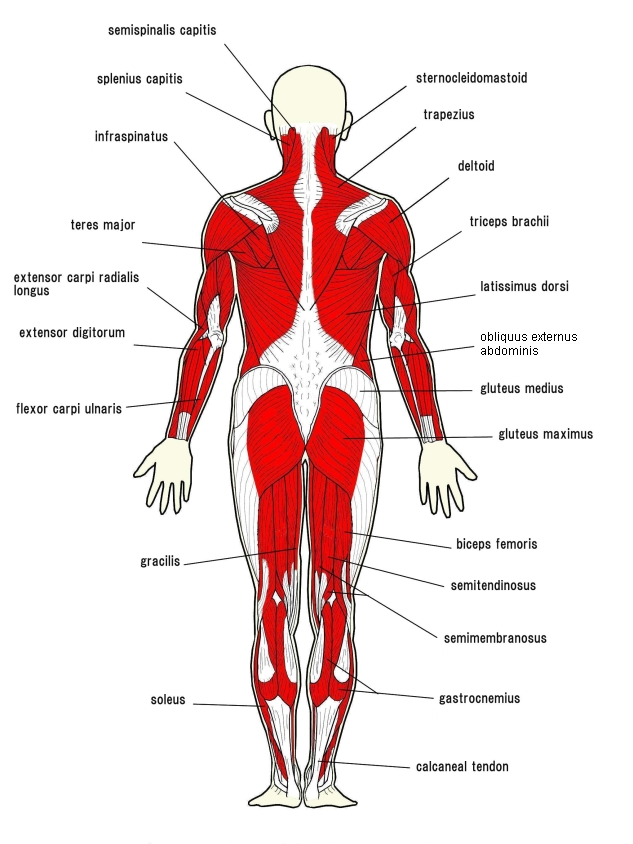
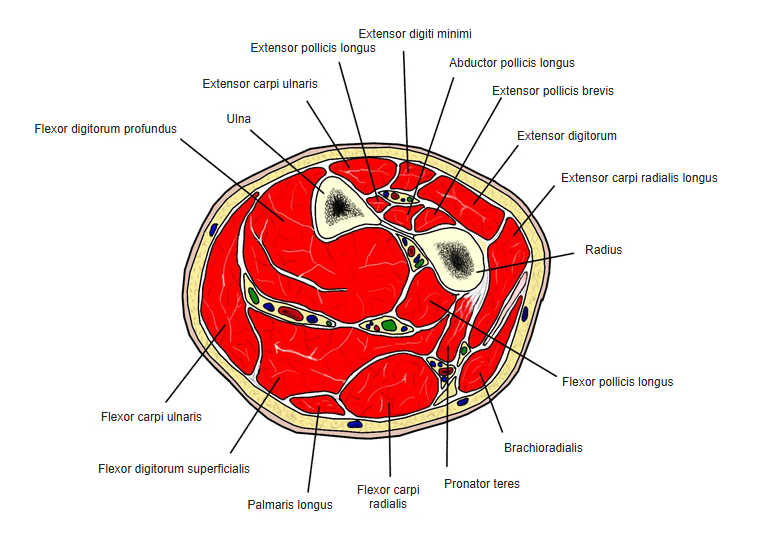
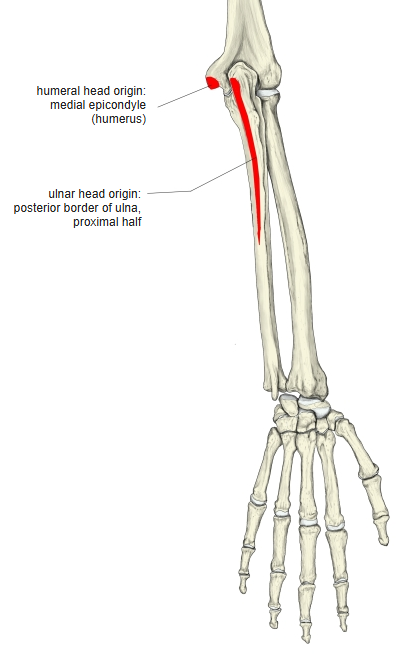
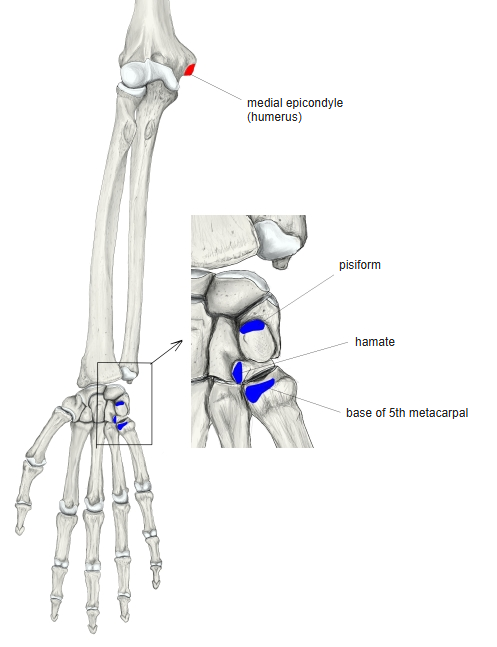
Origin / insertion
- Origin:
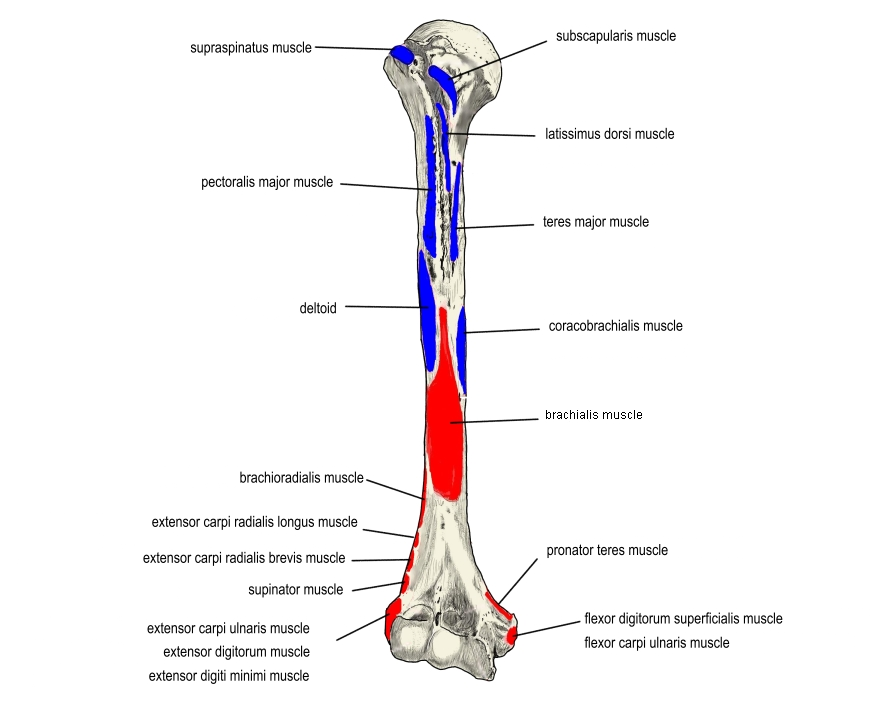
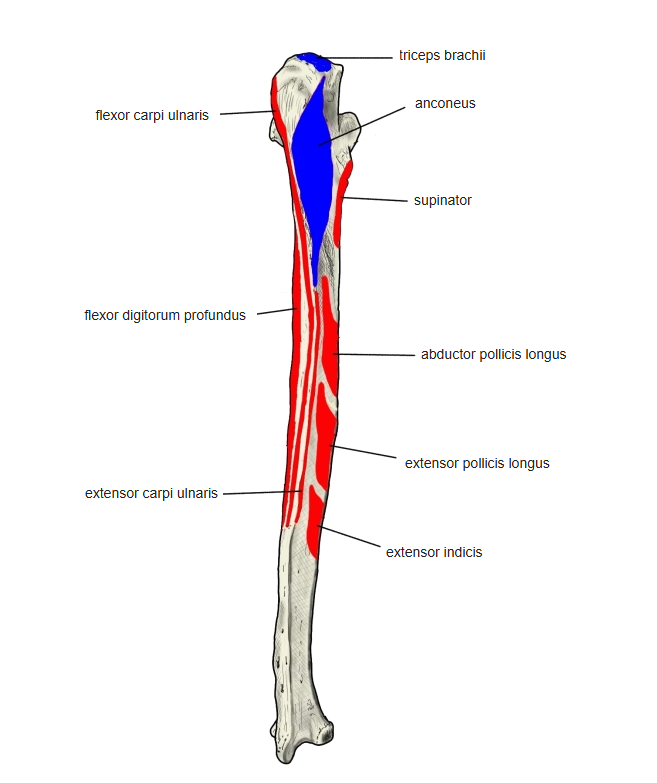
- Humeral head: medial epicondyle of the humerus (common flexor tendon)
- Ulnar head: posterior border of the ulna (upper half to two-thirds, by an aponeurosis), medial margin of the olecranon, and the antebrachial fascia
- Insertion: pisiform, then via the pisohamate and pisometacarpal ligaments to the hook of the hamate and the base of the 5th metacarpal; a few fibres attach to the flexor retinaculum
- The tendon does not pass through the carpal tunnel.
- The pisiform is a sesamoid bone within the tendon; it increases the moment arm of the muscle and so its flexion torque at the wrist.
Action
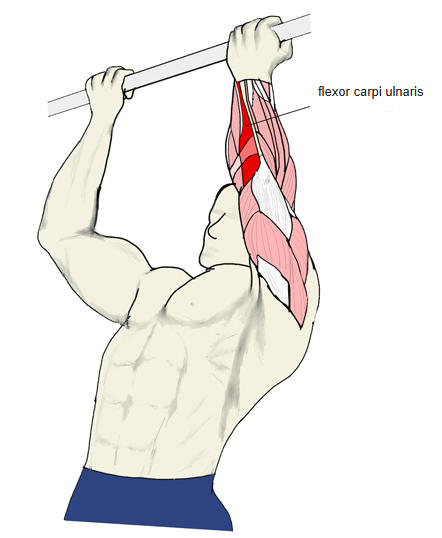
- Flexes the wrist
- Adducts the hand (ulnar deviation) at the same time
Innervation
- Ulnar nerve (C8–T1; C7 may also contribute)
Blood supply
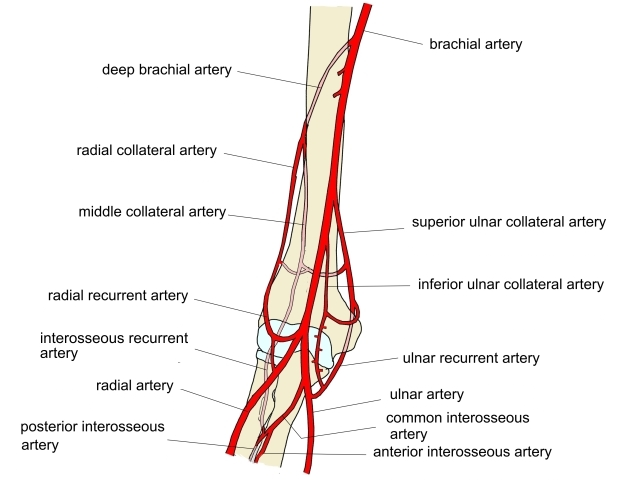
- Superior and inferior ulnar collateral arteries
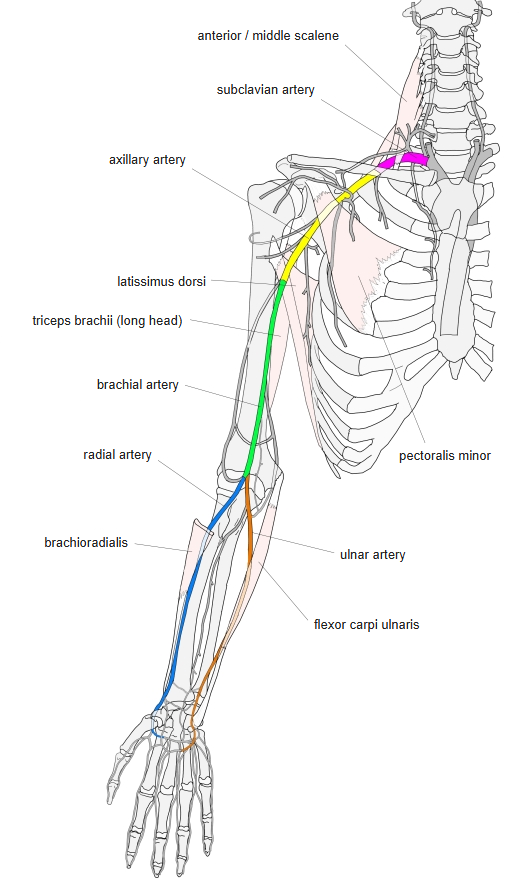
- Ulnar artery
Anatomical variations
- It may be doubled (accessory flexor carpi ulnaris), often together with other variants
Related terms
- Flexor carpi radialis
- Palmaris longus
- Medial epicondyle
- Olecranon
- Antebrachial fascia
- Pisiform
- Hamate
- 5th metacarpal
- Pisohamate ligament
- Pisometacarpal ligament
- Ulnar nerve
- Ulnar artery
- Superior ulnar collateral artery
- Inferior ulnar collateral artery
References and sources
- Further reading: Flexor carpi ulnaris muscle, Wikipedia.