Latin: musculus infraspinatus

Overview

  • One of the muscles of the shoulder girdle and one of the four rotator cuff muscles.
  • A thick, triangular muscle filling most of the infraspinous fossa of the scapula.
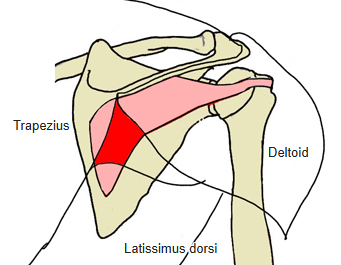
  • Partly covered by the deltoid, trapezius and latissimus dorsi; the rest lies just under the skin and can be felt.
  • Its insertion on the humerus is broad, which is why it is involved in rotator cuff tears about as often as the supraspinatus.
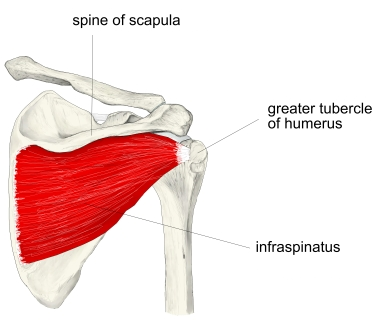
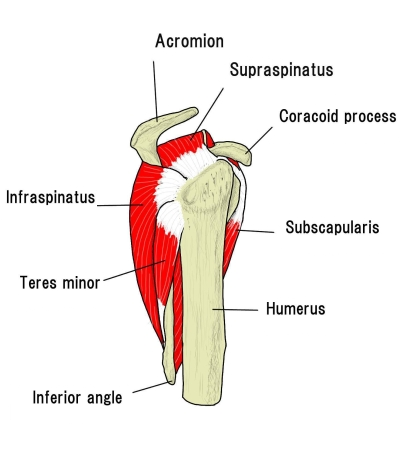
Back of the scapula and humerus with the infraspinatus in red, labelled.
Infraspinatus, posterior view
Scapula with the part of the infraspinatus not covered by the trapezius, deltoid and latissimus dorsi, labelled.
Part not covered by other muscles

Position in the classification

Illustrations

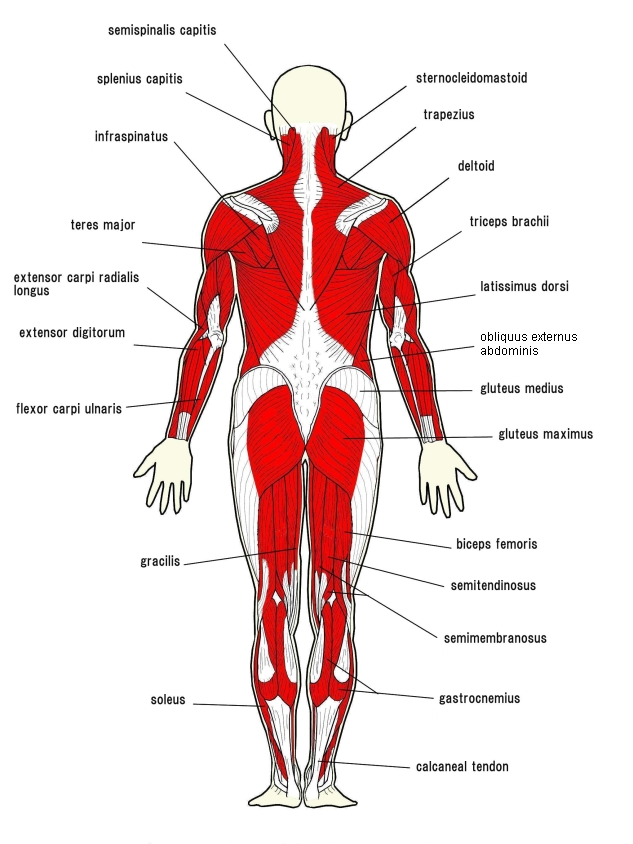
Muscles of the whole body seen from behind, labelled.
Muscles of the body, posterior view
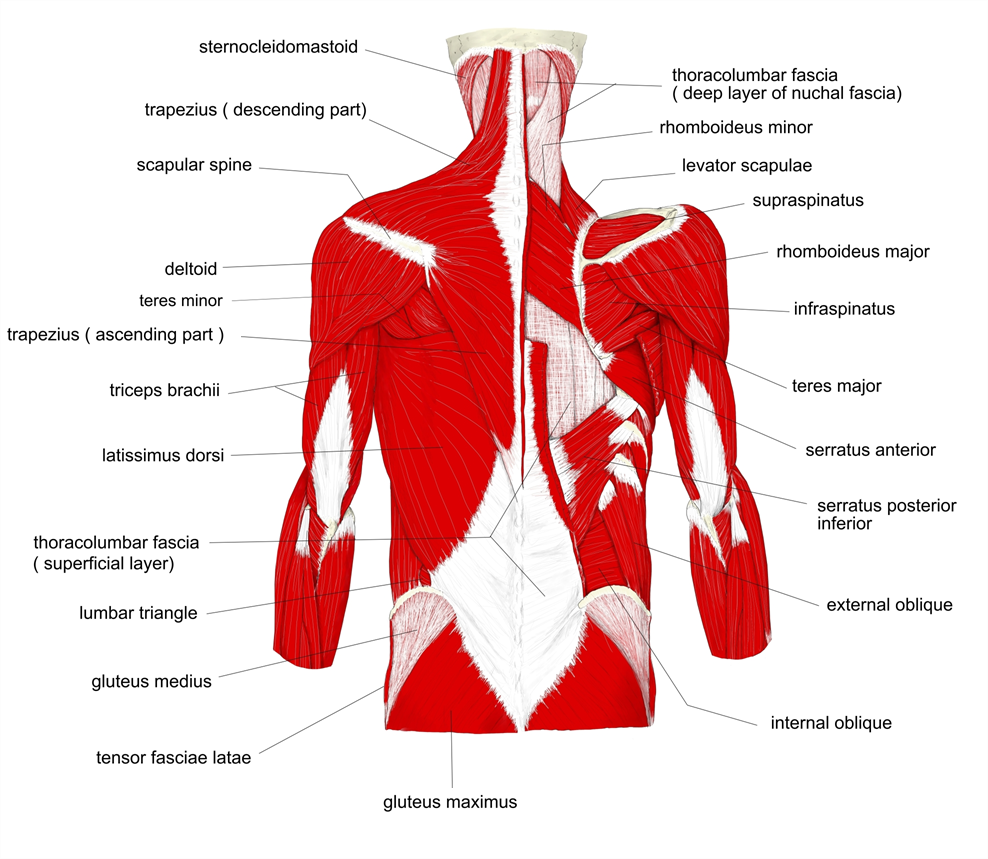
Superficial and deeper muscles of the back and shoulders, labelled.
Muscles of the back and shoulders
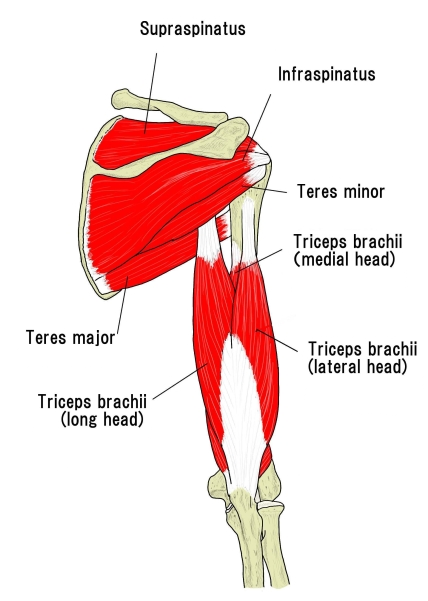
Shoulder and arm from behind with the supraspinatus, infraspinatus, teres minor and major and triceps brachii, labelled.
Shoulder and arm, posterior view
Scapula and humerus from the front with the rotator cuff muscles, labelled.
Shoulder, anterior view
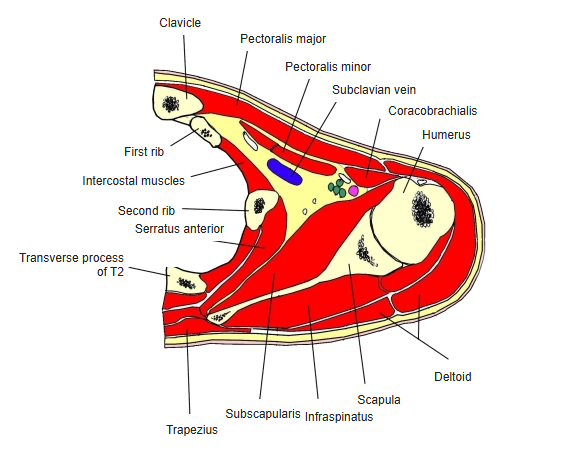
Horizontal cross-section through the shoulder with the muscles, bones and vessels, labelled.
Cross-section of the shoulder

Origin / insertion

  • Origin: infraspinous fossa of the scapula (medial two-thirds) and the infraspinous fascia covering it
  • Insertion: middle facet of the greater tubercle of the humerus and the capsule of the shoulder joint
  • The tendon crosses the back of the shoulder-joint capsule; a bursa may lie between them.
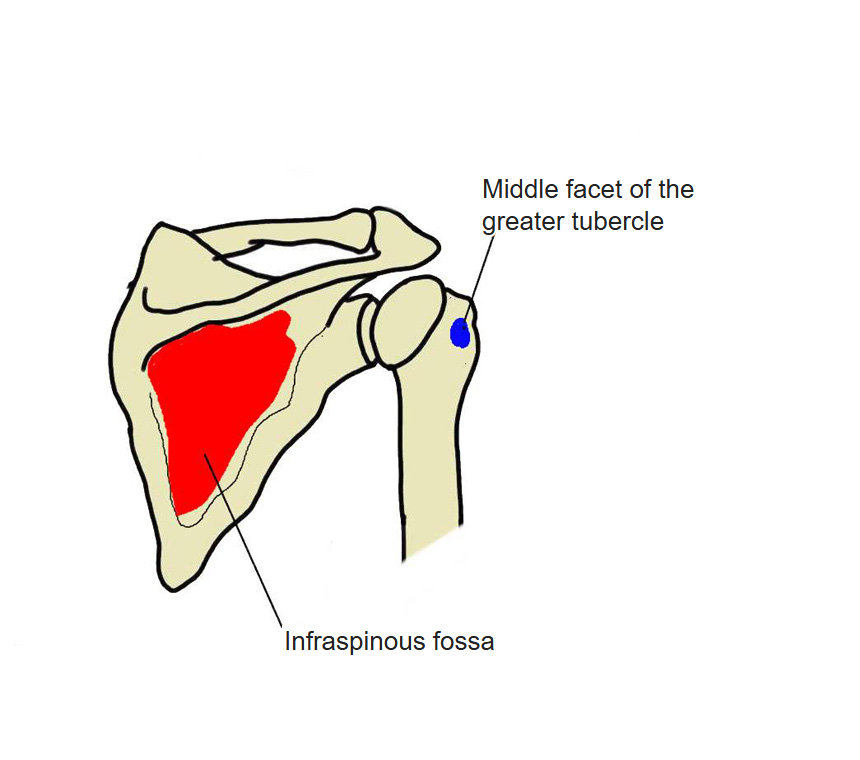
Scapula and humerus from behind with the origin in the infraspinous fossa (red) and the insertion on the greater tubercle (blue), labelled.
Origin and insertion
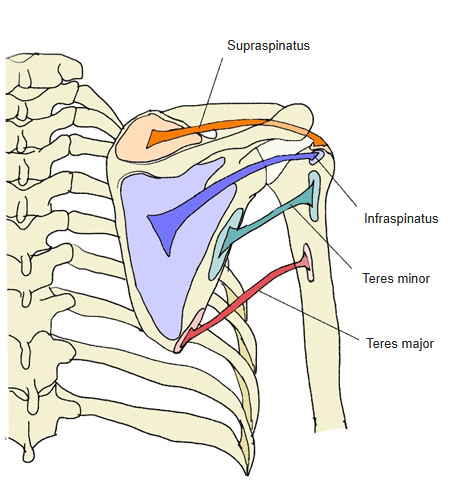
Scapula and humerus with the courses of the supraspinatus, infraspinatus, teres minor and teres major, labelled.
Rotator cuff and teres major
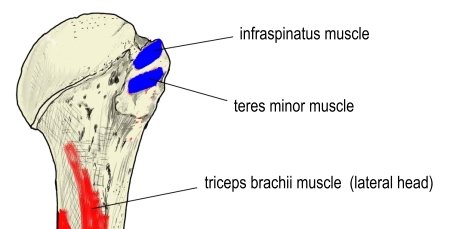
Upper end of the humerus with the attachments of the infraspinatus, teres minor and triceps brachii, labelled.
Attachments on the greater tubercle

Action

  • Laterally rotates the arm at the shoulder joint
  • As part of the rotator cuff, stabilizes the shoulder joint

Innervation

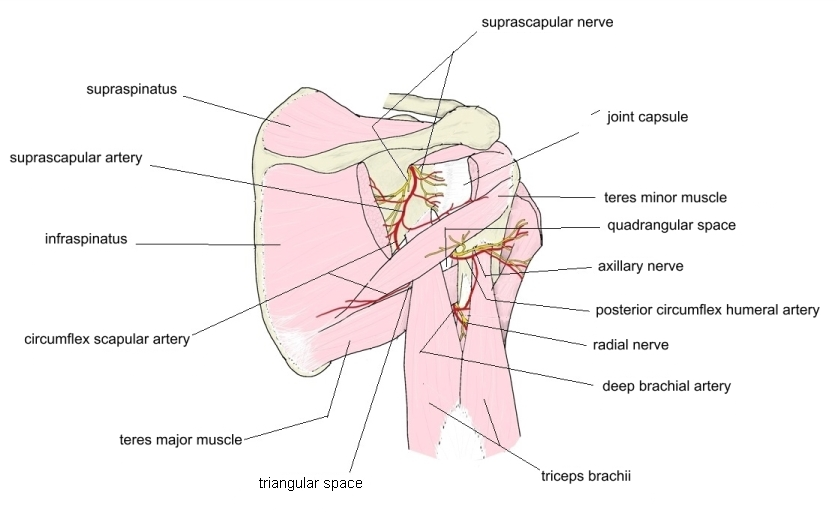
Back of the shoulder with the suprascapular, axillary and radial nerves and the arteries, labelled.
Nerves and vessels of the back of the shoulder

Blood supply

  • Suprascapular artery
  • Circumflex scapular artery
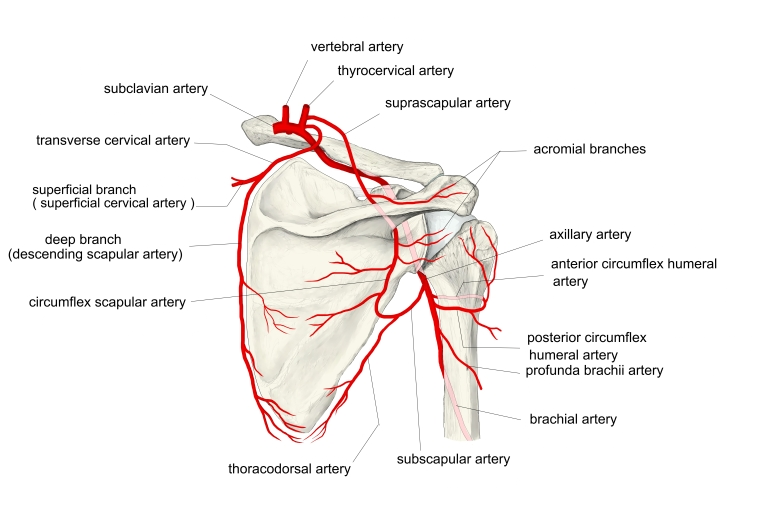
Posterior view of the scapula and humerus with the arteries of the shoulder, labelled.
Arteries of the shoulder

Anatomical variations

  • Frequently fused with the teres minor
  • Supraspinatus
  • Teres minor
  • Subscapularis
  • Rotator cuff
  • Infraspinous fossa
  • Greater tubercle
  • Suprascapular nerve
  • Suprascapular artery

References and sources

  1. Further reading: Infraspinatus muscle, Wikipedia.