Latin: musculus nasalis
Overview
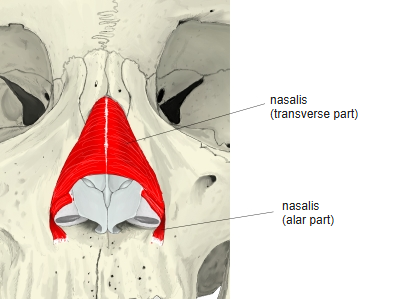
- A thin, small muscle of the nose consisting of a transverse part and an alar part.
- The transverse parts of both sides meet over the bridge of the nose in a thin aponeurosis, which is also continuous with that of the procerus.
- The transverse part is also called the compressor naris, and the alar part the dilator naris.
Position in the classification
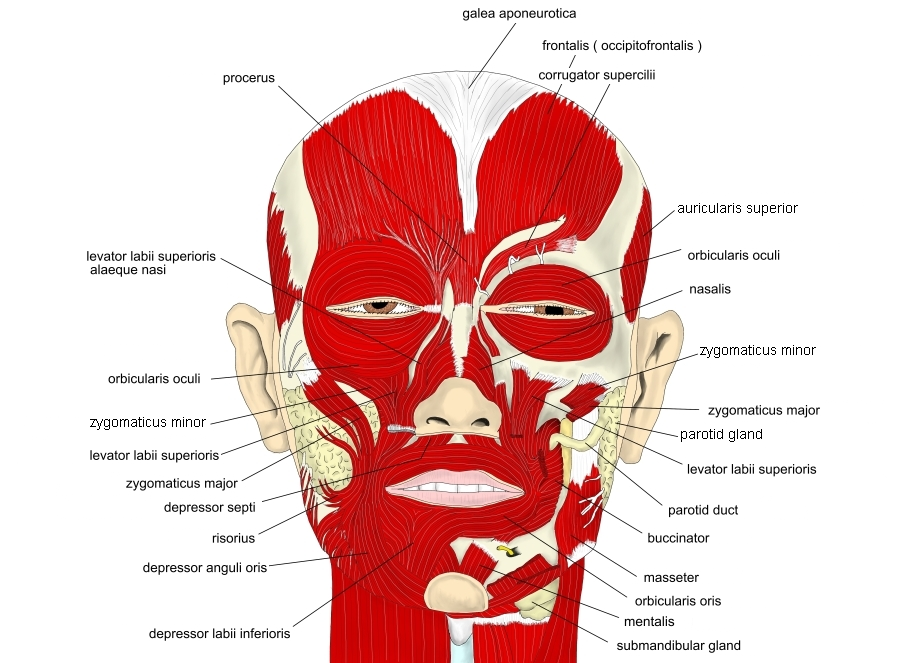
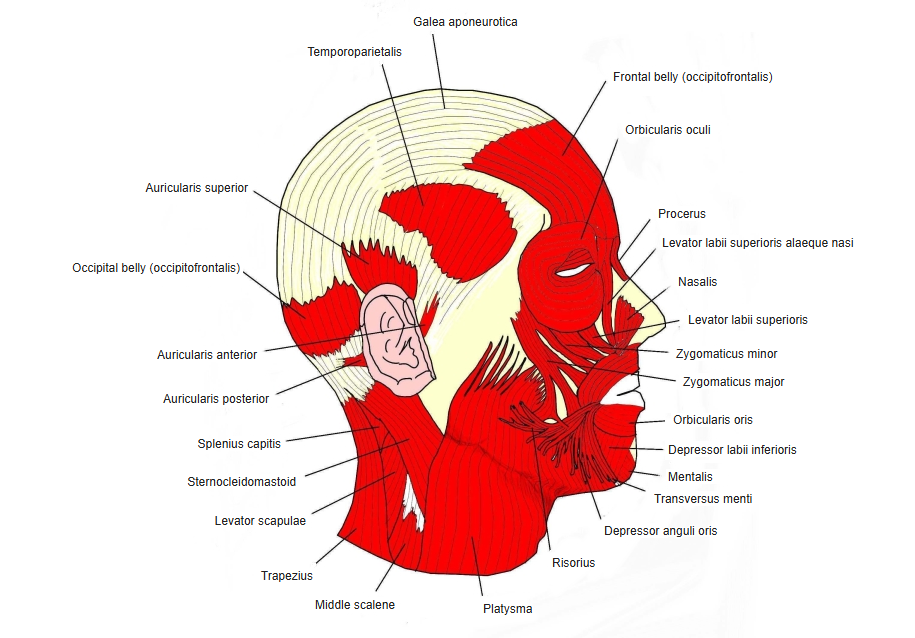
Head › Facial muscles › Muscles around the nose
- Procerus
- Nasalis
- Depressor septi nasi
Illustrations
Origin / insertion
- Origin:
- Transverse part: maxilla, above and lateral to the incisive fossa
- Alar part: maxilla over the lateral incisor (some sources: alveolar eminence of the upper canine)
- Insertion:
- Transverse part: aponeurosis over the bridge of the nose, continuous with that of the opposite side
- Alar part: the skin of the ala near the margin of the nostril; some sources describe attachment to the greater (major) alar cartilage
Action
- Transverse part: narrows the nostril
- Alar part: draws the ala down and laterally, widening the nostril
- Strong contraction pulls the mobile part of the nose down and deepens the nasolabial groove
Innervation
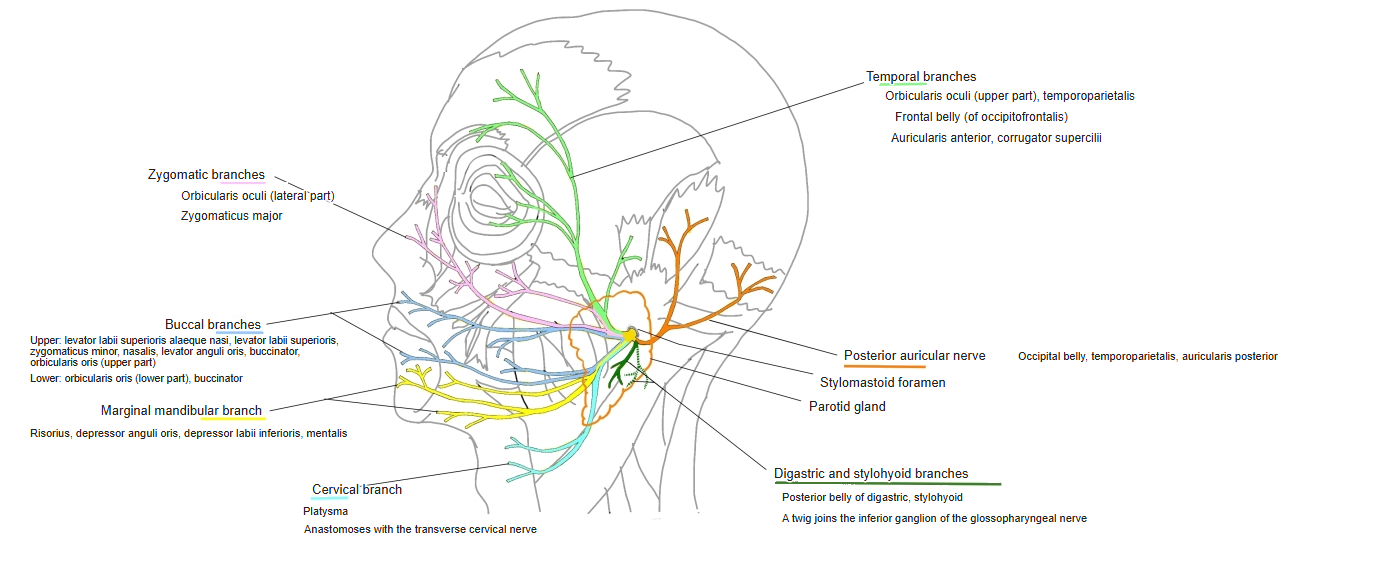
- Facial nerve: buccal branches (some sources give the zygomatic or temporal branches)
Blood supply
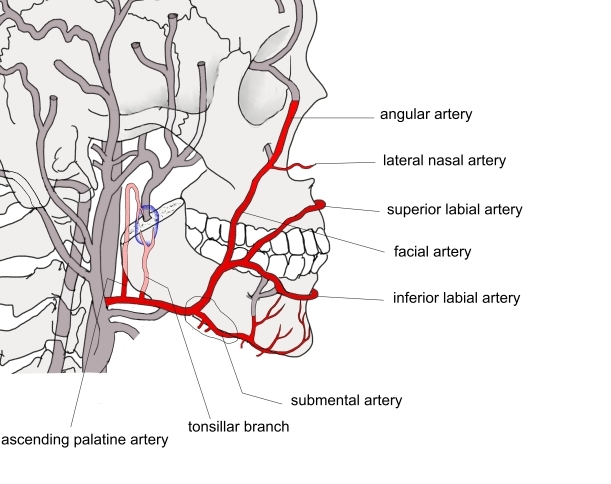
- Superior labial artery (a branch of the facial artery)
Related terms
- Procerus
- Depressor septi nasi
- Levator labii superioris alaeque nasi
- Maxilla
- Facial nerve
References and sources
- Further reading: Nasalis muscle, Wikipedia.
- Gray H. Anatomy of the Human Body, 20th ed. (1918), “4c. The Muscles of the Nose”, Bartleby.com.