Latin: musculus stylopharyngeus
Overview
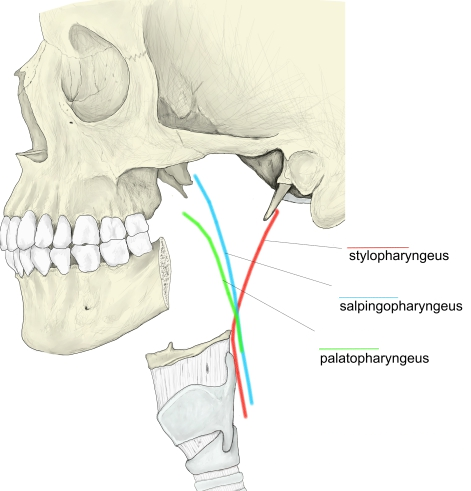
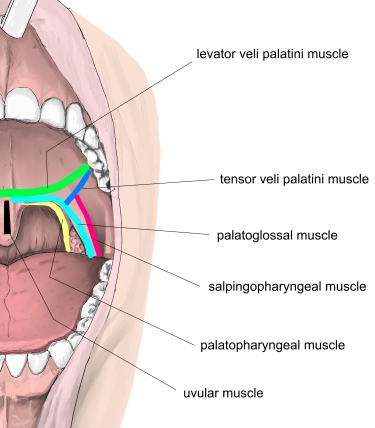
- One of the six muscles of the pharynx and one of the three longitudinal pharyngeal elevators (with the palatopharyngeus and salpingopharyngeus).
- A long, slender muscle: cylindrical above, flattened below.
- Runs down and medially from the styloid process and enters the pharyngeal wall between the superior and middle constrictors.
- Develops from the third pharyngeal arch.
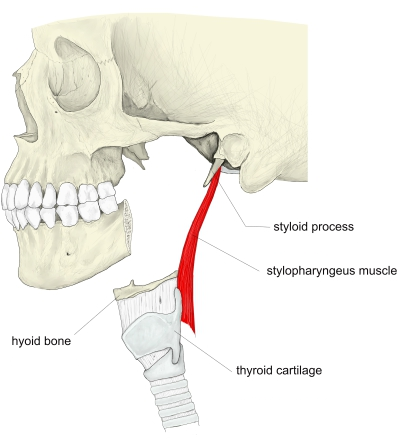
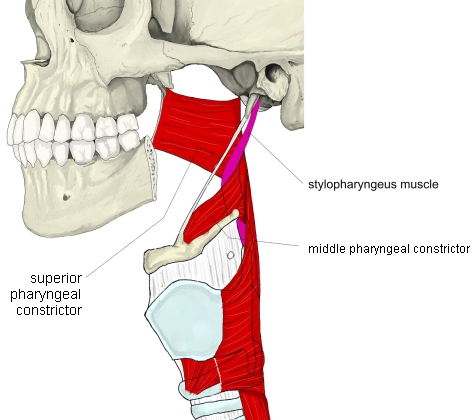
Illustrations
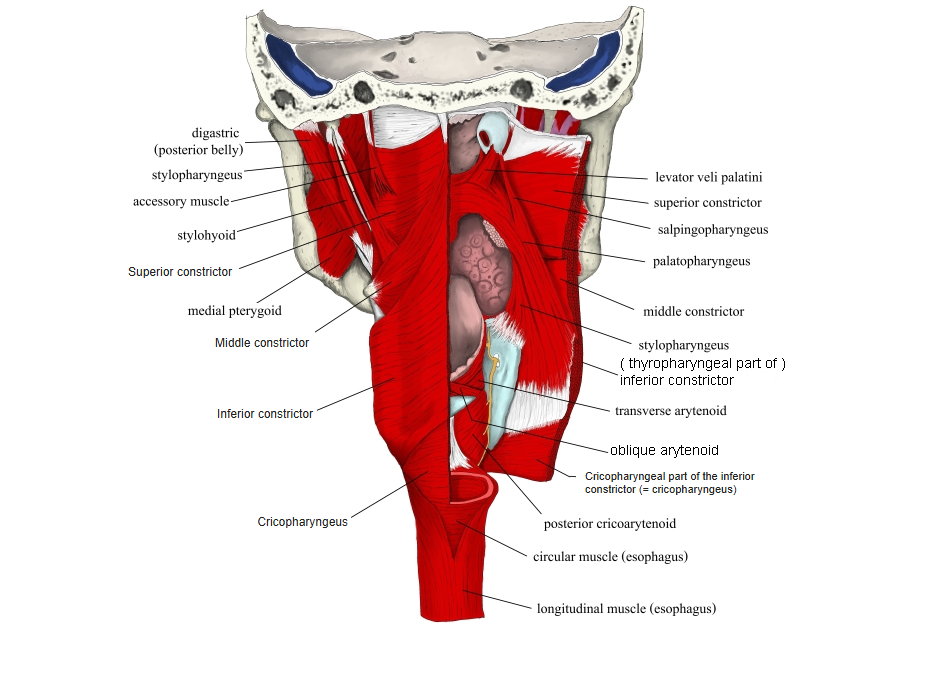
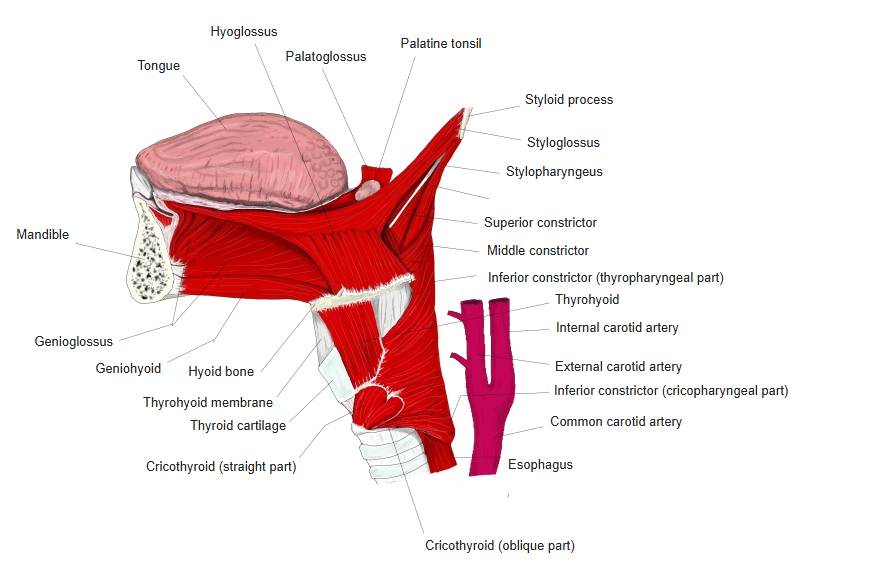
Origin / insertion
- Origin: styloid process of the temporal bone (medial side, near its base)
- Insertion: upper (posterior) border of the thyroid cartilage; partly the lateral border of the epiglottis
- Some fibres blend with the constrictors and the palatopharyngeus; some bundles reach the outer surface of the palatine tonsil.
Action
- Raises the pharynx and the larynx during swallowing
- Widens the pharynx so that a large bolus of food can pass
Innervation
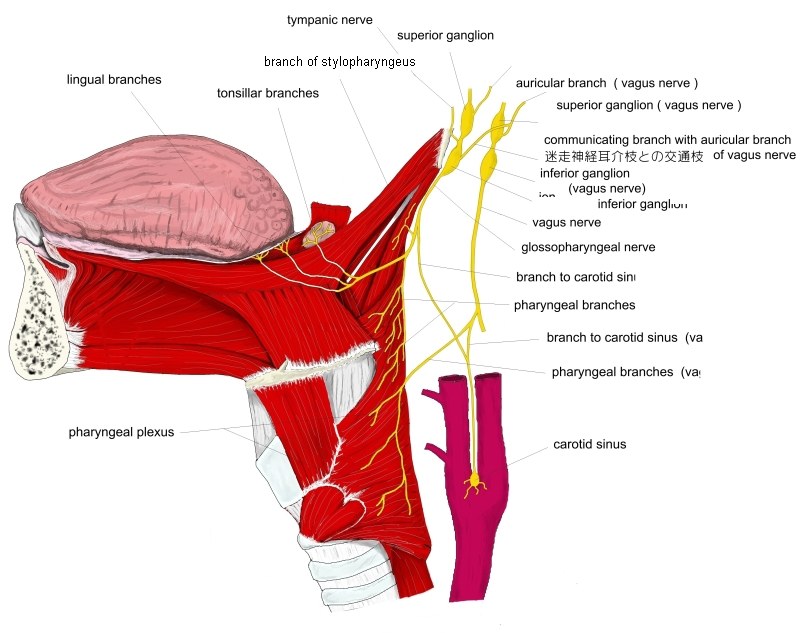
- Glossopharyngeal nerve (cranial nerve IX) – the only pharyngeal muscle supplied by it
- The nerve runs along the lateral side of the muscle and crosses it on its way to the tongue.
Blood supply
- Ascending pharyngeal artery
Compiled from standard anatomy references.
Related terms
- Salpingopharyngeus
- Palatopharyngeus
- Superior constrictor
- Middle constrictor
- Styloid process
- Thyroid cartilage
References and sources
- Further reading: Stylopharyngeus muscle, Wikipedia.