Latin: nervus glossopharyngeus
Overview
- The ninth cranial nerve (IX); a mixed branchial nerve with sensory, motor and parasympathetic fibres.
- Supplies taste and general sensation to the back third of the tongue and the pharynx, the stylopharyngeus muscle and the parotid gland.
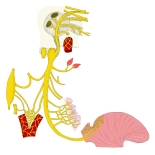
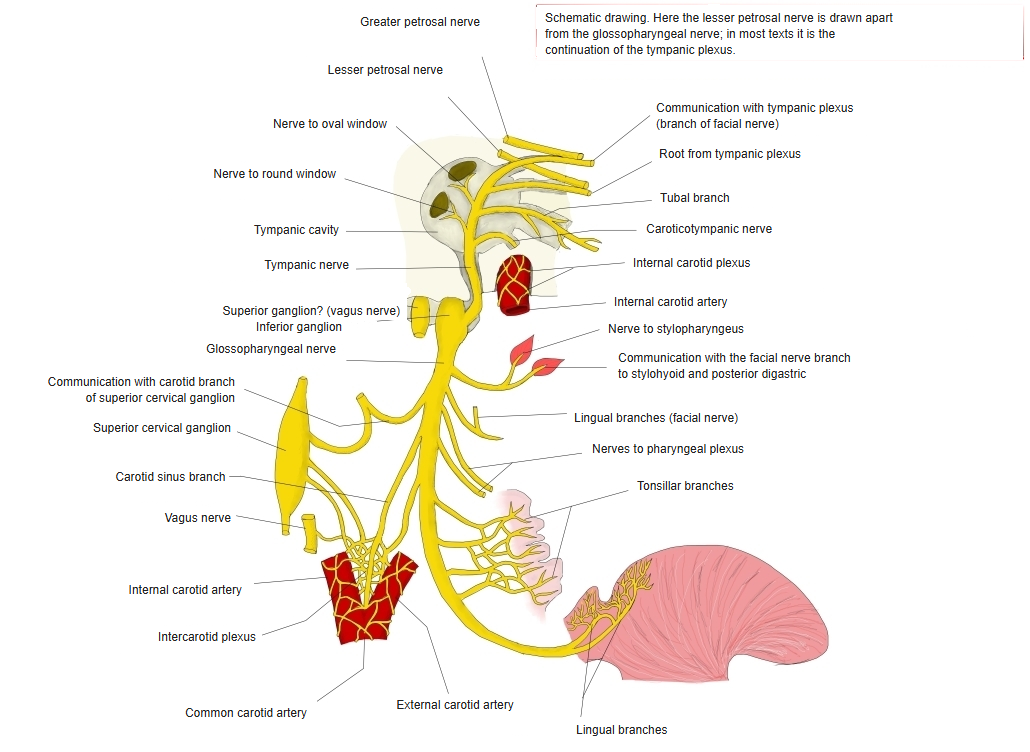
Glossopharyngeal nerve and its branches (schematic) 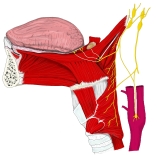
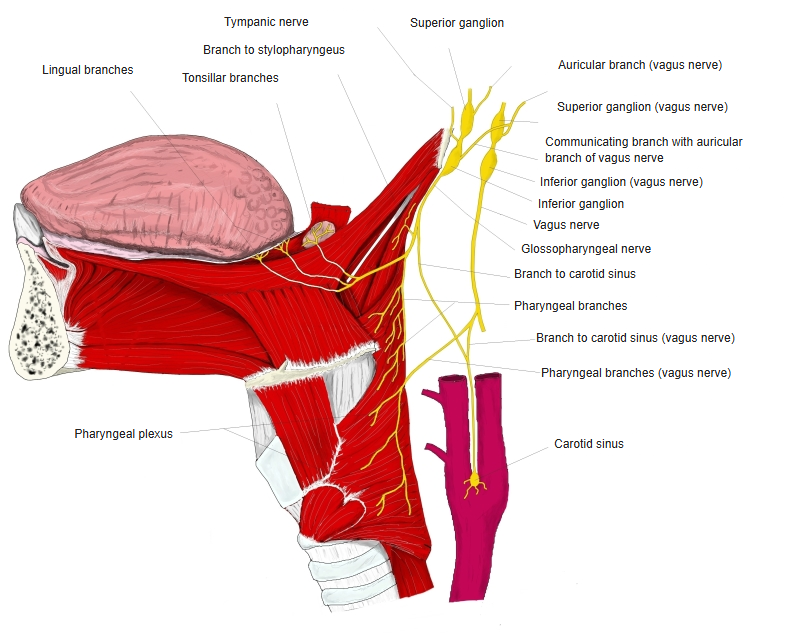
Glossopharyngeal and vagus nerves in the neck
Origin
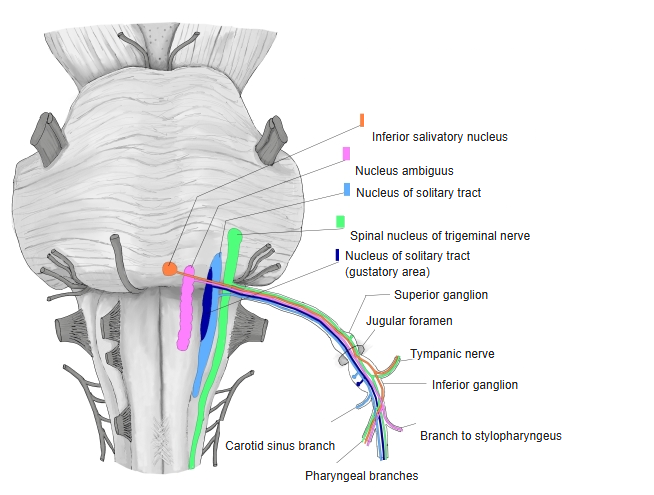
- Leaves the medulla in the uppermost part of the groove between the olive and the inferior cerebellar peduncle.
| Fibres | Nucleus or ganglion |
|---|---|
| Motor | Nucleus ambiguus (with the vagus nerve) |
| Sensory | Superior and inferior ganglia |
| Parasympathetic | Inferior salivatory nucleus |
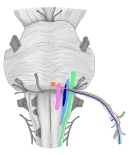
Nuclei and course of the glossopharyngeal nerve
Course
- Leaves the skull through the front part of the jugular foramen with the vagus nerve; forms the superior ganglion in the foramen and the inferior ganglion just below it.
- Descends between the internal jugular vein and the internal carotid artery, then between the artery and stylopharyngeus.
- Curves forwards on the lateral side of stylopharyngeus and divides into terminal branches near the root of the tongue.
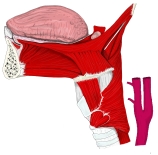
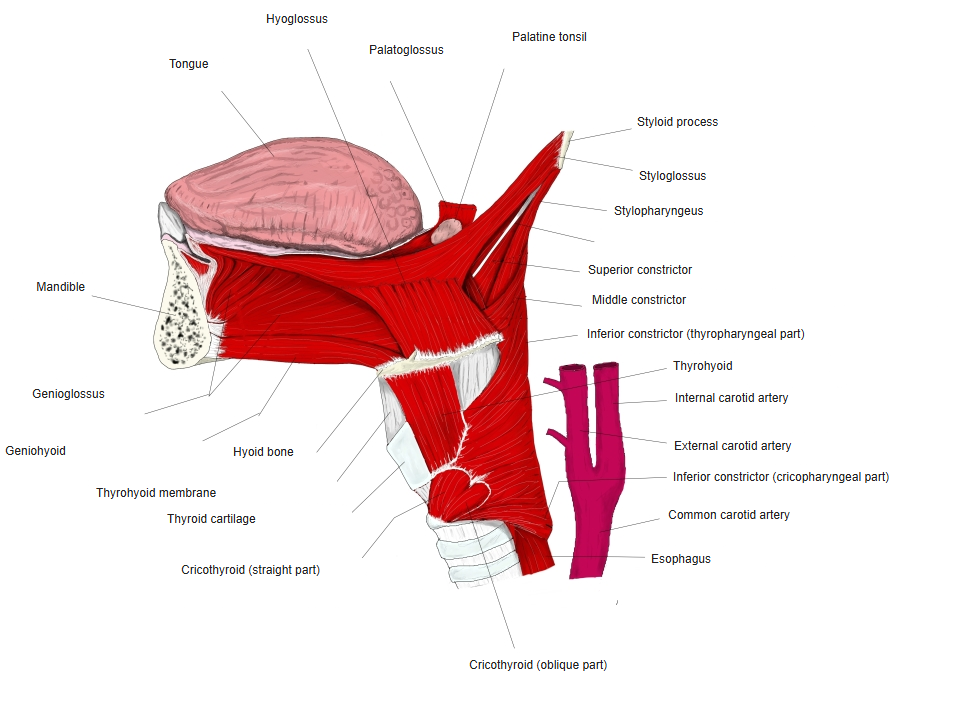
Muscles of the pharynx and tongue (lateral view) 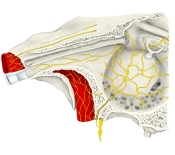
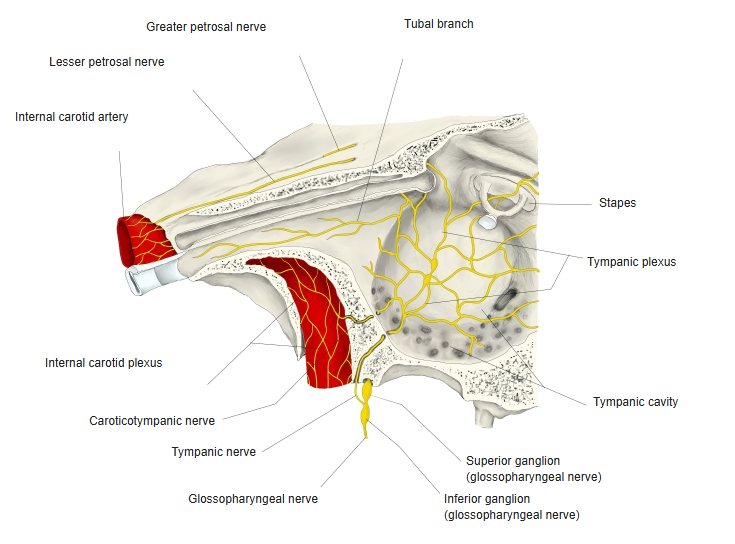
Tympanic plexus and glossopharyngeal nerve
Branches
| Branch | Supply |
|---|---|
| Tympanic nerve | Tympanic plexus; continues as the lesser petrosal nerve to the otic ganglion (parotid gland) |
| Carotid sinus branch | Carotid sinus and carotid body |
| Pharyngeal branches | Pharyngeal plexus |
| Stylopharyngeal branch | Stylopharyngeus |
| Tonsillar branches | Palatine tonsil, soft palate |
| Lingual branches | Taste and sensation of the back third of the tongue |
Communications
| Nerve | Connection |
|---|---|
| Vagus nerve | A branch from the inferior ganglion joins the auricular branch of the vagus |
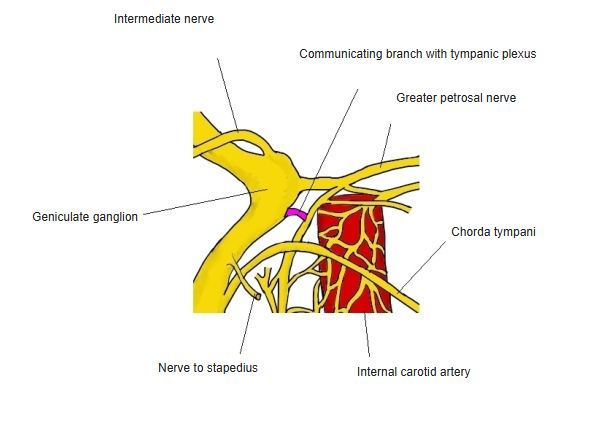
| Facial nerve | Through the tympanic plexus and the communicating branch |
| Lingual nerve | The lingual branches join it in the tongue |
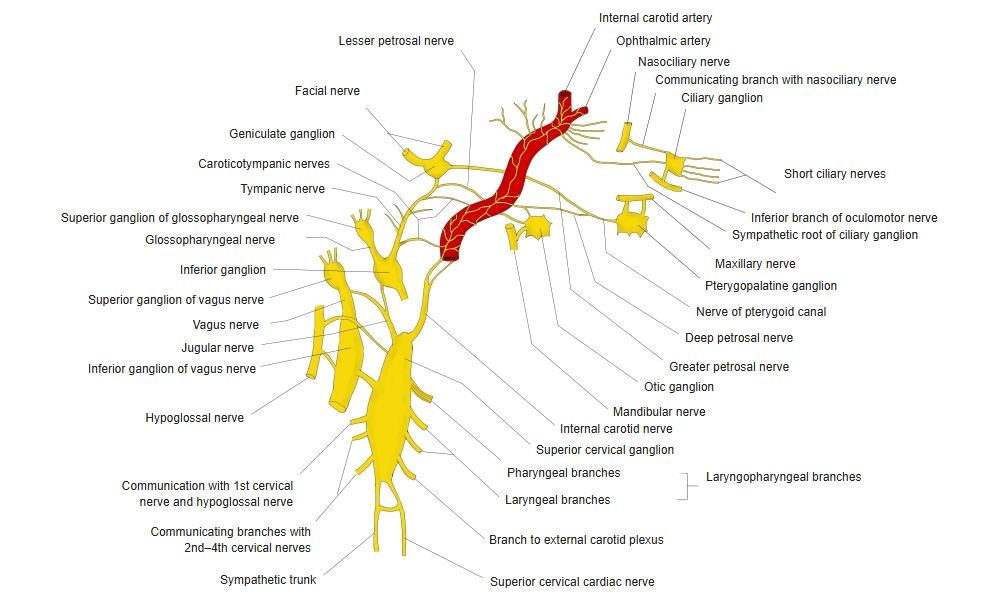
| Sympathetic | Caroticotympanic nerves from the superior cervical ganglion to the tympanic plexus |
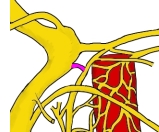
Communicating branch of the geniculate ganglion with the tympanic plexus 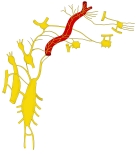
Cervical sympathetic trunk and the head (schematic) 
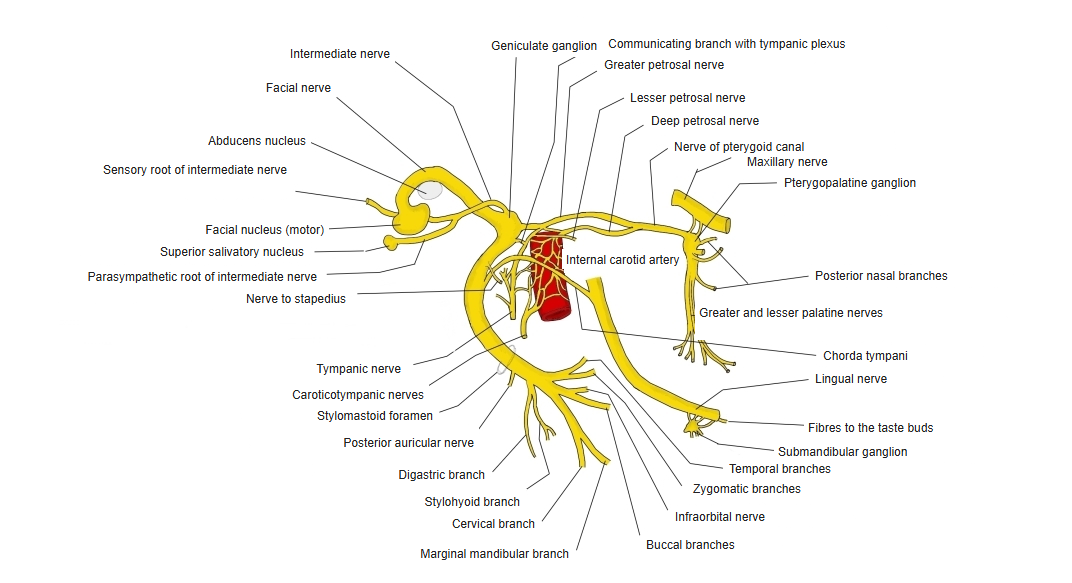
Facial nerve: nuclei and branches
References and sources
- Further reading: Glossopharyngeal nerve, Wikipedia.