Latin: musculus tensor tympani
Overview
- One of the two muscles of the auditory ossicles (with the stapedius), and the larger of the two.
- Fusiform; it lies in a bony canal above the bony part of the auditory tube.
- Its length is not stated in the sources used; compared with the stapedius (about 1 mm) it appears to be roughly 1–2 cm long.
- Develops from the first pharyngeal arch.
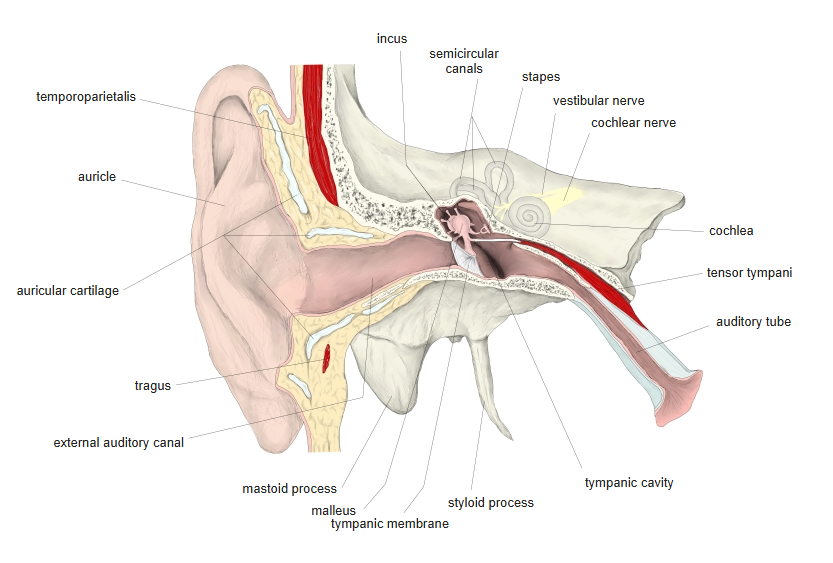
Illustrations
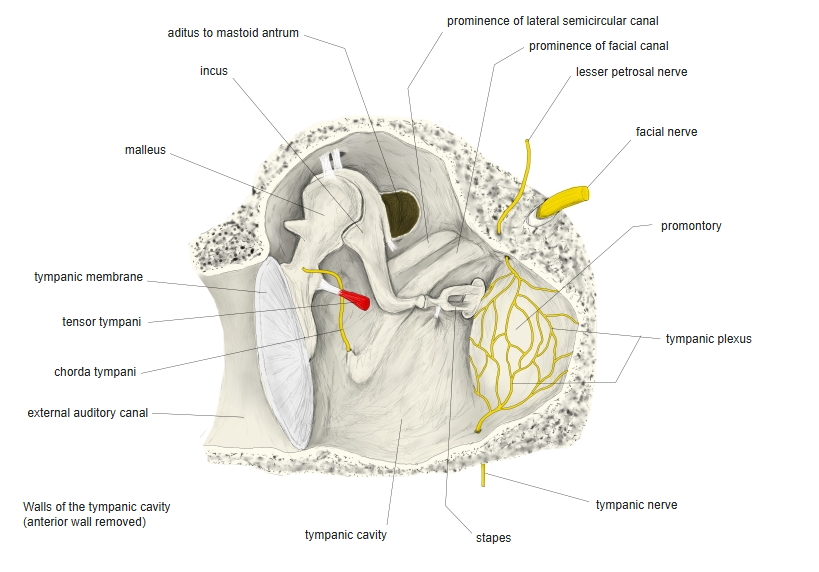
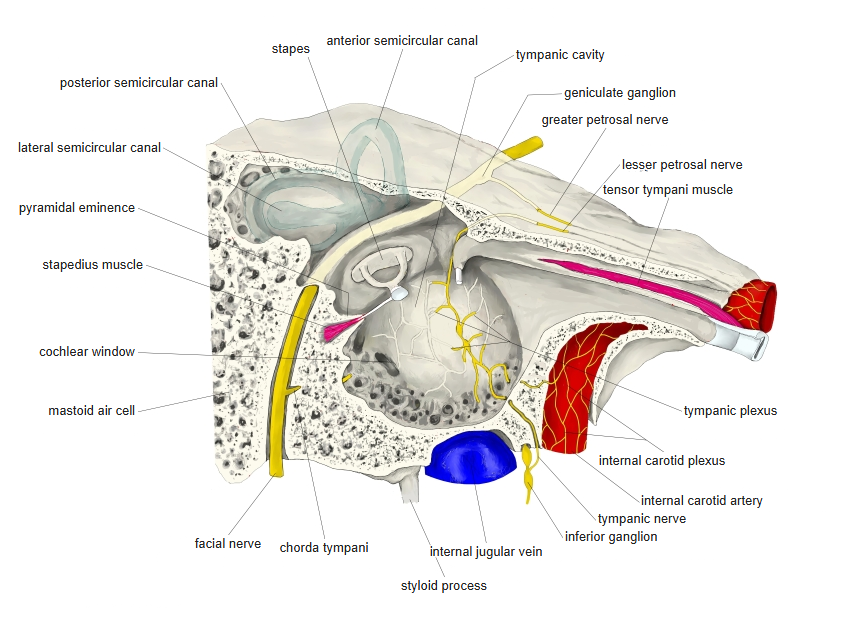
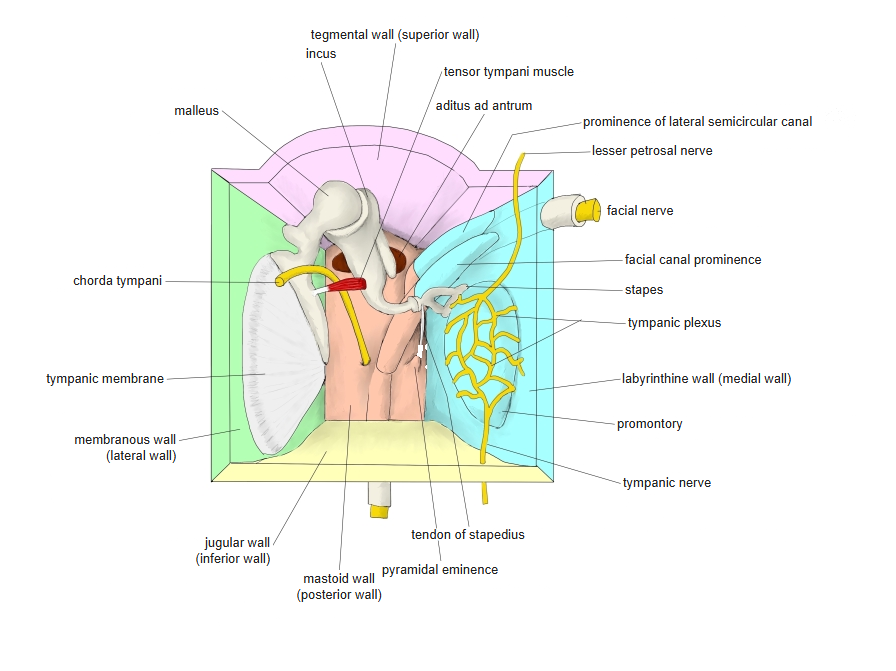
Origin / insertion
- Origin: wall of its bony canal, the (cartilaginous) auditory tube and the region of the sphenopetrosal fissure (adjoining greater wing of the sphenoid)
- Runs backward and laterally in its semicanal; the small tendon turns laterally around the cochleariform process and enters the tympanic cavity.
- Insertion: medial side of the base of the handle of the malleus (near the neck)
Action
- Pulls the handle of the malleus toward the tympanic cavity (medially) and tenses the tympanic membrane
- Sources differ: it raises the sensitivity of sound conduction, or damps vibration of the ossicles (e.g. noise from chewing)
Innervation
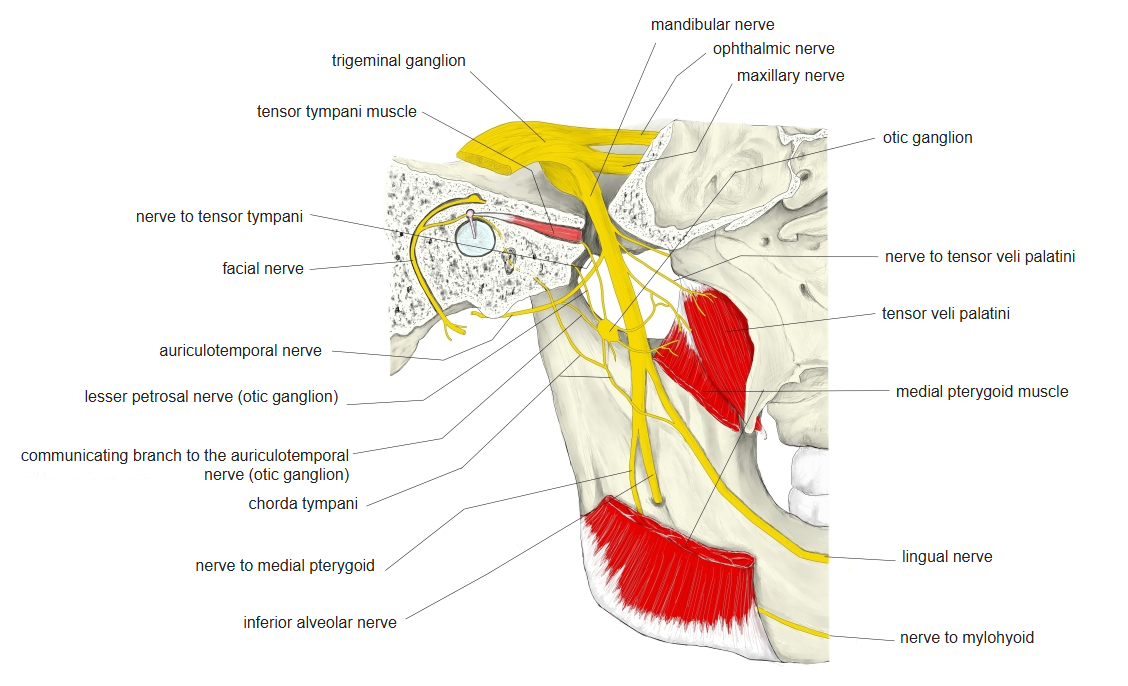
- Nerve to tensor tympani, from the motor root of the trigeminal nerve (mandibular nerve)
Blood supply
- Not stated in the sources used here.
Related terms
- Muscles of the auditory ossicles
- Stapedius
- Malleus
- Tympanic membrane
- Tympanic cavity
- Auditory tube
- Mandibular nerve
References and sources
- Further reading: Tensor tympani muscle, Wikipedia.