Latin: rami pharyngei nervi glossopharyngei
Overview
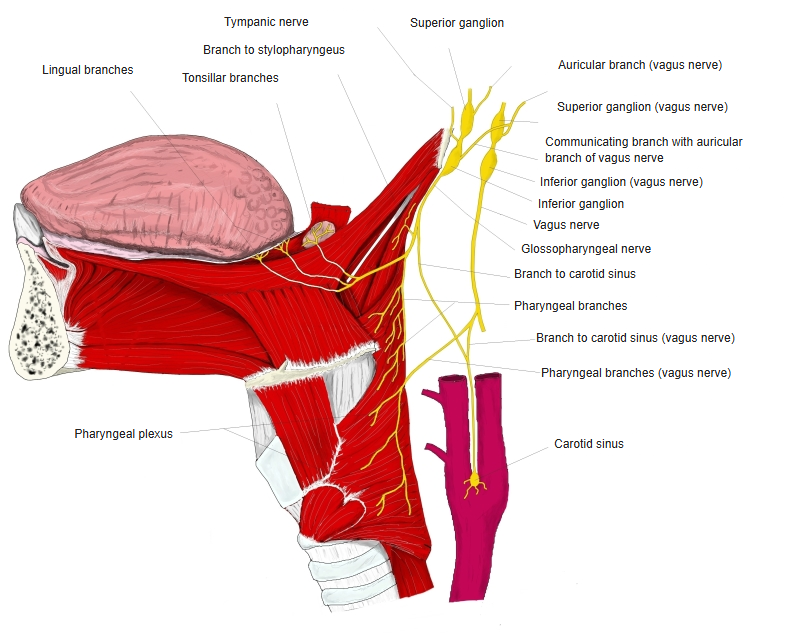
- Two or three branches that leave the glossopharyngeal nerve at various levels and go to the side wall of the pharynx.
- There they join the pharyngeal branches of the vagus nerve and the sympathetic trunk to form the pharyngeal plexus.
- They are mainly sensory to the pharyngeal mucosa; the motor supply of the palate (levator veli palatini, musculus uvulae, palatoglossus, palatopharyngeus) runs through the plexus.
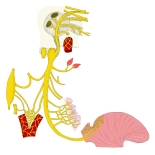
Glossopharyngeal nerve and its branches (schematic)
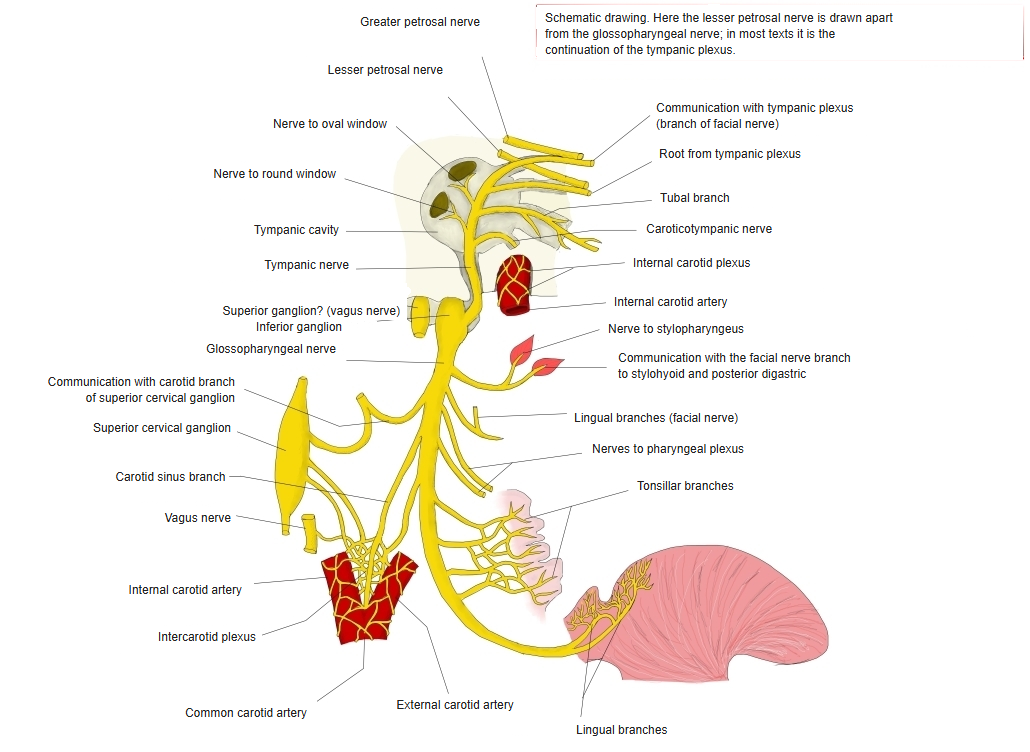
Pharyngeal plexus
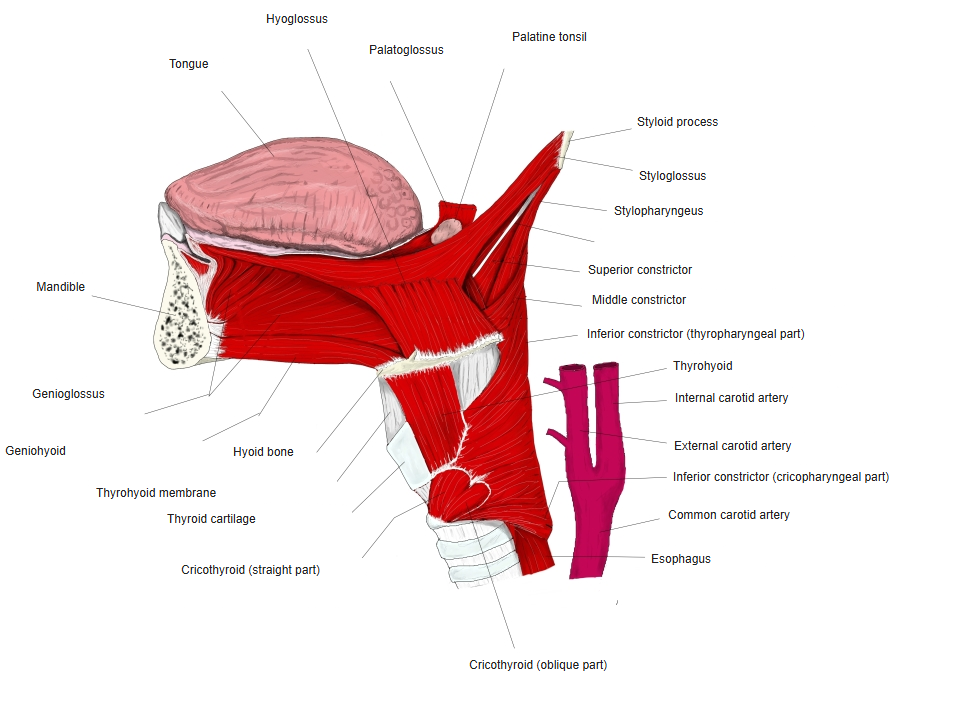
- The plexus supplies the muscles of the pharynx and soft palate (except stylopharyngeus and tensor veli palatini) and the pharyngeal mucosa.
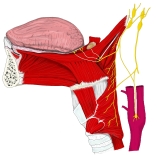
Glossopharyngeal and vagus nerves in the neck 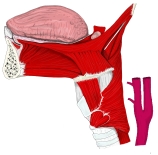
Muscles of the pharynx and tongue (lateral view)
References and sources
- Further reading: Pharyngeal branches of glossopharyngeal nerve, Wikipedia.