Latin: papillae filiformes
Overview
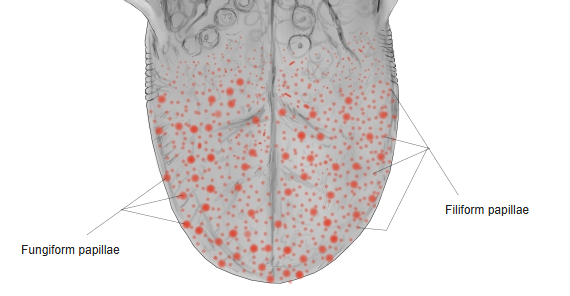
- The most numerous lingual papillae, covering the whole dorsum of the anterior two-thirds of the tongue.
- Slender conical threads in rows roughly parallel to the terminal sulcus.
- Their tips are keratinized, giving the tongue its velvety, whitish surface.
- They have no taste buds; they serve touch and help to grip and move food.
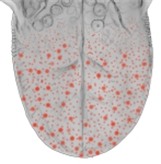
Filiform and fungiform papillae 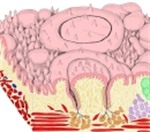
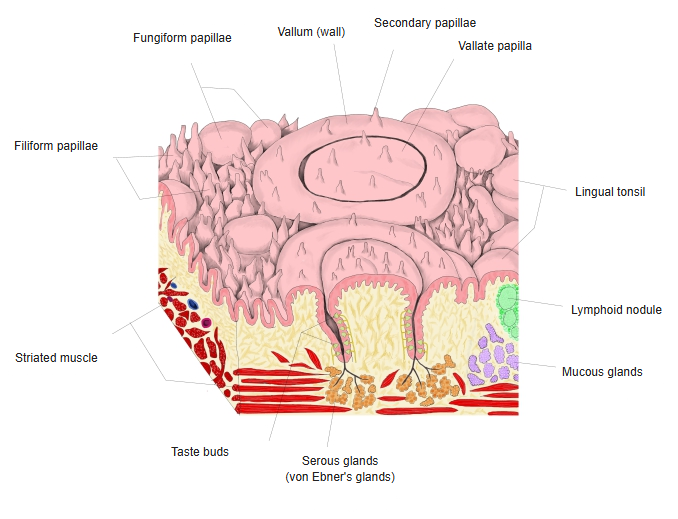
Lingual papillae (block diagram)
Clinical notes
- When the keratinized tips grow long and collect debris and microbes, they form a coating on the tongue (furred tongue).
- Loss of filiform papillae makes the tongue smooth and red (atrophic glossitis), for example in iron or vitamin B12 deficiency.
References and sources
- Further reading: Filiform papillae, Wikipedia.