Latin: papillae vallatae
Overview
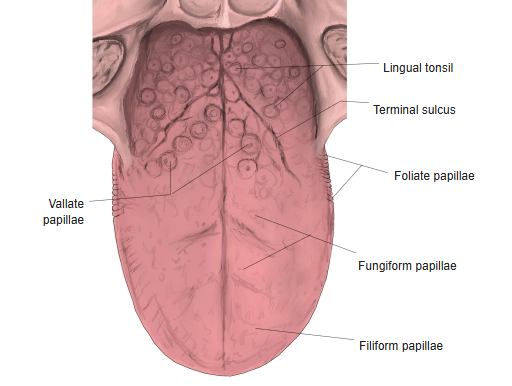
- The largest lingual papillae (1–3 mm across), usually 8–12 in number.
- Arranged in a V-shaped row just in front of the terminal sulcus, at the border between the body and the root of the tongue.
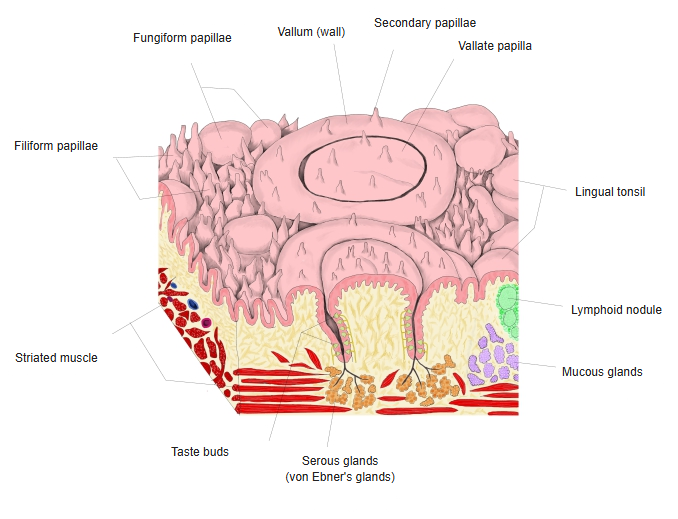
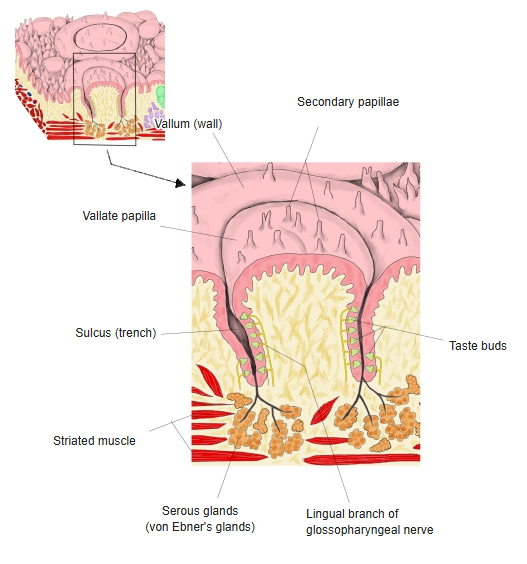
- Each is sunk in the mucosa and surrounded by a circular trench and an outer wall (vallum).
- Also called circumvallate papillae.
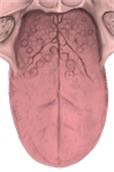
Dorsum of the tongue 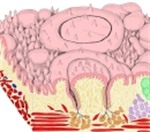
Lingual papillae (block diagram)
Structure
- Many taste buds lie in the epithelium of the side wall facing the trench.
- Serous glands (von Ebner glands) open into the bottom of the trench; their secretion rinses the trench so that new substances can be tasted.
- Taste and general sensation: glossopharyngeal nerve.
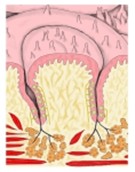
Vallate papilla, section
References and sources
- Further reading: Vallate papillae, Wikipedia.