Latin: nervi thoracici
Overview
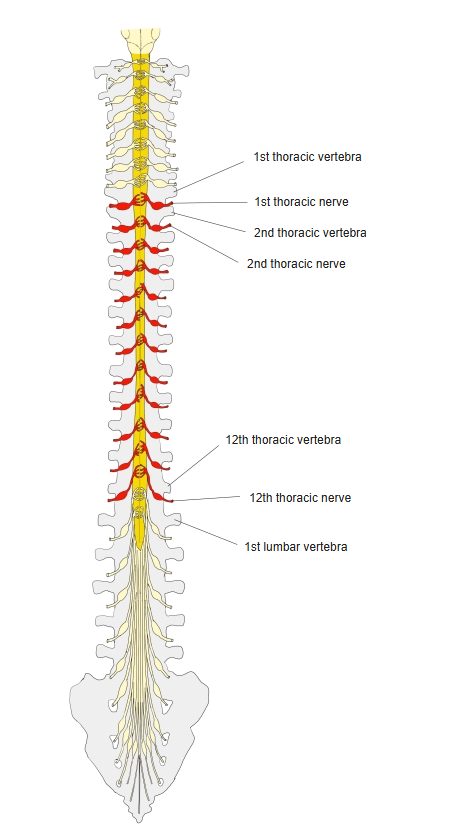
- 12 pairs of spinal nerves (T1–T12); each leaves below the thoracic vertebra of the same number (T12 between T12 and L1).
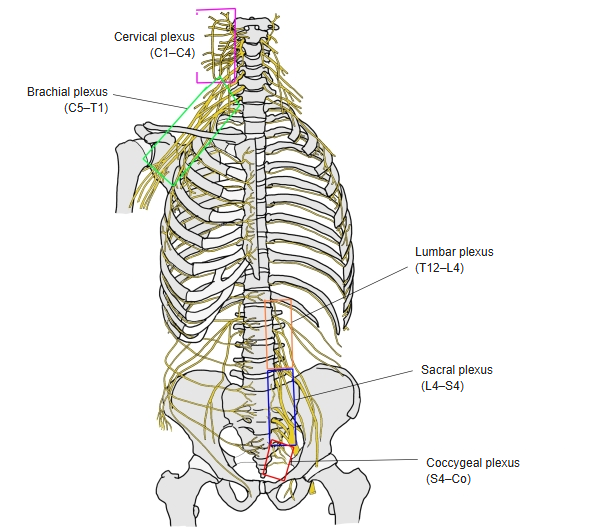
- Unlike the other spinal nerves, their ventral rami (except T1 and T12) do not form plexuses: they run in the intercostal spaces as the intercostal nerves.
- Most of T1 joins the brachial plexus; only a small branch runs in the first intercostal space.
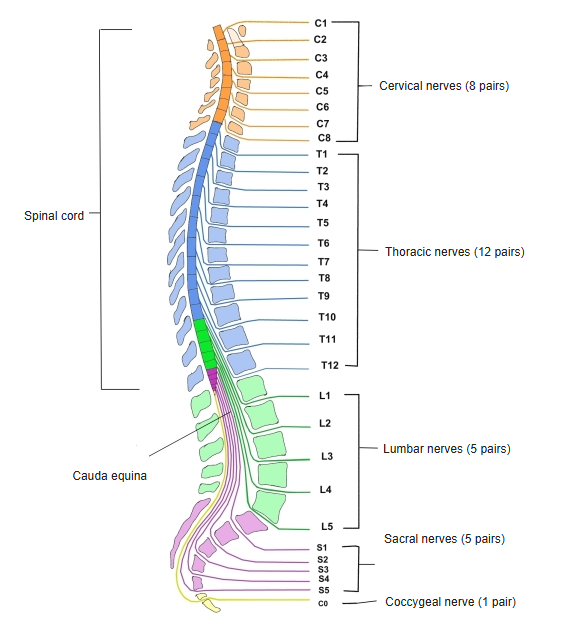
Spinal nerves (side view) 
Thoracic nerves and vertebrae
Ventral rami
- T1–T11: the intercostal nerves; T12: the subcostal nerve.
Plexuses of the spinal nerves
Dorsal rami
- Each divides into a medial and a lateral branch to the deep back muscles and the skin of the back.
- Medial branches: the upper six run between semispinalis and multifidus and pierce rhomboid and trapezius to the skin near the spinous processes; the lower six supply mainly multifidus and longissimus.
- Lateral branches: larger lower down; they run through or under longissimus to the border with iliocostalis.
- The lower five or six lateral branches give cutaneous branches through serratus posterior inferior and latissimus dorsi near the angles of the ribs; the last one crosses the iliac crest to the skin of the buttock.
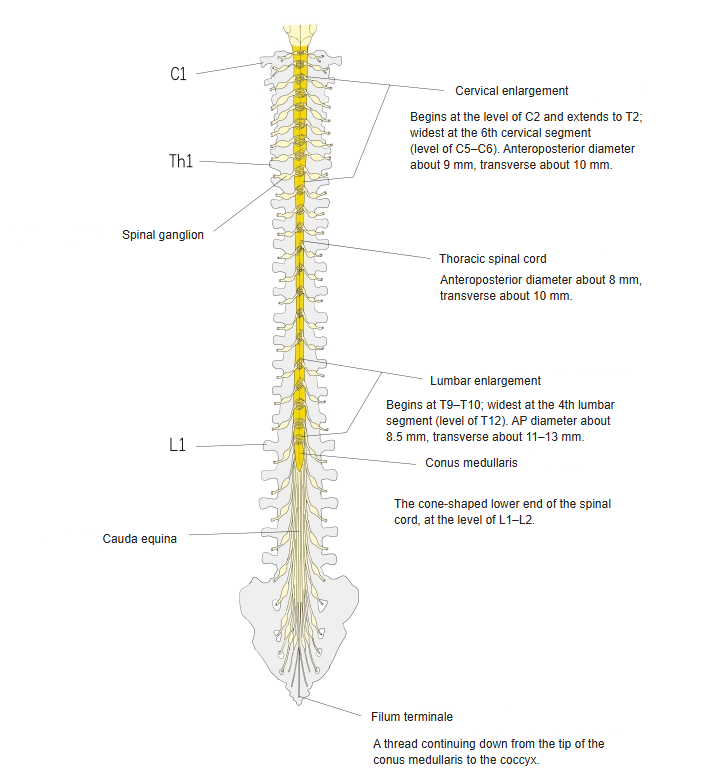
Spinal cord and its levels
References and sources
- Further reading: Thoracic nerves, Wikipedia.