Latin: Arteria occipitalis
Overview
- A posterior branch of the external carotid artery.
- Supplies the back of the scalp, the muscles at the back of the neck, the sternocleidomastoid and the mastoid area.
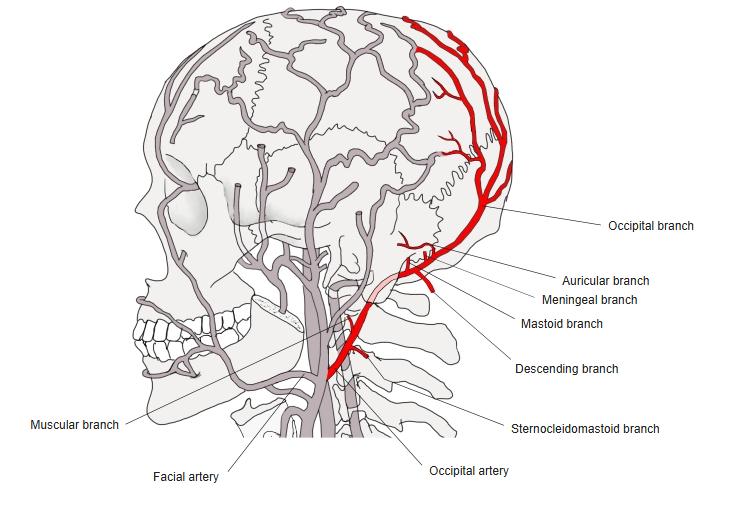
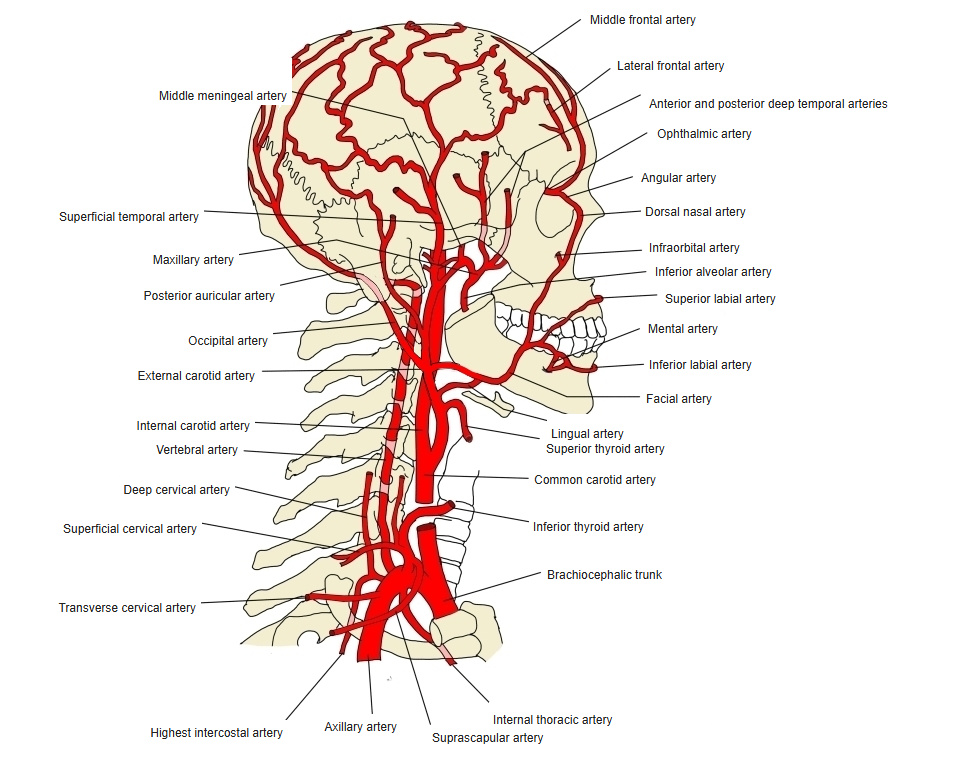
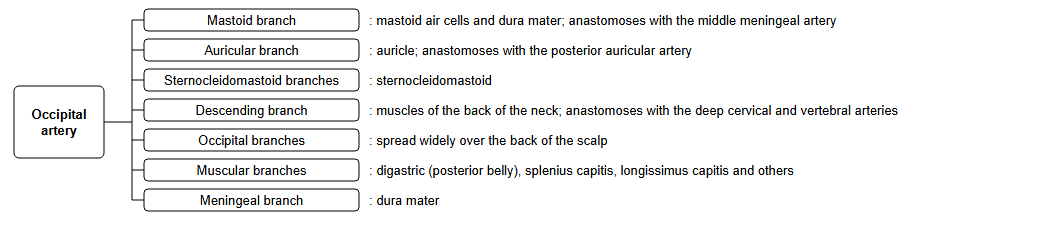
- The points where its branches arise vary between individuals and between illustrations.
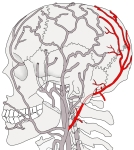
Occipital artery and its branches

Origin
- Arises from the back of the external carotid artery, about at the level of the facial artery.
Course
- Runs backward along the lower border of the posterior belly of the digastric, crossing the internal carotid artery and the hypoglossal nerve.
- Passes in the occipital groove of the temporal bone (medial to the mastoid process), then pierces the fascia between the trapezius and sternocleidomastoid to reach the scalp.
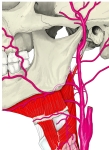
Arteries of the face and neck 
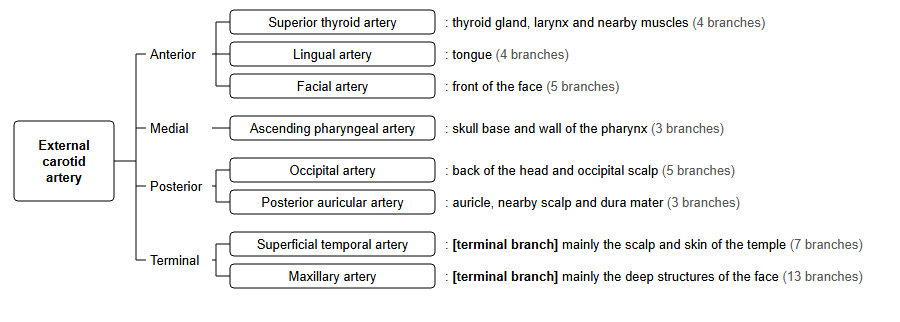
Branches of the external carotid artery (front view) 
Arteries of the head and neck
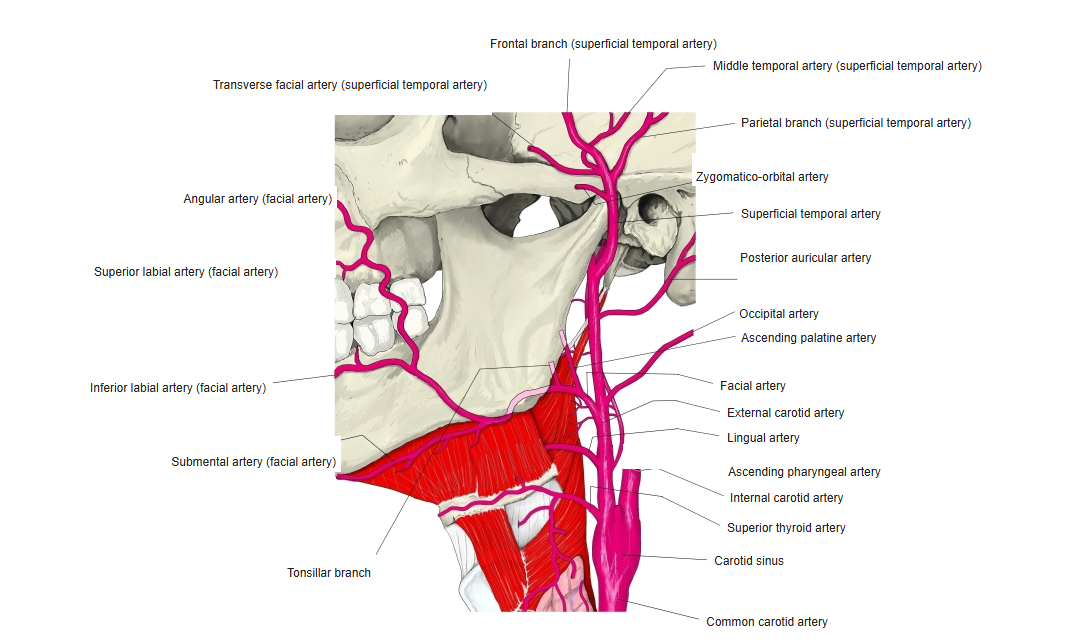
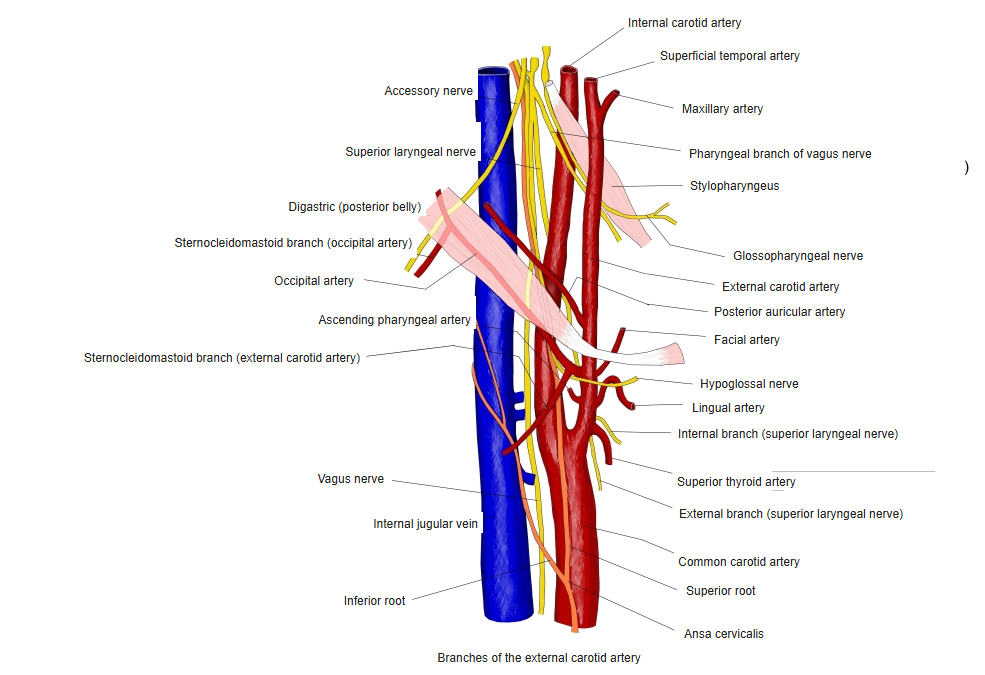
Branches
Clinical notes
- Its descending branch anastomoses with the deep cervical and vertebral arteries, providing a collateral route when the carotid or subclavian arteries are blocked.
References and sources
- Further reading: Occipital artery, Wikipedia.