Latin: musculus subscapularis
Overview
- One of the muscles of the shoulder girdle and the largest of the four rotator cuff muscles (with the supraspinatus, infraspinatus and teres minor).
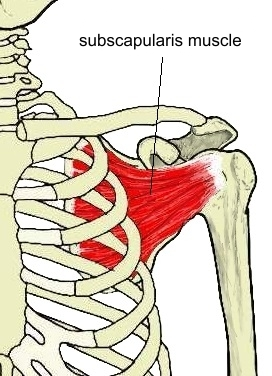
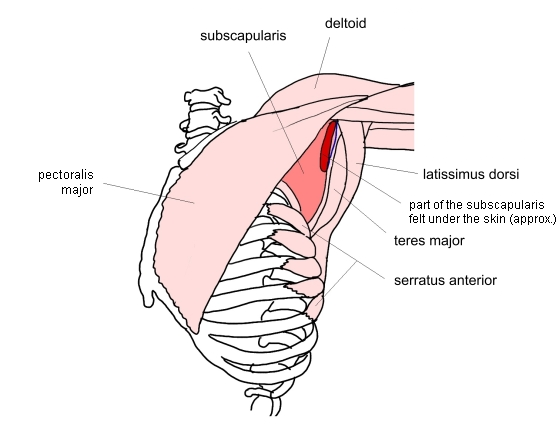
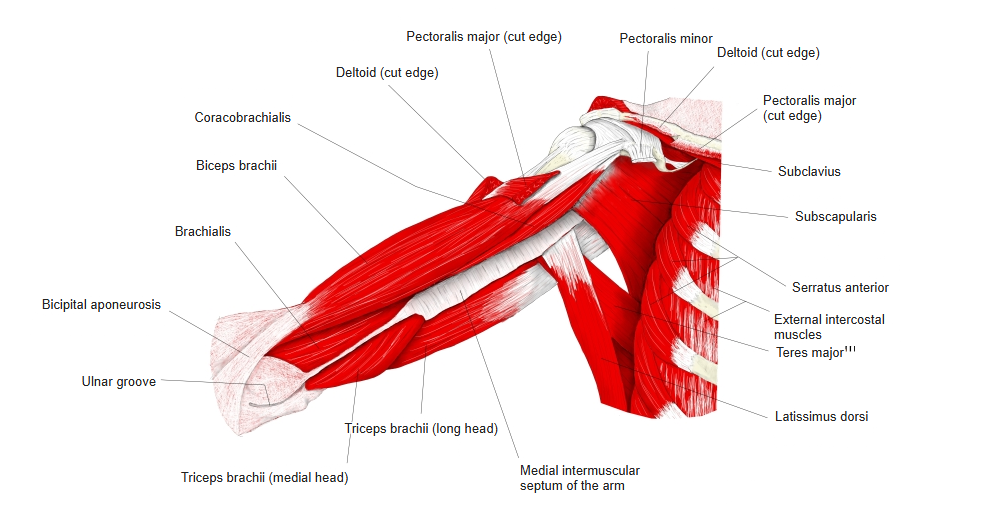
- A large, triangular, multipennate muscle filling the subscapular fossa on the front of the scapula.
- The belly is thick, with a cord-like tendon in its middle, although the muscle looks flat at first sight.
- Its tendon is separated from the neck of the scapula by a large bursa that opens into the shoulder joint; another bursa separates the muscle from the serratus anterior.
- Connected to the supraspinatus.
Position in the classification
Upper Limb › Shoulder girdle
Illustrations
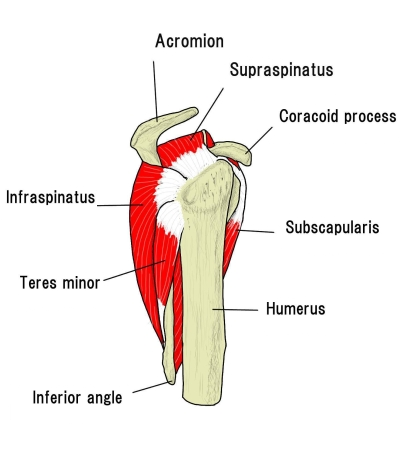
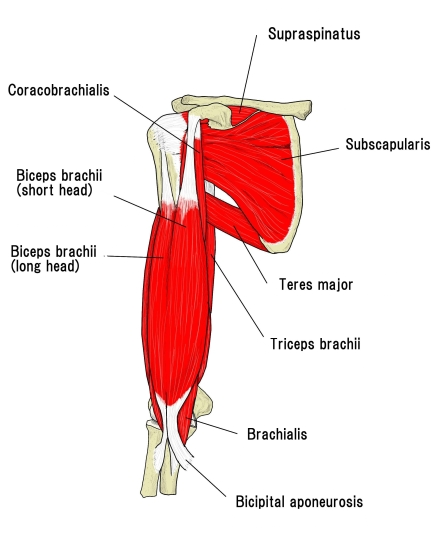
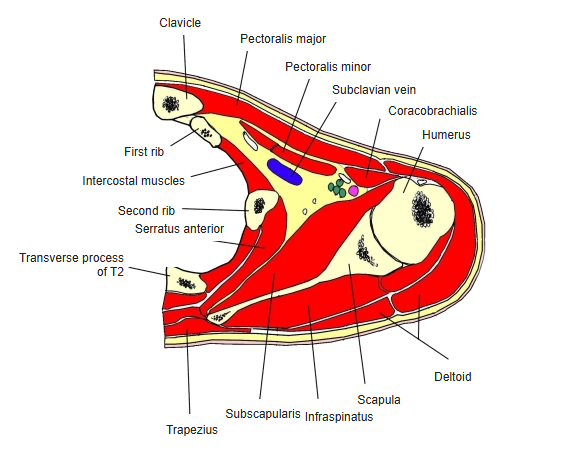
Origin / insertion
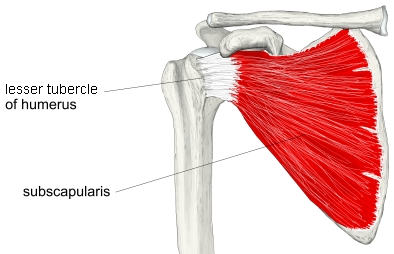
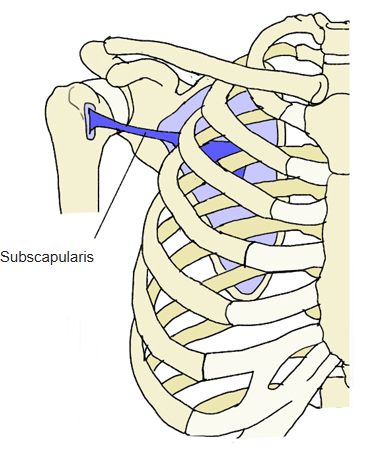
- Origin: subscapular fossa of the scapula (medial two-thirds) and the subscapular fascia; some fibres from tendinous sheets attached to ridges on the bone
- Insertion: lesser tubercle and crest of the lesser tubercle of the humerus; front of the capsule of the shoulder joint
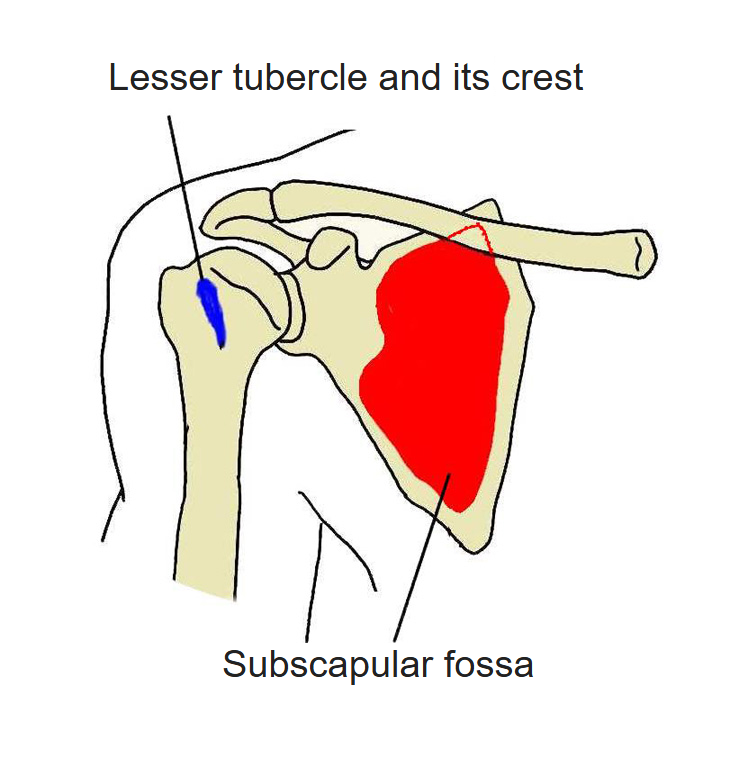
Action
- Rotates the arm medially (internal rotation of the humerus)
- Adducts the arm; with the arm raised, draws the humerus forward and down
- Guards the front of the shoulder joint and keeps the head of the humerus in place
Innervation
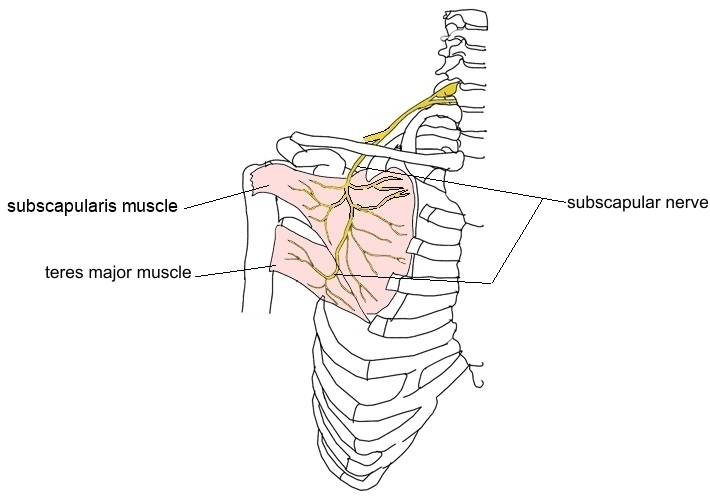
- Upper and lower subscapular nerves (C5–C6), from the posterior cord of the brachial plexus
Blood supply
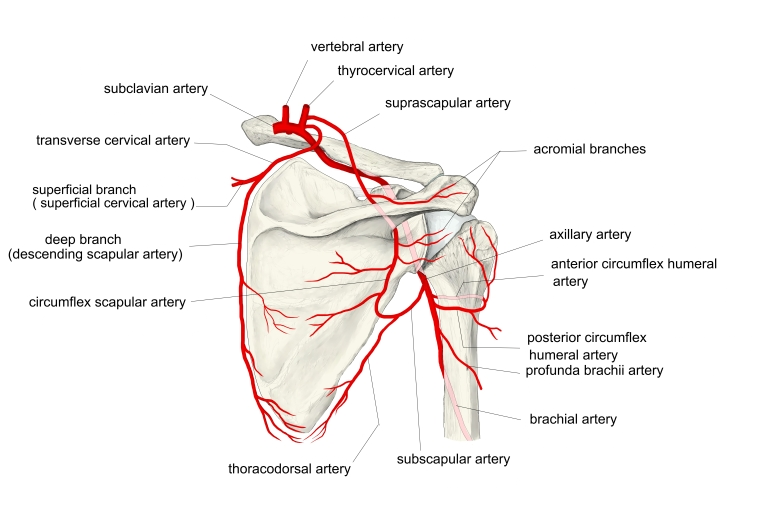
- Circumflex scapular artery
Anatomical variations
- May be divided into an upper and a lower part, or into several (usually two) separate bundles
- An accessory bundle, the subscapularis minor, may arise from the lateral border of the scapula, the infraglenoid tubercle or the long head of the triceps brachii and insert on the crest of the lesser tubercle
The name "subscapularis minor" is rarely used today.
Related terms
- Rotator cuff
- Supraspinatus
- Infraspinatus
- Teres minor
- Subscapular fossa
- Lesser tubercle
- Subscapular nerve
References and sources
- Further reading: Subscapularis muscle, Wikipedia.