Latin: nervus oculomotorius
Overview
- The third cranial nerve (III); motor to most extraocular muscles, with parasympathetic fibres for the pupil and lens.
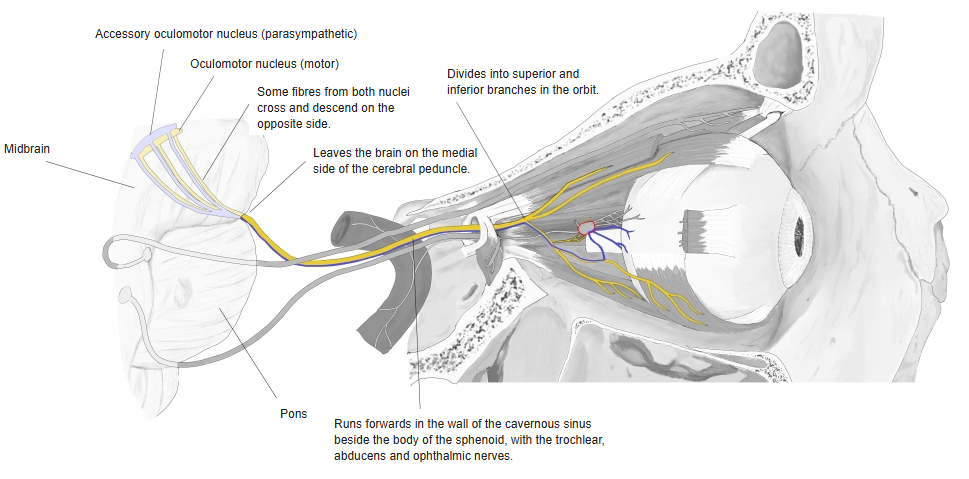
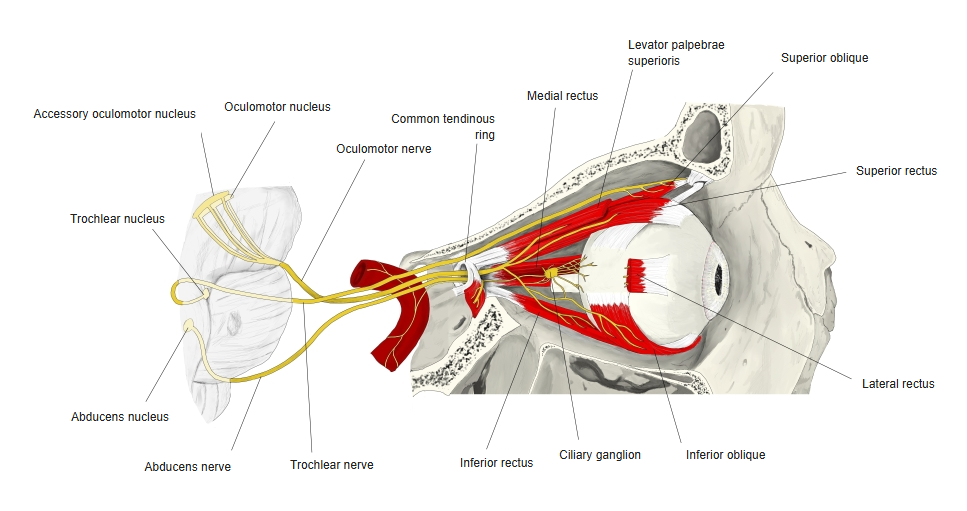
- Leaves the midbrain in the interpeduncular fossa, runs in the lateral wall of the cavernous sinus and enters the orbit through the superior orbital fissure, inside the common tendinous ring.
- Divides into a superior and an inferior branch.
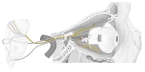
Course of the oculomotor nerve 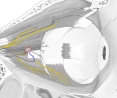
Branches of the oculomotor nerve
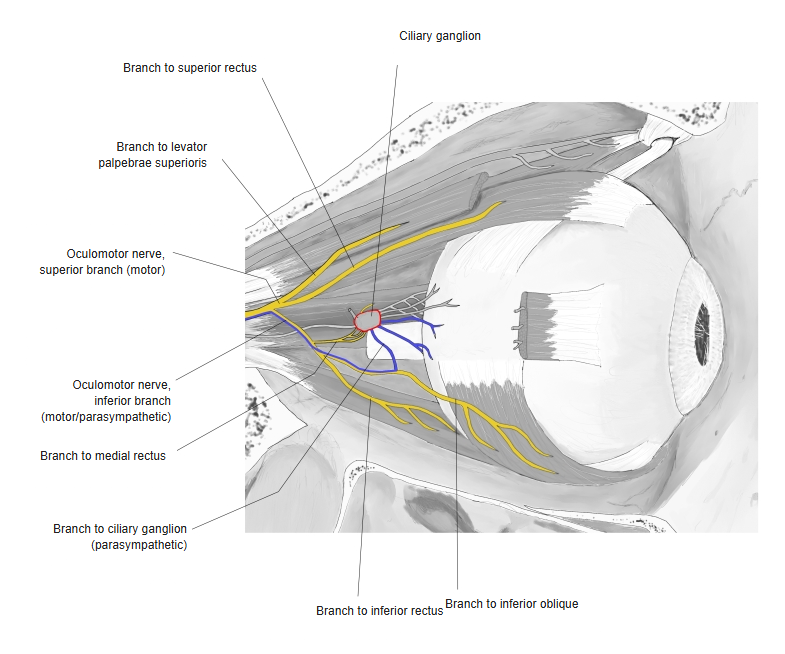
Branches
| Branch | Supply |
|---|---|
| Superior branch | Superior rectus, levator palpebrae superioris |
| Inferior branch | Medial rectus, inferior rectus, inferior oblique |
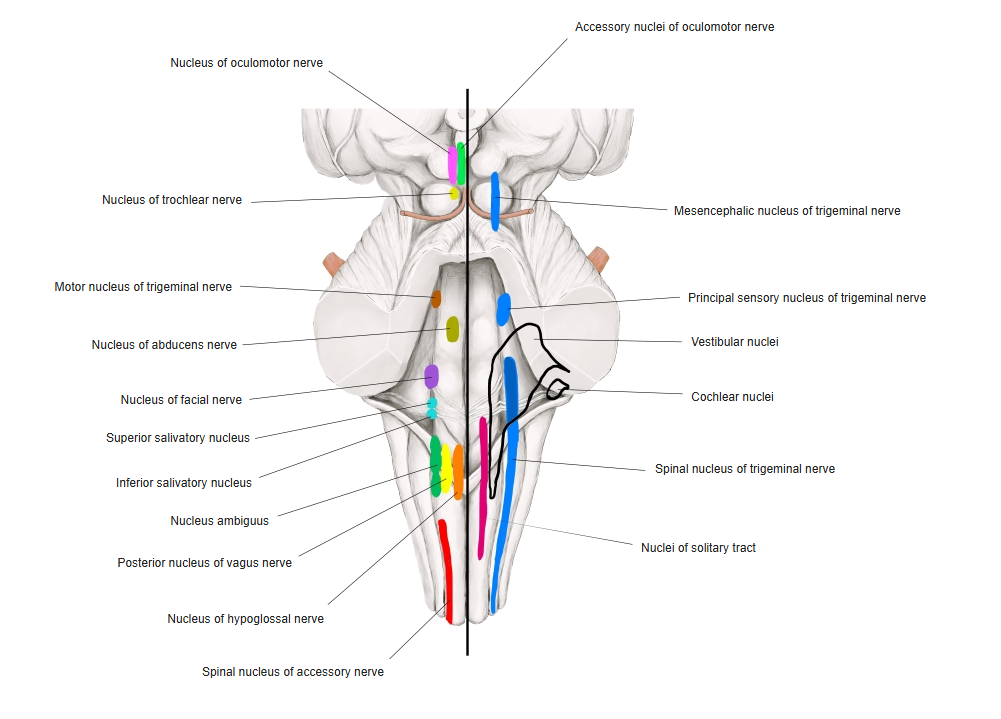
| Parasympathetic root of ciliary ganglion | From the accessory (Edinger–Westphal) nucleus via the inferior branch; after synapse in the ciliary ganglion, the short ciliary nerves go to the sphincter pupillae and ciliary muscle |
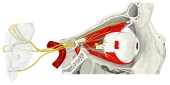
Nerves to the extraocular muscles 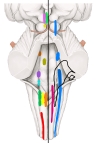
Cranial nerve nuclei in the brainstem
References and sources
- Further reading: Oculomotor nerve, Wikipedia.