Latin: Arteria ulnaris
Overview
- The larger of the two terminal branches of the brachial artery; it runs down the medial (little finger) side of the forearm.
- In the palm it forms most of the superficial palmar arch.
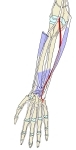
Course of the ulnar artery 
Arteries of the upper limb 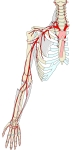
Arteries of the upper limb and their branches
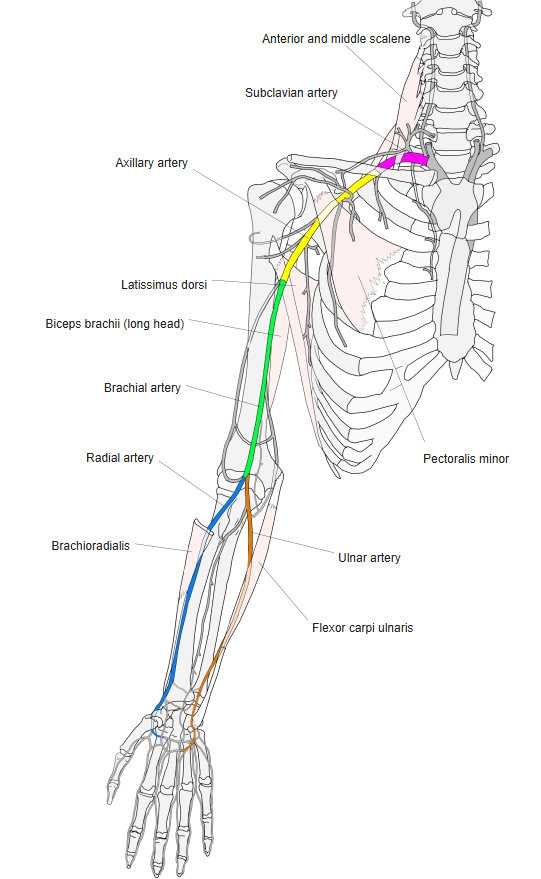
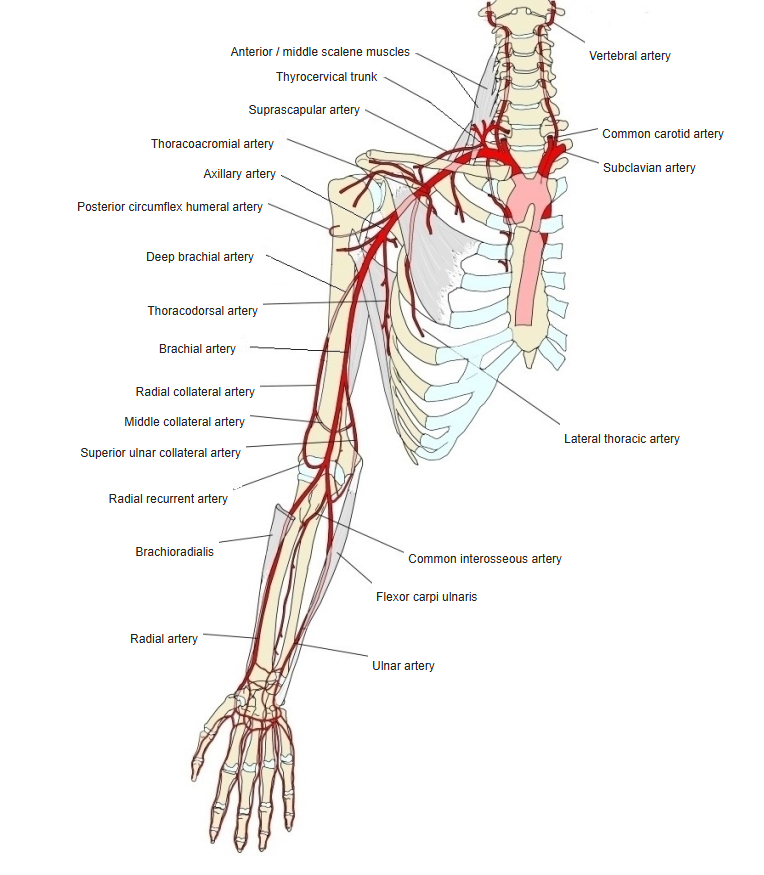
Course
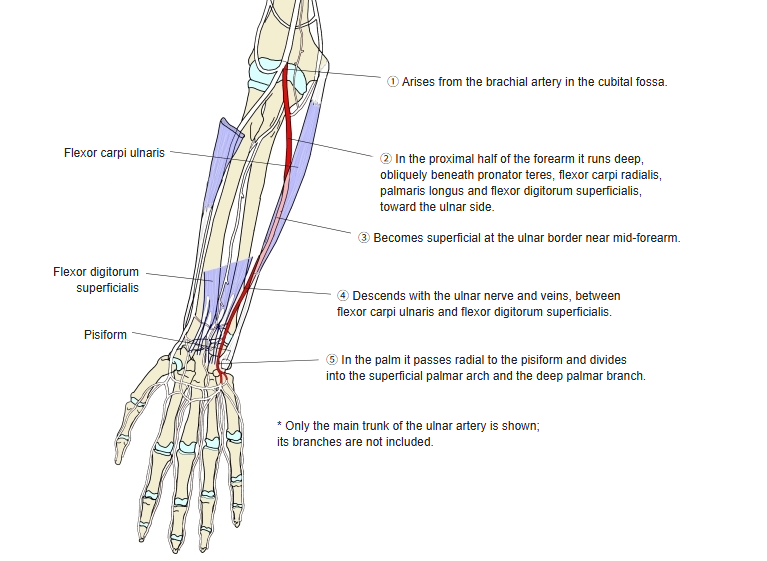
- Begins in the cubital fossa and runs obliquely downward and medially, deep to the pronator teres and the superficial flexor muscles.
- In the lower two-thirds of the forearm it runs with the ulnar nerve under the flexor carpi ulnaris.
- At the wrist it passes in front of the flexor retinaculum, on the radial side of the pisiform (ulnar canal), and divides into the superficial palmar arch and the deep palmar branch.
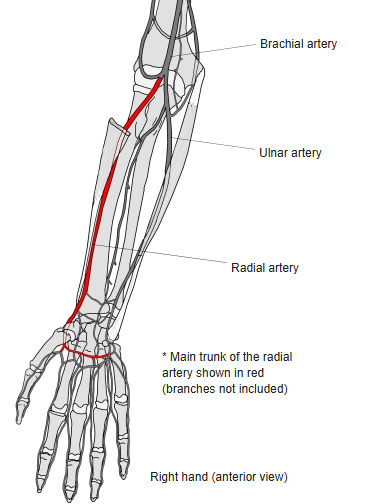
- The radial artery runs on the opposite (lateral) side of the forearm.
Radial artery
Branches
| Branch | Course / supply |
|---|---|
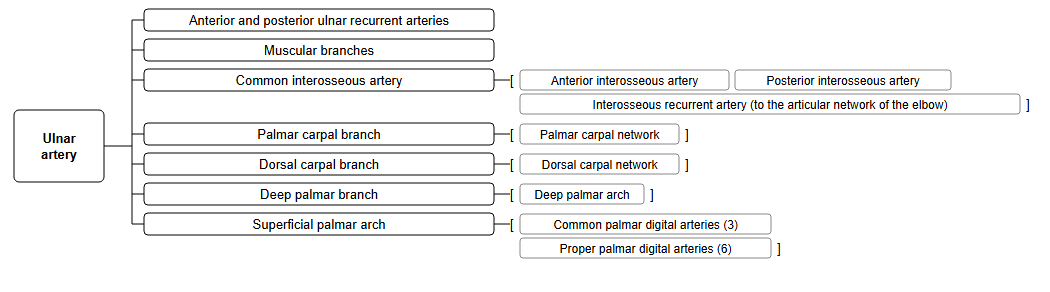
| Anterior and posterior ulnar recurrent arteries | Up to the articular network of the elbow |
| Common interosseous artery | Divides into the anterior and posterior interosseous arteries; the posterior gives the interosseous recurrent artery |
| Muscular branches | Muscles of the medial forearm |
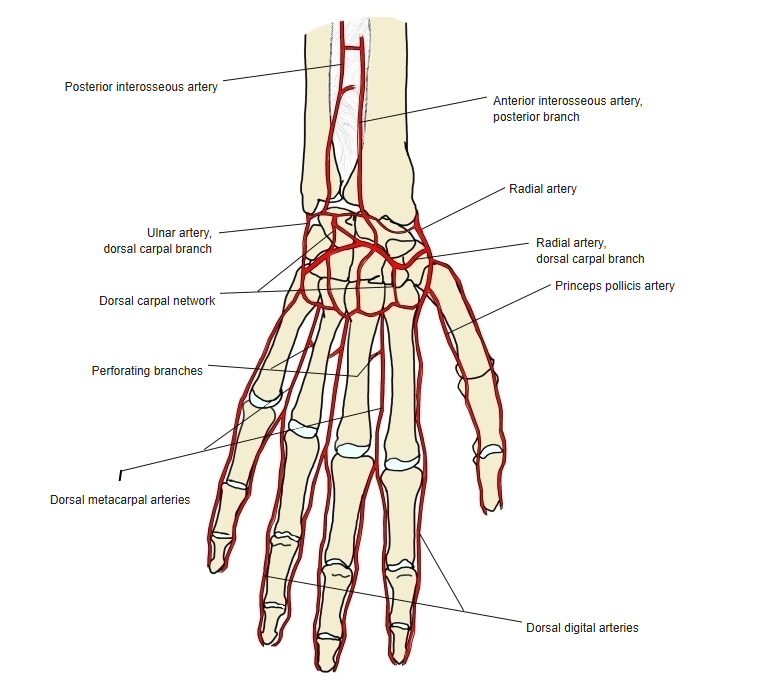
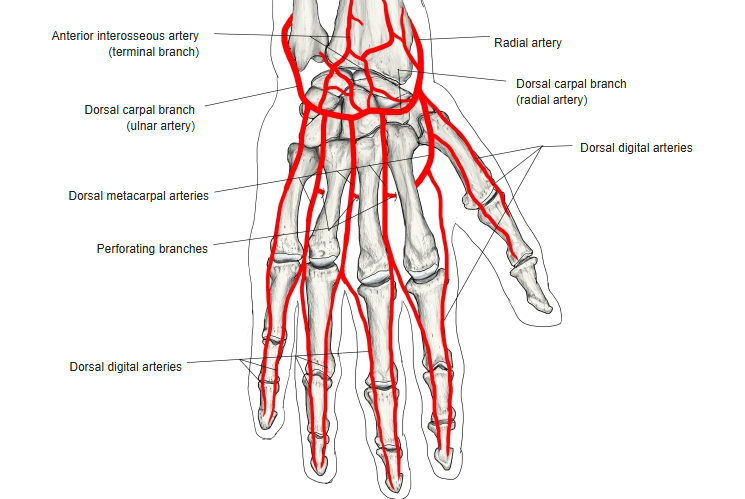
| Palmar and dorsal carpal branches | To the palmar and dorsal carpal networks |
| Deep palmar branch | Completes the deep palmar arch |
| Superficial palmar arch | Terminal part in the palm |
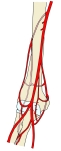
Articular network of the elbow 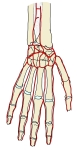
Arteries of the back of the hand 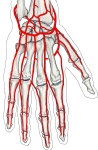
Dorsal metacarpal and digital arteries
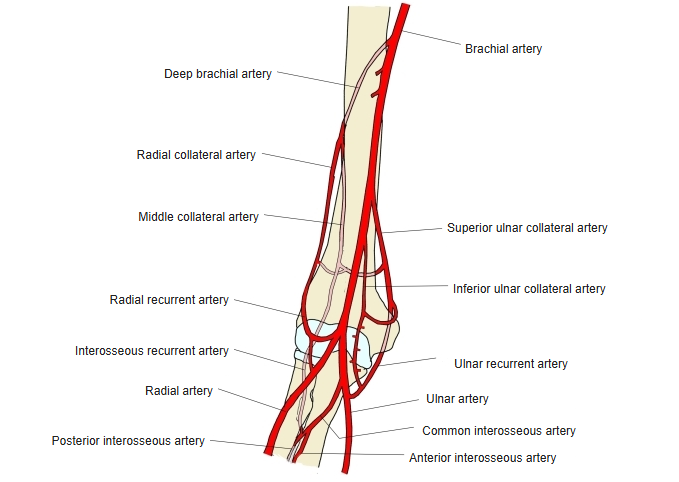
Clinical notes
- The Allen test checks that the ulnar artery alone can supply the hand before the radial artery is punctured or used for a graft.
References and sources
- Further reading: Ulnar artery, Wikipedia.