Latin: os pisiforme · one of the carpal bones of the hand
Overview
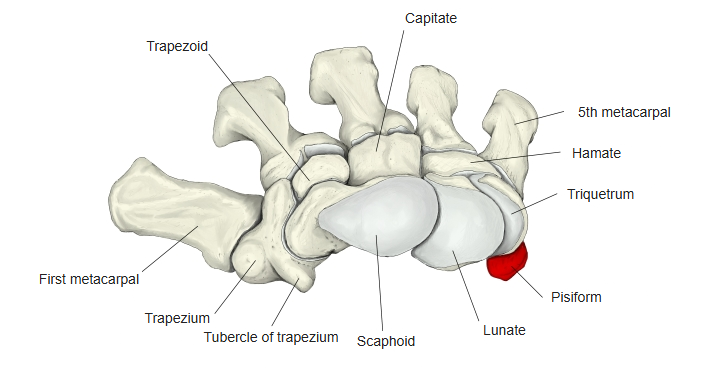
- One of the eight carpal bones; a small bone at the little-finger (ulnar) end of the proximal row, lying on the palmar surface of the triquetrum.
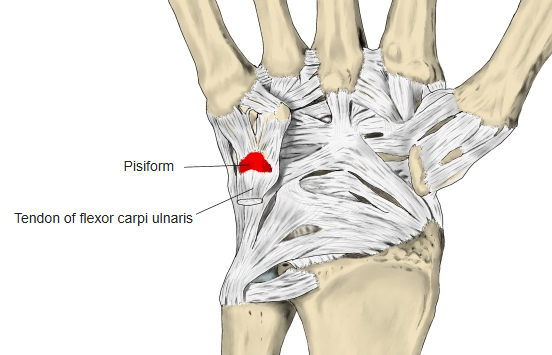
- A sesamoid bone: it develops within the tendon of the flexor carpi ulnaris, which inserts on it.
- Pea-shaped (spheroidal), with a single oval articular facet on its dorsal surface for articulation with the triquetrum.
- Its palmar surface is rough and gives attachment to the flexor retinaculum, the flexor carpi ulnaris and the abductor digiti minimi.
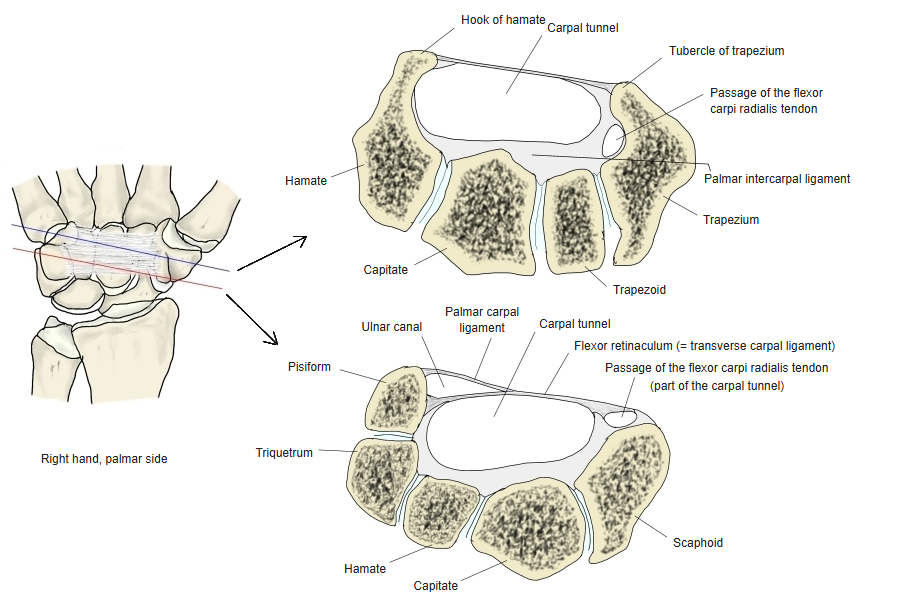
- Forms part of the ulnar wall of the carpal tunnel.
Flexor carpi ulnaris and the pisiform 
Carpal tunnel
- Carpal bones (8)
- Distal row (4)
- Trapezium ← thumb side
- Trapezoid
- Capitate
- Hamate ← little-finger side
- Proximal row (4)
- Scaphoid ← thumb side
- Lunate
- Triquetrum
- Pisiform ← little-finger side
- Distal row (4)
Illustrations
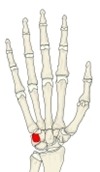
Bones of the hand (palmar view) 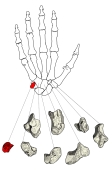
Carpal bones drawn separately (palmar view) 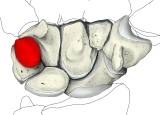
Carpal bones (palmar view) 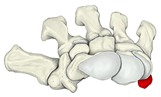
Carpal bones and metacarpals 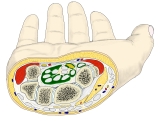
Wrist (cross-section)
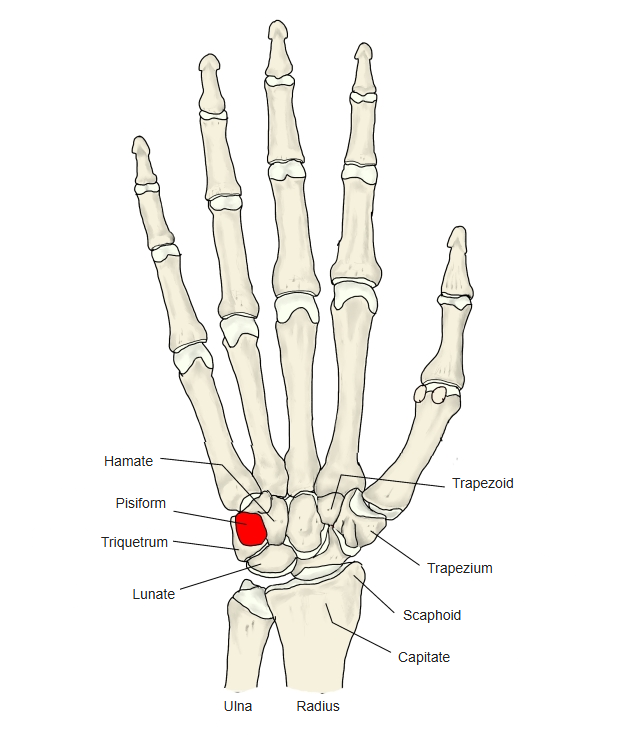
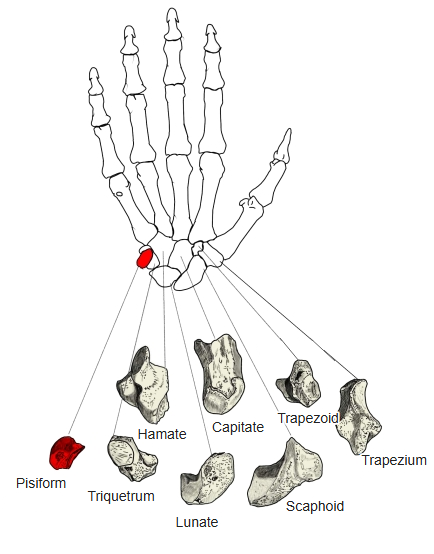
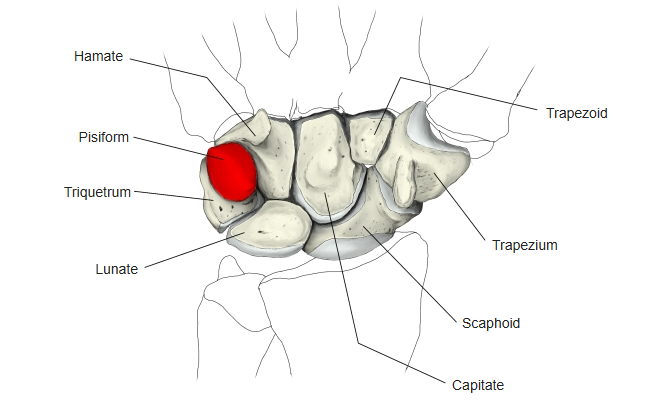
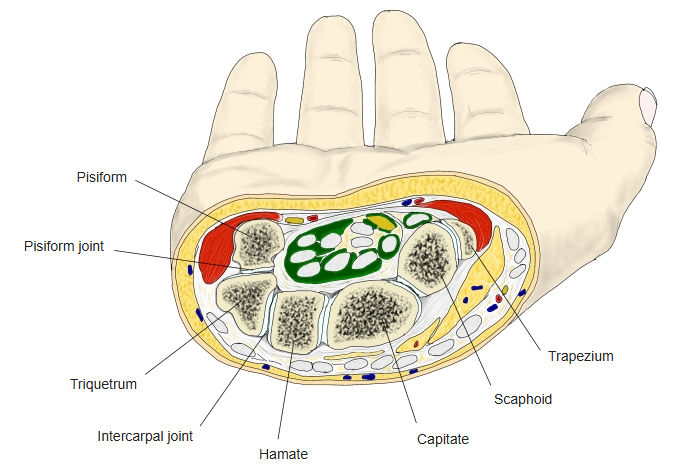
Articulations
| # | Bone | Joint |
|---|---|---|
| 1 | Triquetrum | Pisiform joint |
Joint of the pisiform
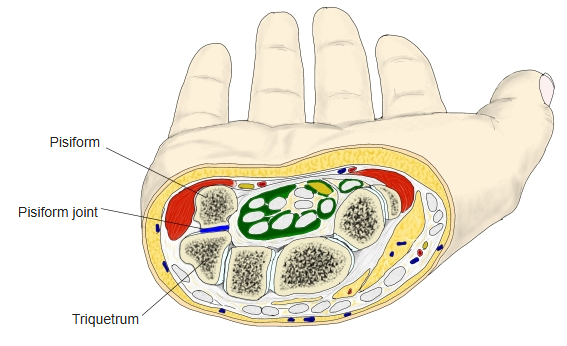
The hamate lies next to the pisiform but does not form a joint with it.
Ligaments
The following ligaments attach to the pisiform. The list is intended to be comprehensive but may omit minor ligaments.
| # | Ligament | Connects |
|---|---|---|
| 1 | Pisohamate ligament | Pisiform – hamate |
| 2 | Pisometacarpal ligament | Pisiform – fifth metacarpal |
| 3 | Flexor retinaculum (transverse carpal ligament) | Hamate, pisiform – scaphoid, trapezium |
Muscle attachments
- Origin of: Abductor digiti minimi (hand)
- Insertion of: Flexor carpi ulnaris
References and sources
- Further reading: Pisiform bone, Wikipedia.