Latin: caliculi gustatorii
Overview
- Oval, barrel-shaped clusters of 50–100 cells in the epithelium, about 50–70 µm long.
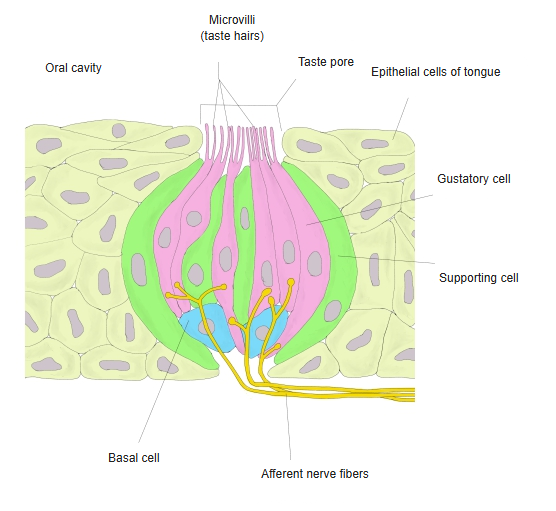
- They open on the surface through a small taste pore, where microvilli of the receptor cells meet the dissolved substances.
- An adult has a few thousand taste buds; most are on the tongue.
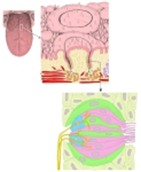
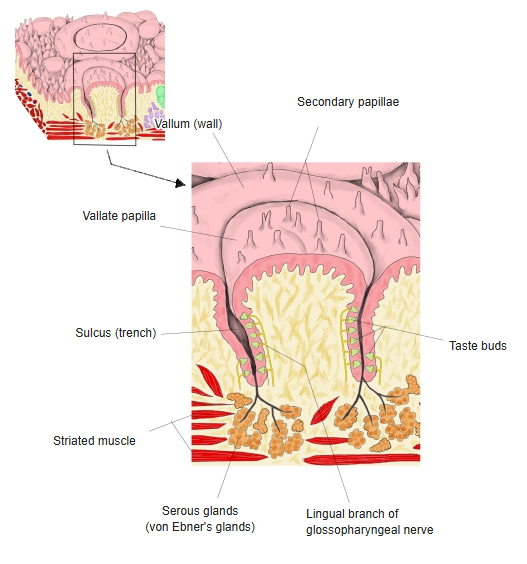
Taste bud in a vallate papilla
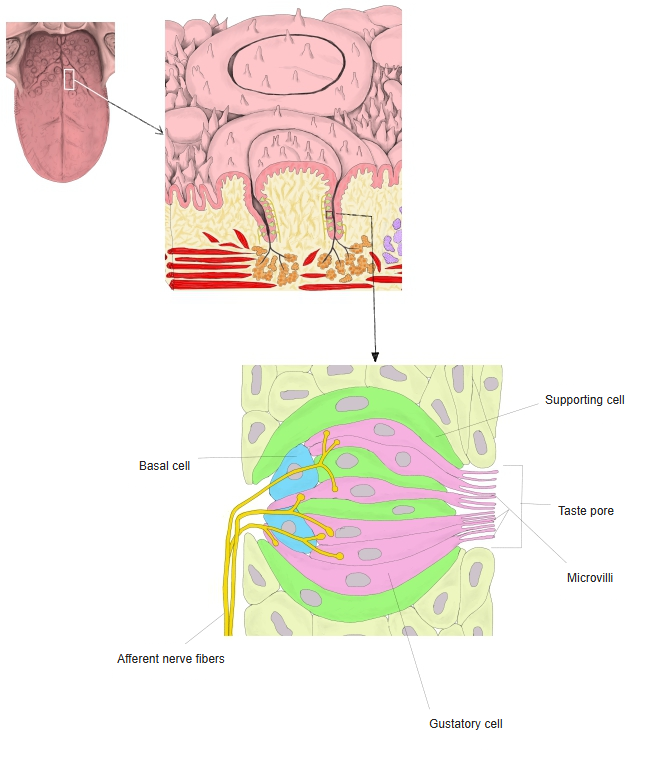
Cells of a taste bud
| Cell | Description |
|---|---|
| Gustatory (receptor) cells | Slender cells with microvilli at the taste pore; synapse with afferent nerve fibers |
| Supporting cells | Spindle-shaped cells between and around the receptor cells |
| Basal cells | Stem cells at the base; renew the bud – each cell lives only about 10 days |
- Afferent nerve fibers enter the base of the bud and branch among the cells.
Taste bud, cells
Where taste buds are found
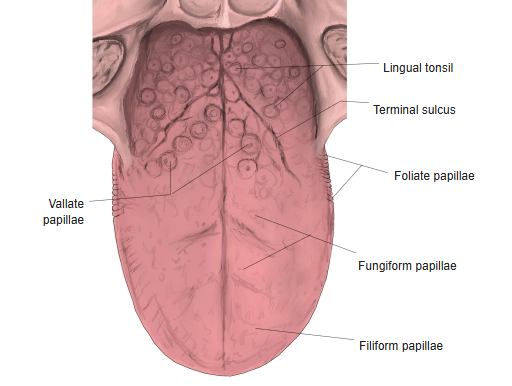
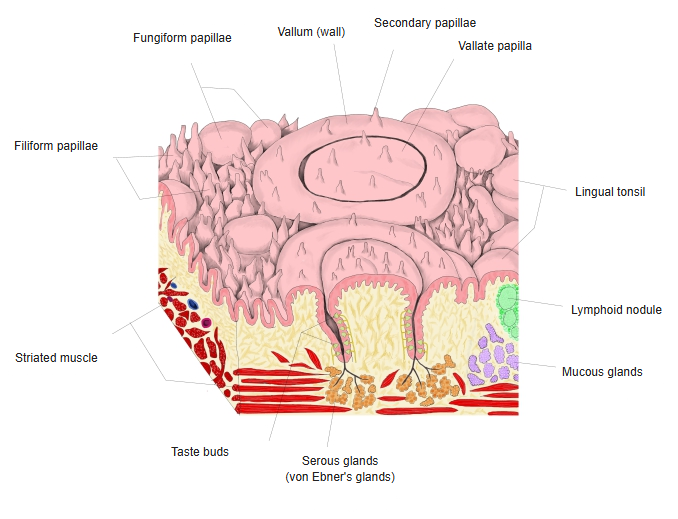
- Vallate papillae: many in the side walls facing the trench – roughly half of all taste buds of the tongue.
- Foliate papillae: in the folds at the back of the lateral margin.
- Fungiform papillae: a few on the upper surface of each papilla.
- Filiform papillae: none.
- Outside the tongue: soft palate, pharynx, epiglottis.
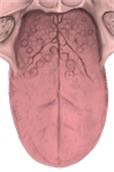
Dorsum of the tongue 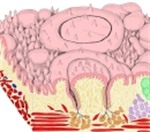
Lingual papillae (block diagram) 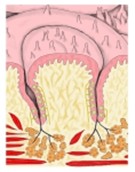
Vallate papilla, section
References and sources
- Further reading: Taste buds, Wikipedia.