Crown (Latin: corona dentis)
Also called Crown of tooth
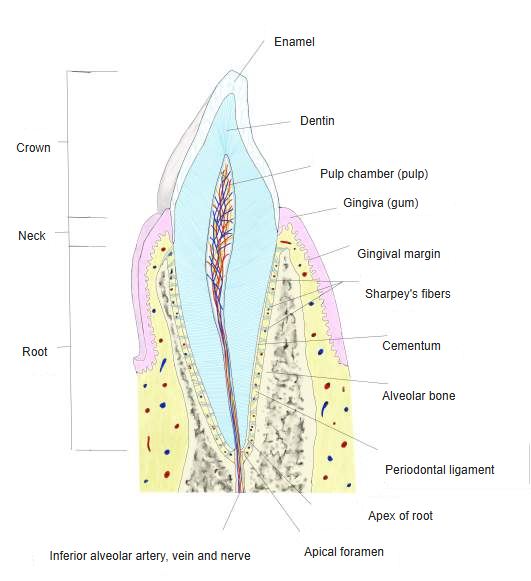
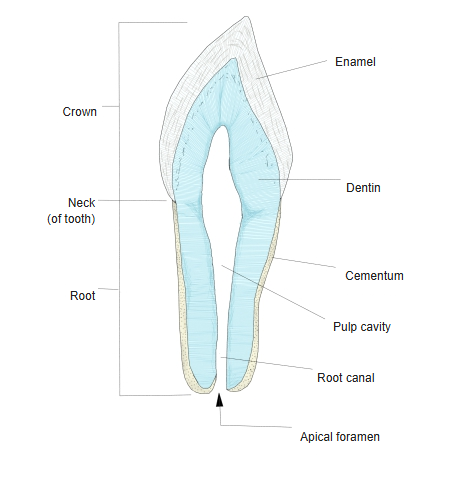
· The part covered with enamel is called the anatomical crown; the part actually exposed in the mouth is the clinical crown, which changes as the gum recedes. The crown meets the root at the neck of the tooth, along the cervical line (cementoenamel junction). Under the enamel lies dentine, which surrounds the crown part of the pulp cavity (the pulp chamber).
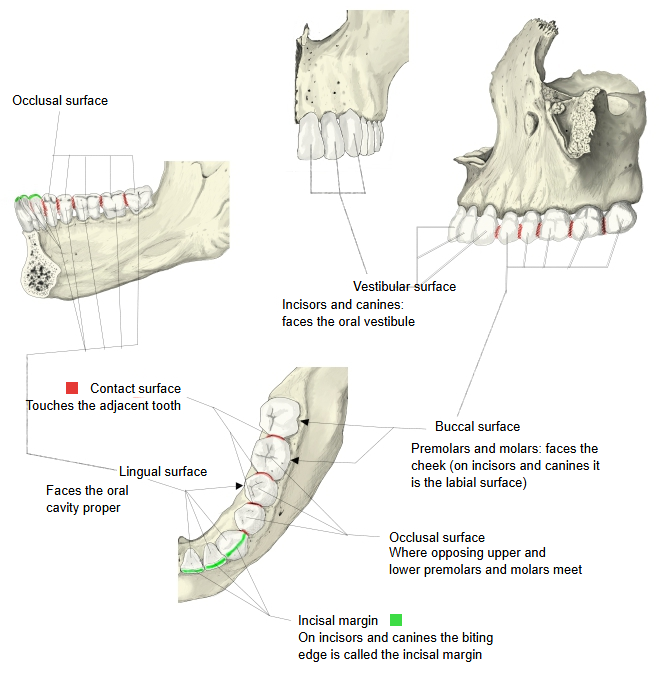
The crown has the following four kinds of surface. Its shape differs with the kind of tooth: a cutting edge on incisors, one cusp on canines, two or more cusps on premolars and molars.
1) Occlusal surface: the chewing surface of the premolars and molars, where the upper and lower teeth meet; it shows the typical cusps and grooves.
On incisors and canines the biting edge is called the incisal margin.
2) Vestibular surface: faces the vestibule of the mouth. It is called the labial surface on incisors and canines and the buccal surface on premolars and molars.
3) Lingual surface: faces the oral cavity proper and the tongue; on upper teeth it is also called the palatal surface.
4) Contact (approximal) surfaces: face the neighbouring teeth in the same arch. They are named as follows.
· Mesial surface: faces toward the midline along the arch (the medial surface of incisors and canines, the anterior surface of premolars and molars). Distal surface: faces away from it (the lateral surface of incisors and canines, the posterior surface of premolars and molars).
of a tooth
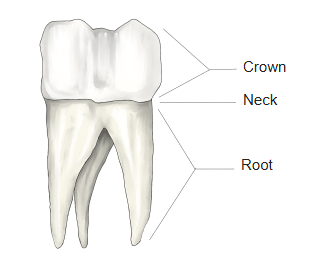
- Crown : the part that stands out of the gum and is covered with enamel
- Occlusal surface : where the upper and lower teeth meet; cusps and grooves on premolars and molars
- Vestibular surface : faces the oral vestibule; on premolars and molars it is the buccal surface
- Lingual surface : faces the oral cavity proper
- Contact surfaces : face the neighbouring teeth in the same row: mesial and distal surfaces
- Root : covered with cementum and set in the tooth socket (alveolus); its tip is the apex of the root
- Neck : the slightly narrowed part at the border between the crown and the root
- Pulp cavity : the space inside that holds the dental pulp (rich in vessels, nerves and lymph vessels); it continues as the root canal to the apical foramen
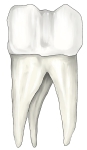 Parts of a tooth
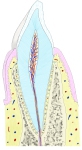 Structure of a tooth (sagittal section)
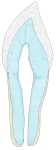 Dental tissues (sagittal section)
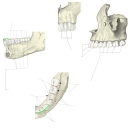 Surfaces of the crown
Reference websites
[Wikipedia]
· Crown (tooth), Wikipedia.
· Tooth enamel, Wikipedia.
[Websites with illustrations]
· Tooth anatomy (Blausen) (Wikimedia Commons)
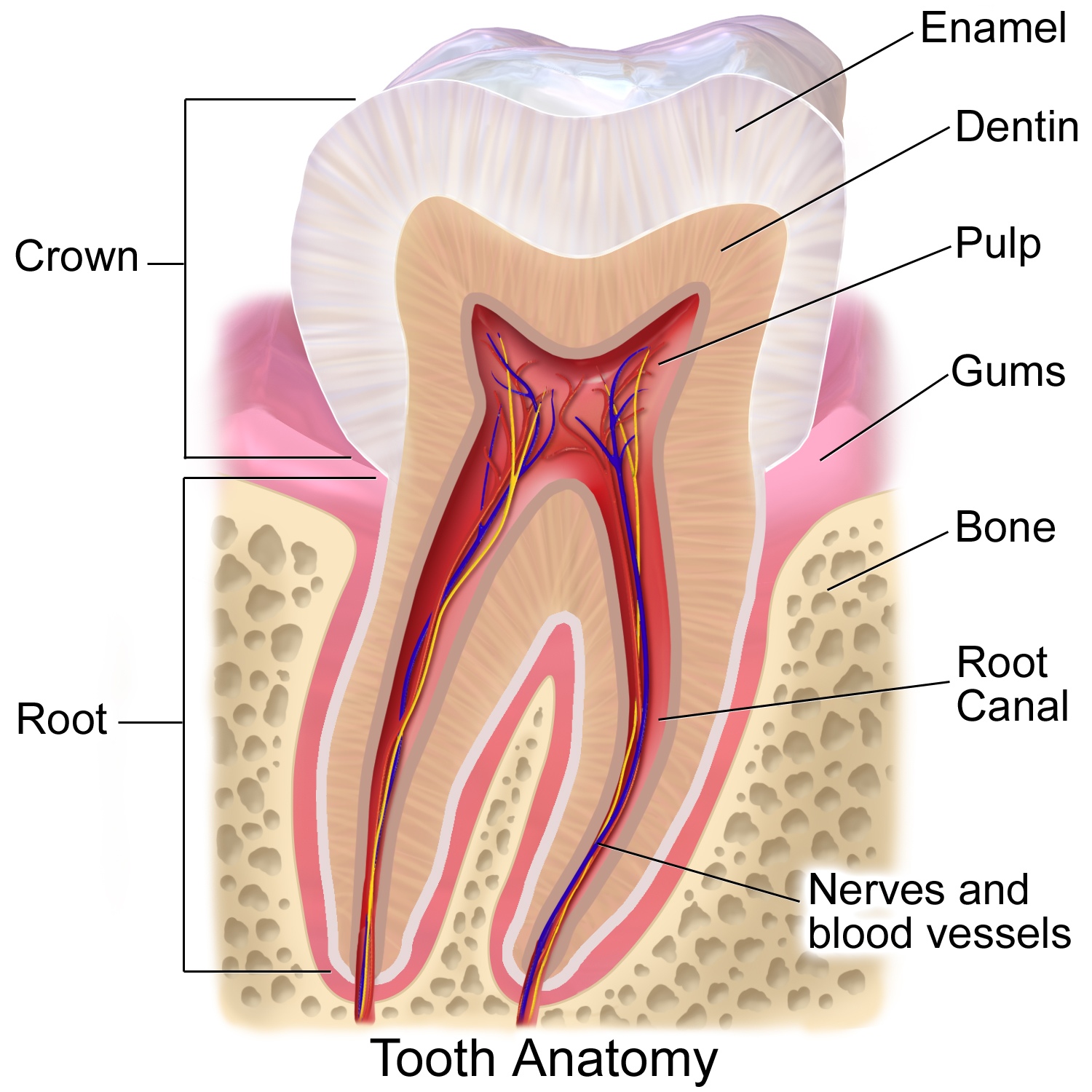
· Your tooth's anatomy (dentistinwestcolumbia.com)

Where it is found
Related terms
References and sources
- Further reading: Crown (tooth), Wikipedia.
- Further reading: Tooth enamel, Wikipedia.
- Federative International Programme for Anatomical Terminology (FIPAT). Terminologia Anatomica, 2nd ed. (TA2), 2019.