Latin: musculus temporalis
Overview
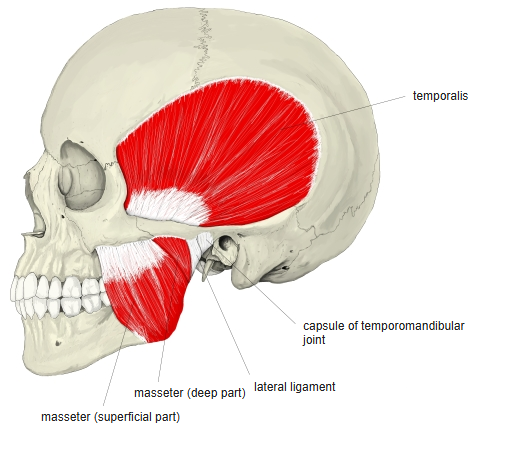
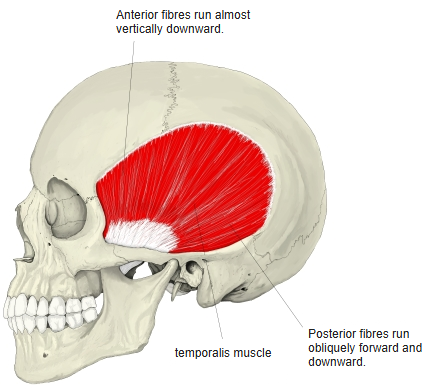
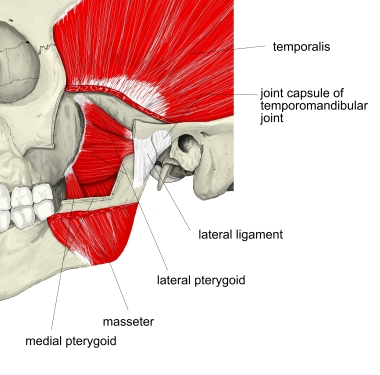
- A broad, fan-shaped muscle of mastication filling the temporal fossa; its fibres converge on a strong tendon that passes under the zygomatic arch.
- The tendon of insertion extends upwards into the muscle.
- Its long fibres give it a large range of contraction; a purely “chewing” muscle.
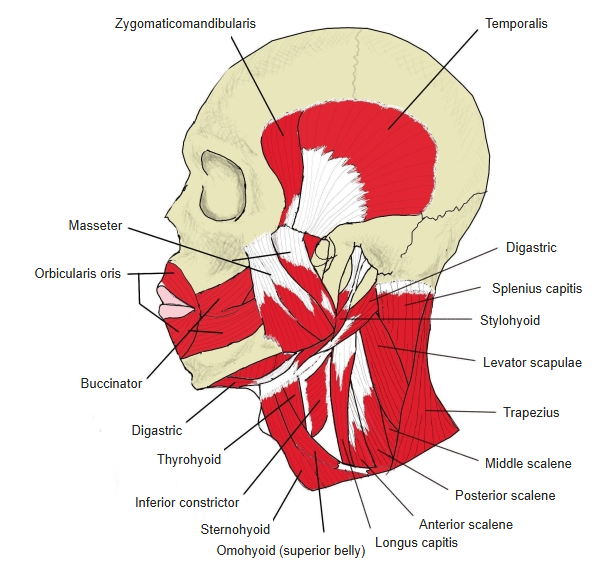
- The temporoparietalis lies superficial to it.
- Its contraction can be felt above the ear when the teeth are clenched.
Position in the classification
Head › Muscles of mastication
Illustrations
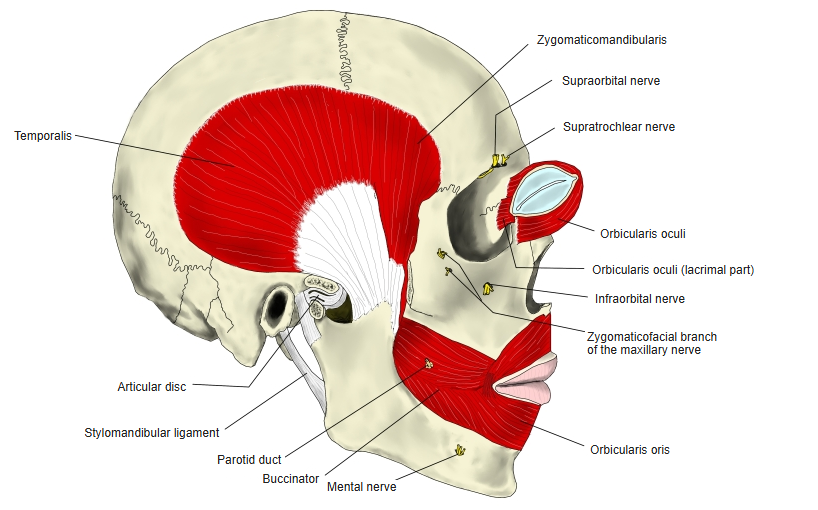
Origin / insertion
- Origin: the whole temporal surface of the temporal fossa and the inner surface of the temporal fascia; the fibres converge downwards and forwards
- Insertion: coronoid process of the mandible and the medial surface of the ramus below it
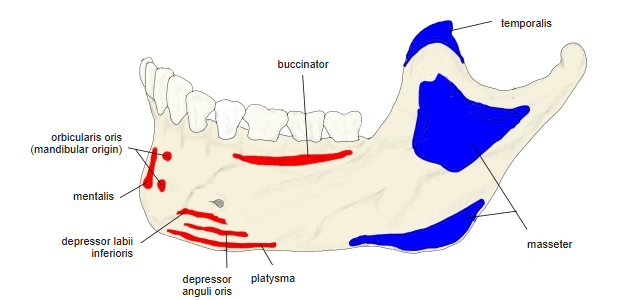
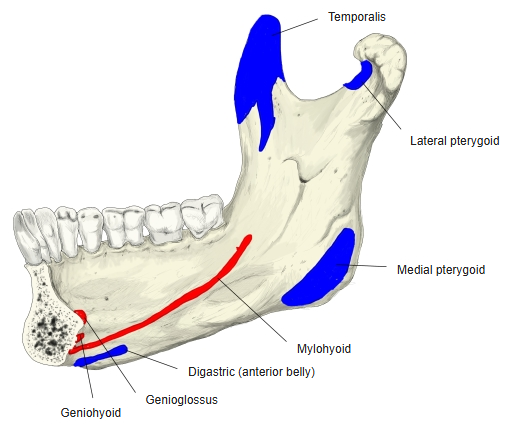
Action
- Raises the mandible (anterior fibres) and pulls it back (posterior fibres)
Innervation
- Deep temporal nerves, branches of the mandibular nerve (third division of the trigeminal nerve)
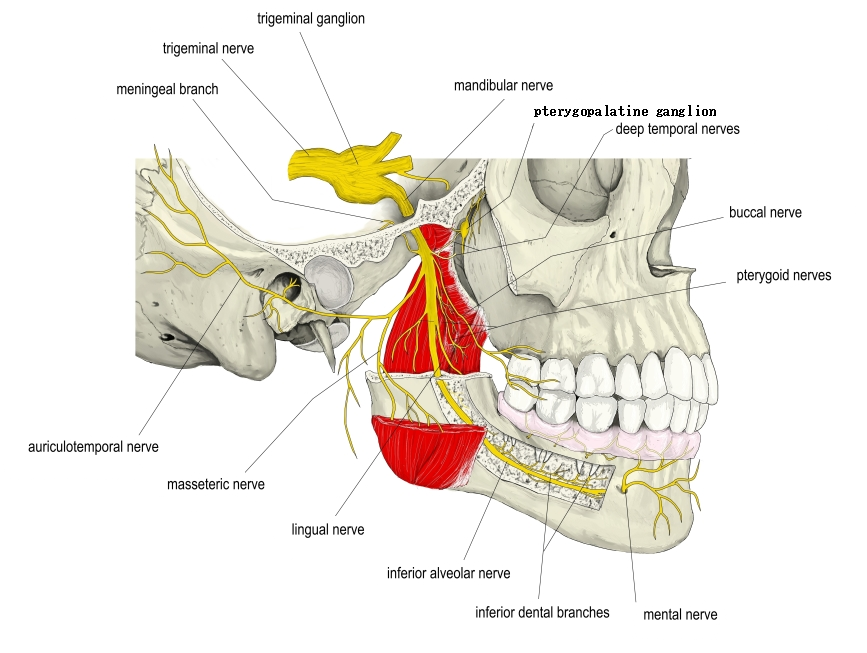
Blood supply
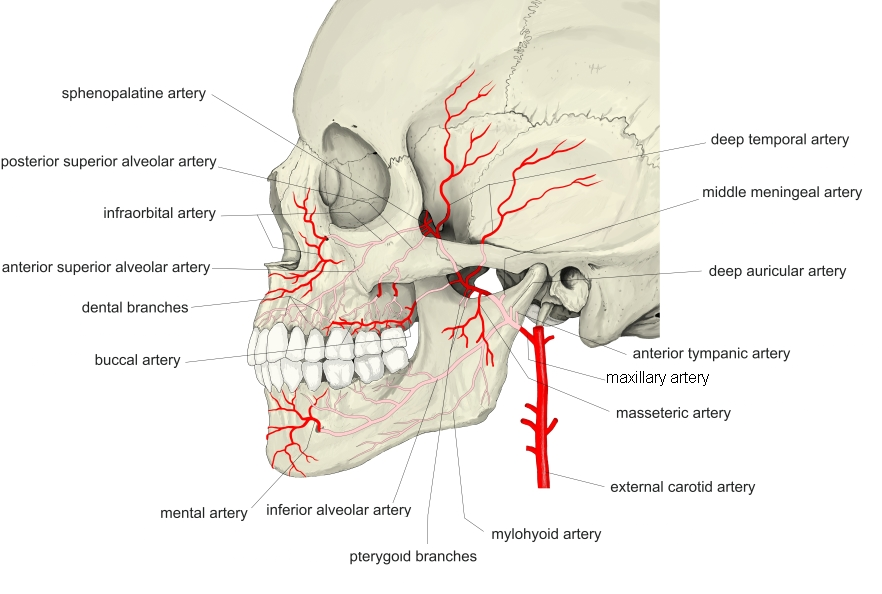
- Deep temporal arteries (Wikipedia); the veins are probably the deep temporal veins, but no source mentions them
Related terms
- Masseter
- Lateral pterygoid
- Medial pterygoid
- Temporoparietalis
- Temporal fossa
- Coronoid process
- Mandible
- Mandibular nerve
References and sources
- Further reading: Temporal muscle, Wikipedia.