Latin: musculus teres major
Overview
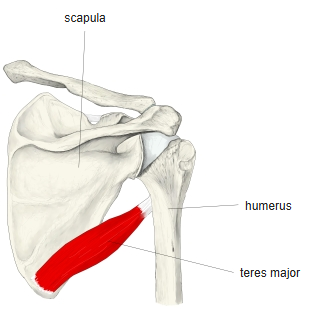
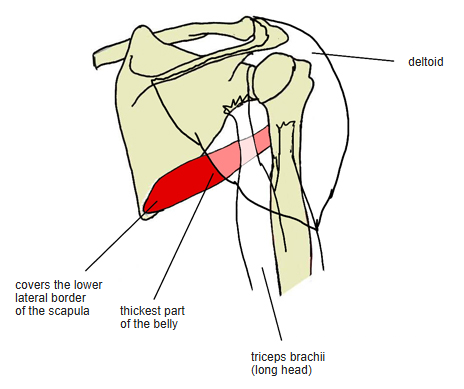
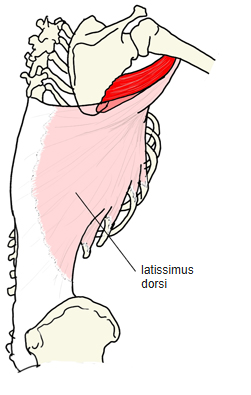
- A thick, somewhat flattened muscle from the inferior angle of the scapula to the humerus, lying above the latissimus dorsi.
- Not a rotator cuff muscle: unlike the teres minor, it does not attach to the capsule of the shoulder joint (Wikipedia).
- Covers the lower part of the lateral border of the scapula.
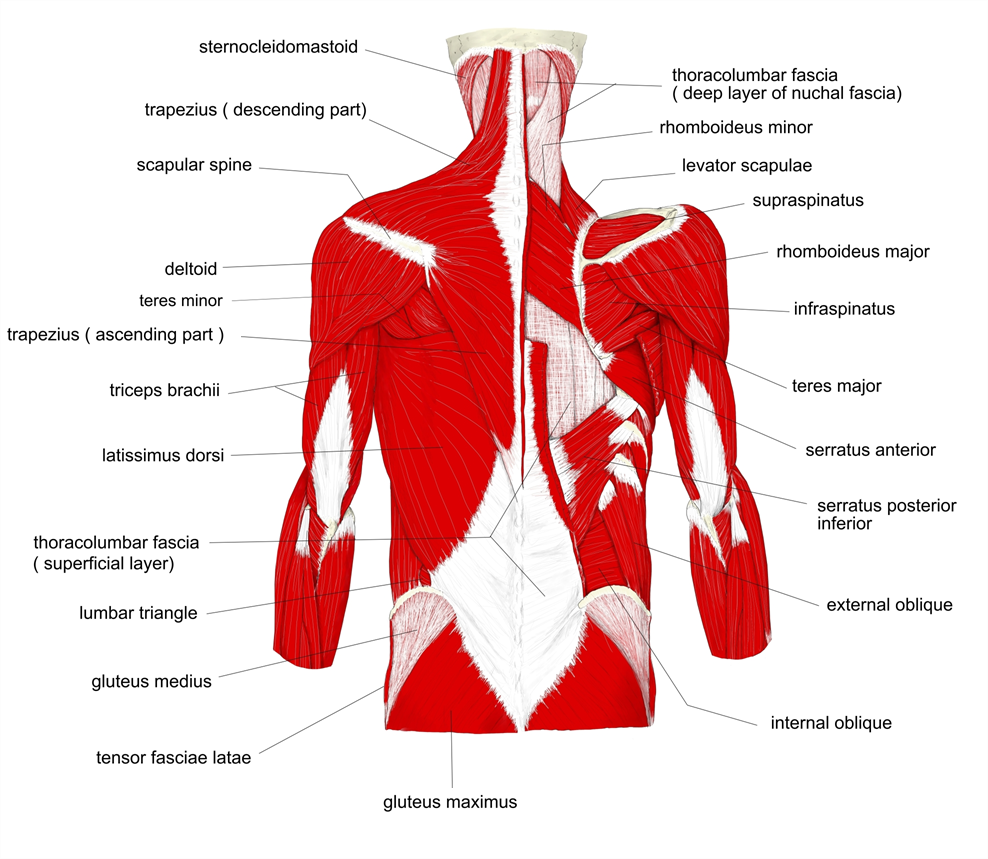
- Continuous in places with the teres minor, latissimus dorsi and infraspinatus.
Position in the classification
Upper Limb › Shoulder girdle
Illustrations
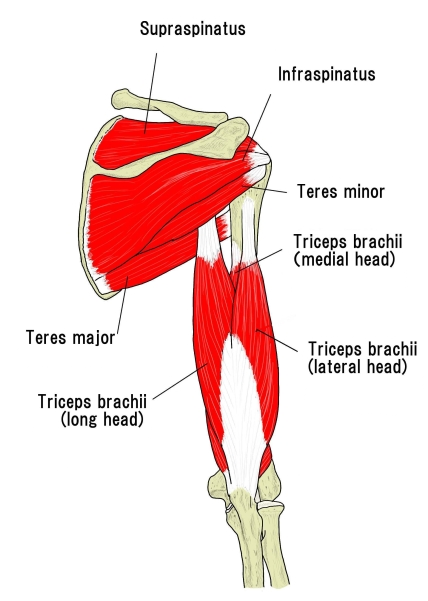
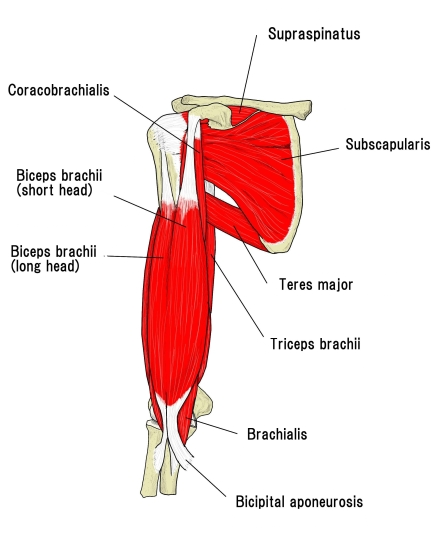
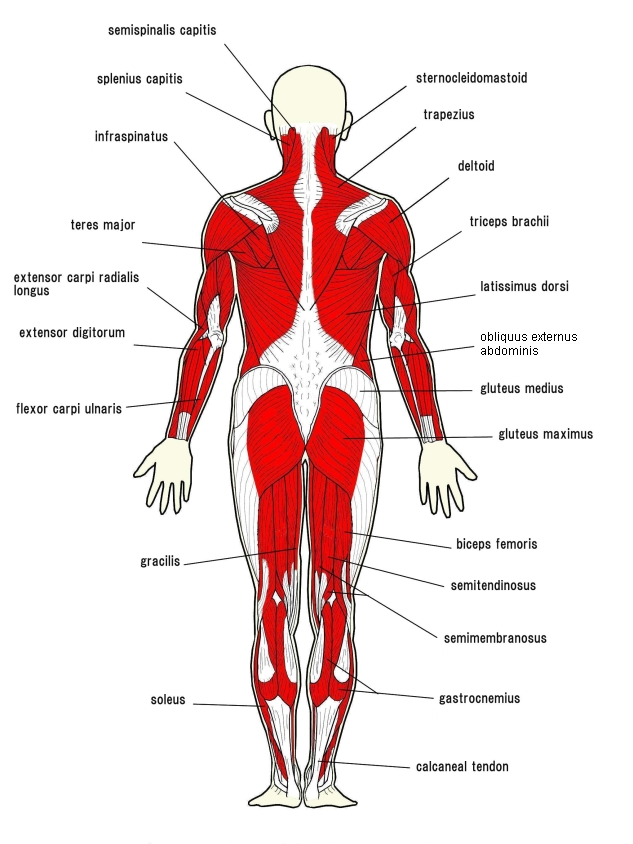
Origin / insertion
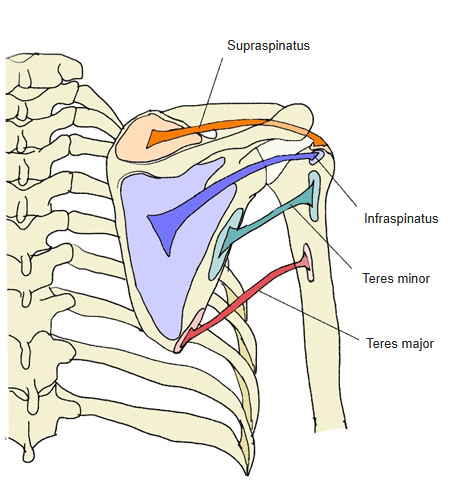
- Origin: posterior surface of the inferior angle of the scapula
- Insertion: crest of the lesser tubercle of the humerus
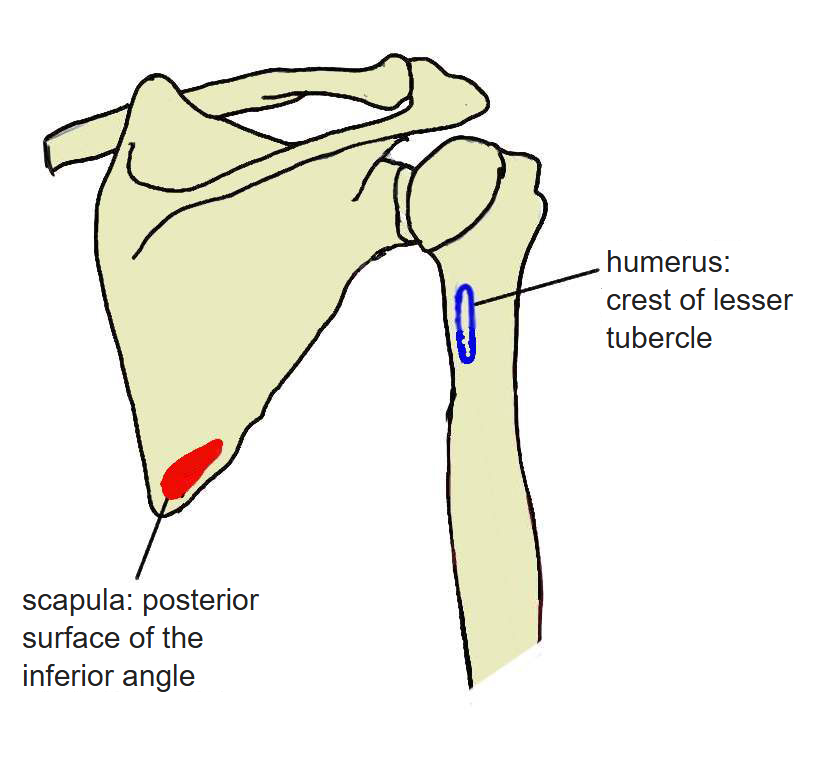
Action
- Adducts, extends and medially rotates the arm at the shoulder joint
Innervation
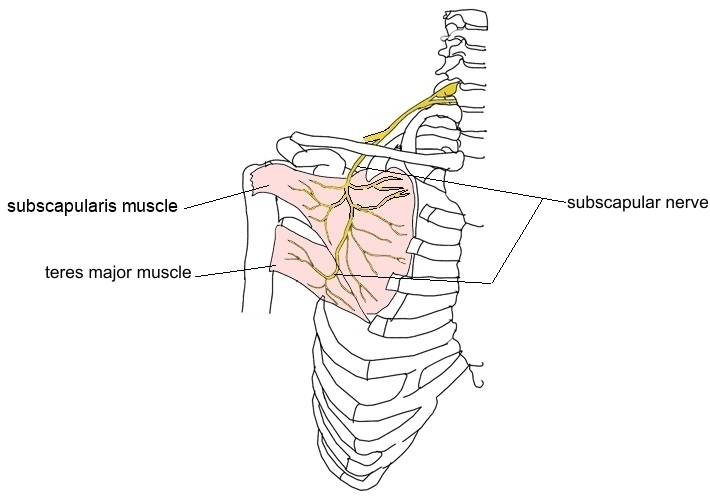
- Subscapular nerve (C5, C6; sometimes C7); Wikipedia also names the thoracodorsal nerve
Blood supply
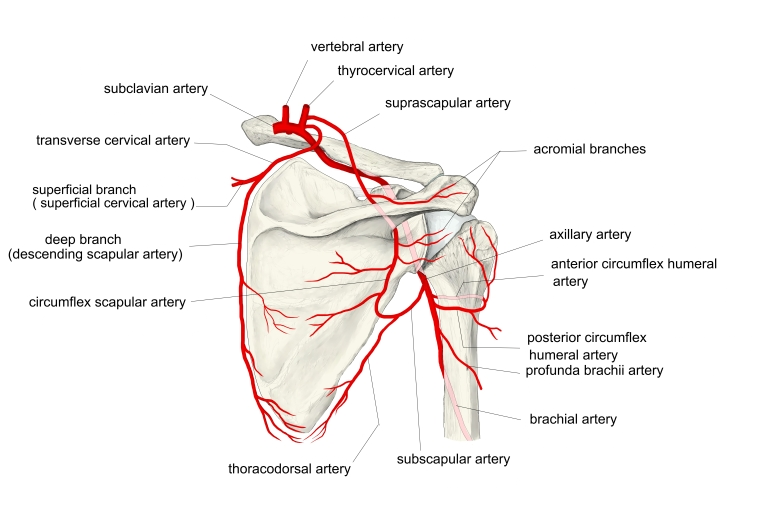
- Subscapular artery, thoracodorsal artery
Anatomical variations
- May be completely absent (Rauber-Kopsch)
- Connections with the latissimus dorsi and the rhomboids have been described
- Very rarely sends a bundle to the long head of the triceps brachii or to the brachial fascia
Related terms
- Teres minor
- Latissimus dorsi
- Infraspinatus
- Scapula
- Humerus
- Subscapular nerve
- Subscapular artery
- Thoracodorsal artery
References and sources
- Further reading: Teres major muscle, Wikipedia.