Lateral bony ampulla (Latin: ampulla ossea lateralis)
Also called Lateral osseous ampulla
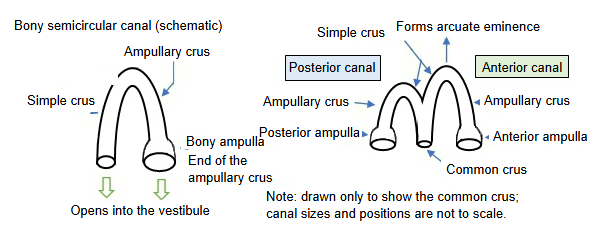
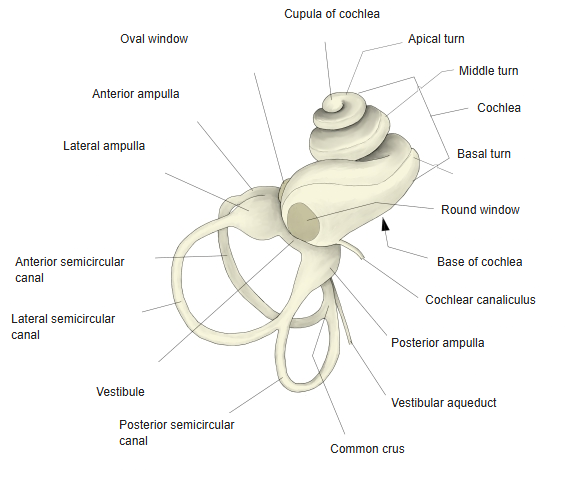
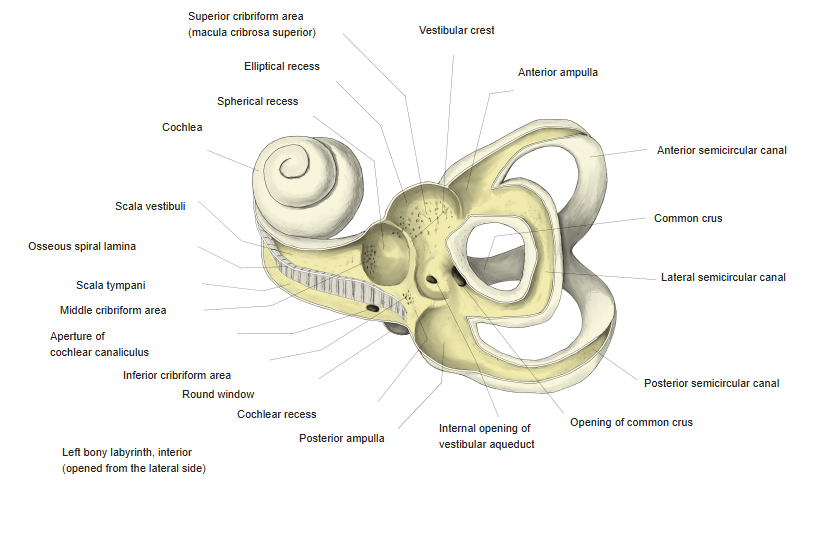
The lateral (bony) ampulla is the swollen part at the end of the (bony) ampullary crus of the lateral (bony) semicircular canal; it opens into the vestibule.
The shortest of the bony semicircular canals; it runs horizontally, backwards and laterallyIn the upper part of the vestibule, just below the opening of the anterior bony ampulla
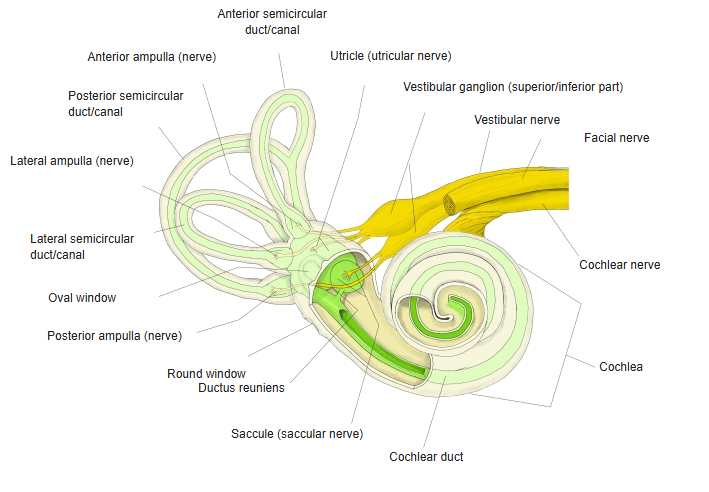
· It houses the lateral membranous ampulla of the lateral semicircular duct, with its ampullary crest, the sensory organ for rotation in the horizontal plane. The crest is supplied by the lateral ampullary nerve, a branch of the superior part of the vestibular nerve.
· Each of the three bony canals has one ampulla (bony ampullae): anterior, lateral and posterior.
- Anterior canal
- Simple crus : joins the simple crus of the posterior canal; as the (bony) common crus it opens into the medial wall of the back part of the vestibule.
- Ampullary crus → anterior bony ampulla : opens into the upper part of the vestibule, near the elliptical recess.
- Lateral canal
- Ampullary crus → lateral bony ampulla : opens into the vestibule just below the anterior ampulla, lateral to the elliptical recess.
- Simple crus : opens on its own into the back of the vestibule, between the common crus and the posterior ampulla.
- Posterior canal
- Simple crus : joins the simple crus of the anterior canal to form the common crus.
- Ampullary crus → posterior bony ampulla : opens into the lower back part of the vestibule.
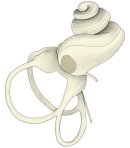 Bony labyrinth
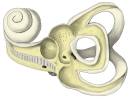 Bony labyrinth (opened)
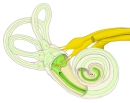 Labyrinth and nerves
Related terms
- Semicircular canals
- Semicircular ducts
- Bony labyrinth
- Vestibule
- Lateral ampullary nerve
- Vestibular nerve
References and sources
- Further reading: Semicircular canals, Wikipedia.
- Further reading: Bony labyrinth, Wikipedia.
- Federative International Programme for Anatomical Terminology (FIPAT). Terminologia Anatomica, 2nd ed. (TA2), 2019.