Labyrinth (Latin: labyrinthus)
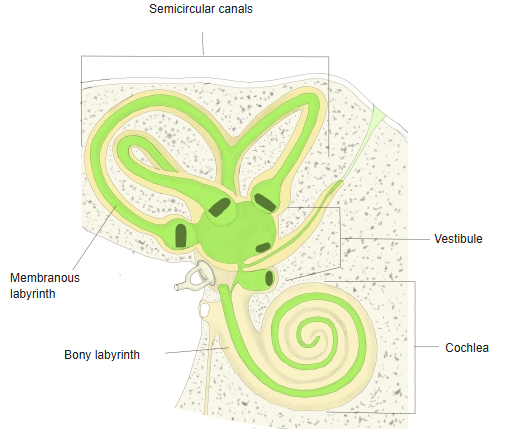
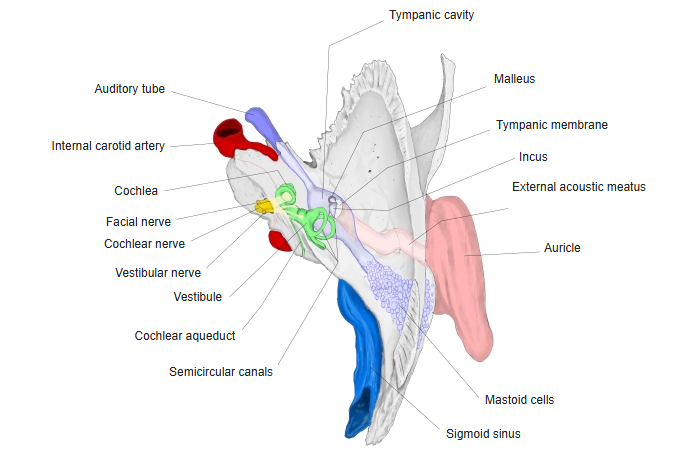
The internal ear is called the labyrinth because of its complex structure; it is divided into the bony labyrinth and the membranous labyrinth inside it.
It is the organ of hearing and at the same time the organ of balance
Labyrinth
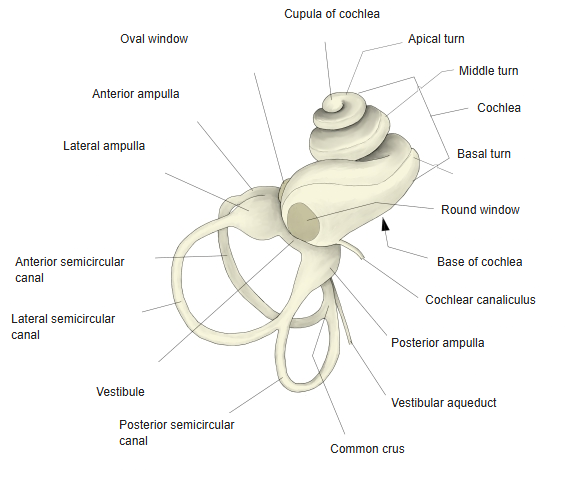
- Bony labyrinth : a system of cavities in the petrous part of the temporal bone, walled by dense bone formed by ossification of cartilage. It holds the membranous labyrinth, and the space between the two is filled with perilymph. Main parts: the cochlea, the vestibule and the semicircular canals.
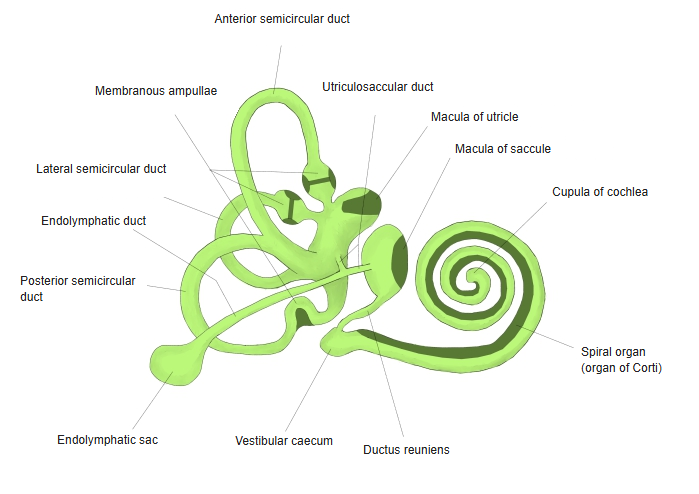
- Membranous labyrinth : a system of thin membranous tubes and sacs of almost the same shape as the bony labyrinth, filled with endolymph. Main parts: the cochlear duct, the utricle and saccule, and the semicircular ducts.
The internal ear is the receptor of sound waves, the organ of hearing, and at the same time the organ of balance, which senses the position and direction of the body and the accelerations that come with movement. Because its structure is so complex, it is also called the labyrinth. The cochlea serves hearing, and the vestibule and semicircular canals serve balance. It is described under the internal ear.
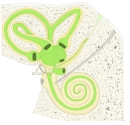 Bony and membranous labyrinth
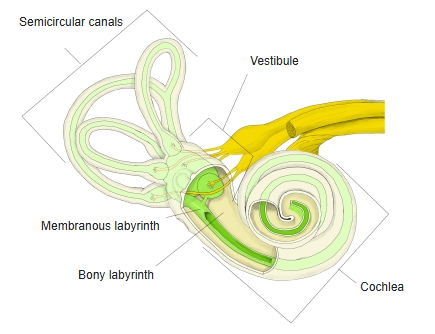
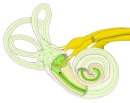 Labyrinth and nerves
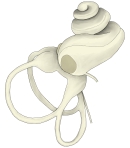 Bony labyrinth
 Membranous labyrinth
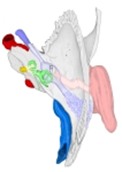 Temporal bone (superior view)
Reference websites
[Wikipedia]
· Inner ear, Wikipedia.