Posterior superior iliac spine (Latin: spina iliaca posterior superior)
Also called PSIS
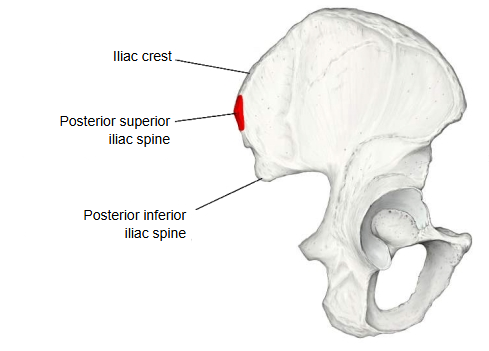
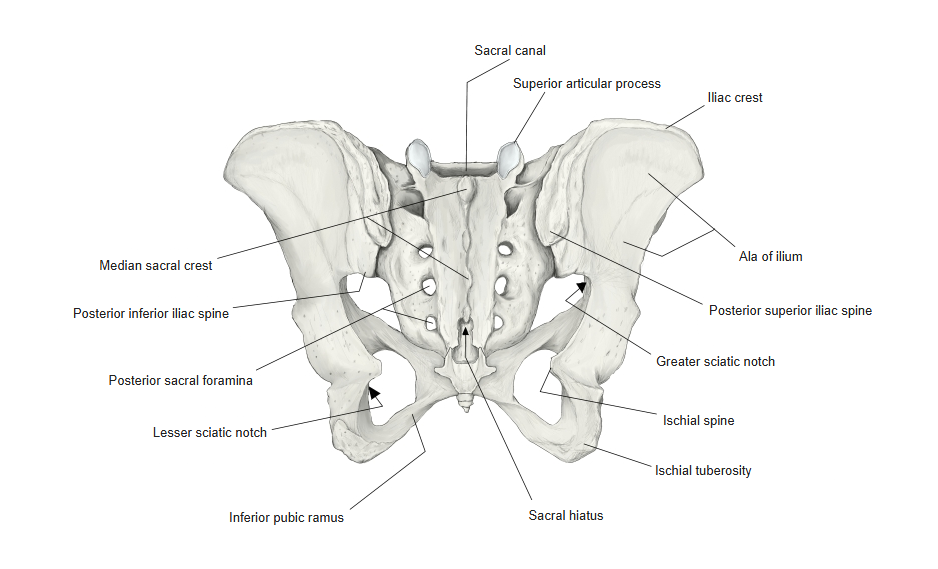
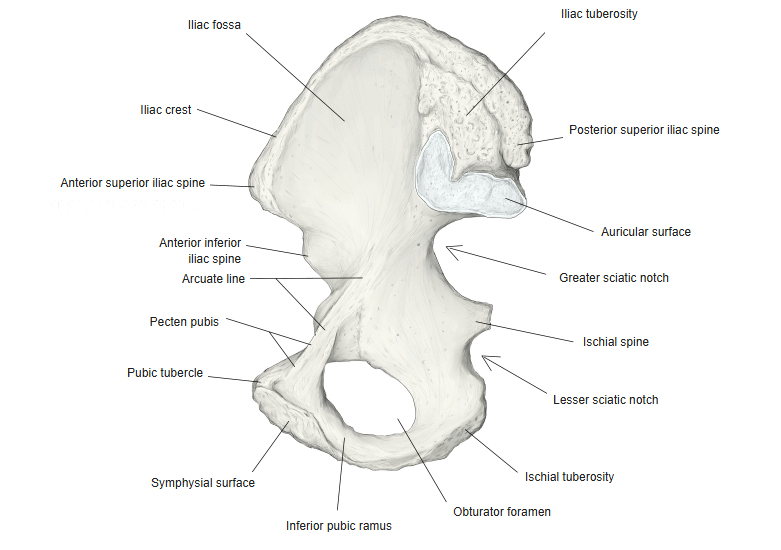
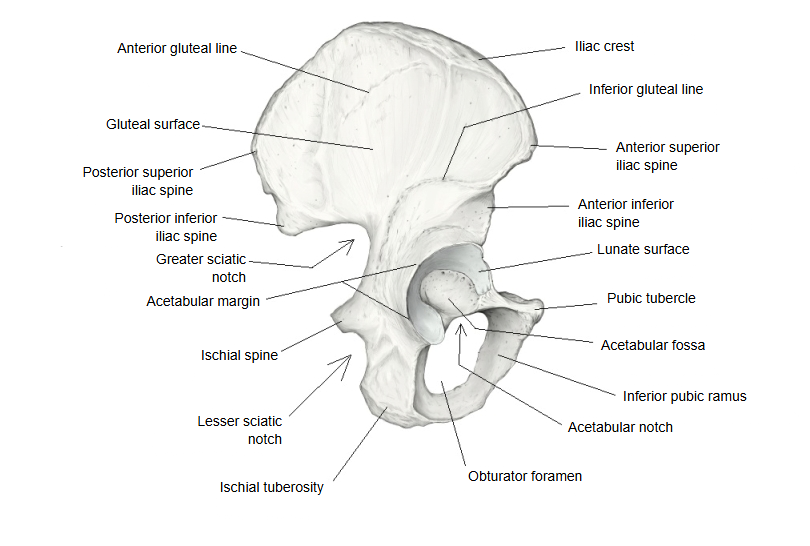
The back end of the iliac crest projects backwards as the posterior superior iliac spine, at the top of the posterior border of the ilium. Below it, a small notch separates it from the posterior inferior iliac spine; below that, the posterior border turns forwards into the greater sciatic notch. Compare the anterior superior iliac spine at the front end of the crest.
· It gives attachment to the long dorsal sacroiliac ligament and the sacrotuberous ligament, and to some fibres of the multifidus and the gluteus maximus.
· In the living body it lies under a skin dimple on each side of the lower back, at about the level of the second sacral vertebra and the middle of the sacroiliac joint. Clinically it is a landmark for examining the sacroiliac joint and a common site for bone marrow sampling.
Reference websites
[Wikipedia]
· Posterior superior iliac spine, Wikipedia.
· Ilium (bone), Wikipedia.
[Websites with illustrations]
· Right hip bone, external surface (Gray's Anatomy, fig. 235) (Wikimedia Commons)
· Right hip bone, internal surface (Gray's Anatomy, fig. 236) (Wikimedia Commons)
· Hip bone (Kenhub)
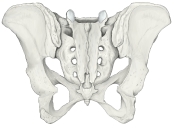 Pelvis, posterior view
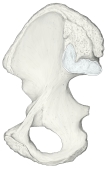 Hip bone, medial view
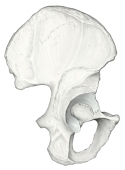 Hip bone, lateral view (all landmarks)


Related terms
- Ilium
- Hip bone
- Iliac crest
- Posterior inferior iliac spine
- Anterior superior iliac spine
- Sacroiliac joint
- Long dorsal sacroiliac ligament
References and sources
- Further reading: Posterior superior iliac spine, Wikipedia.
- Federative International Programme for Anatomical Terminology (FIPAT). Terminologia Anatomica, 2nd ed. (TA2), 2019.