Latin: musculus flexor carpi radialis
Overview
- One of the four superficial flexors of the forearm.
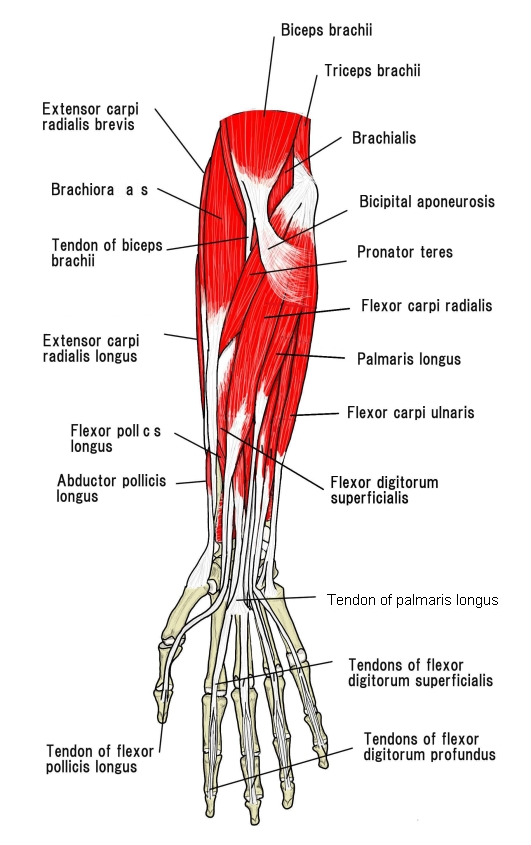
- Its tendon runs parallel to that of the palmaris longus at the wrist and is easily seen and felt; it is the most lateral tendon (nearest the thumb) when the wrist is flexed.
- Continuous in places with the abductor pollicis brevis, palmaris longus, biceps brachii, pronator teres and flexor digitorum superficialis.
Position in the classification
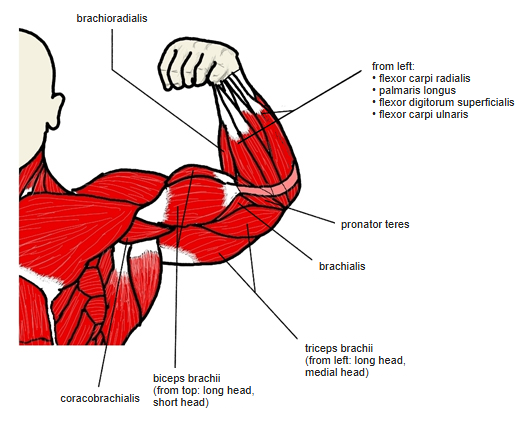
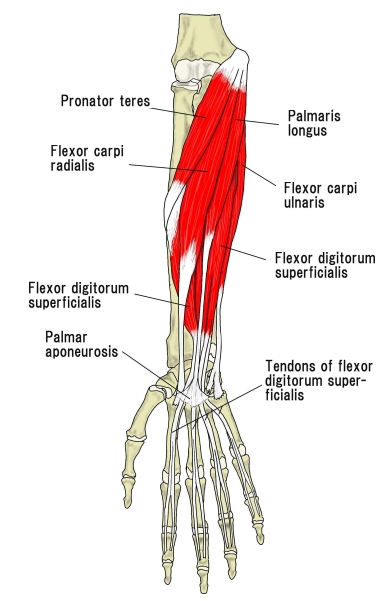
Upper Limb › Forearm › Flexor group › First layer
- Pronator teres
- Flexor carpi radialis
- Palmaris longus
- Flexor carpi ulnaris
Illustrations
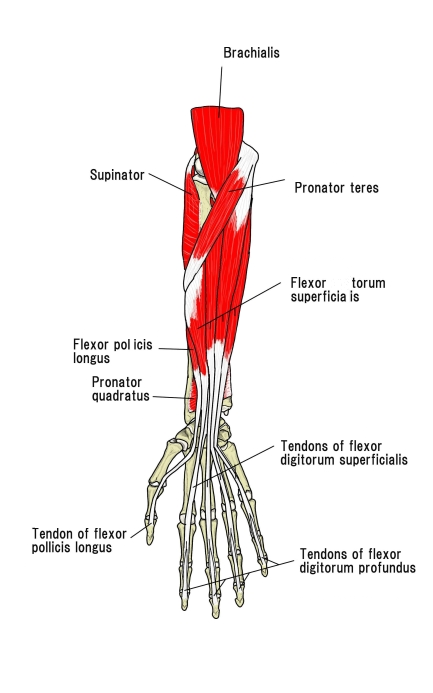
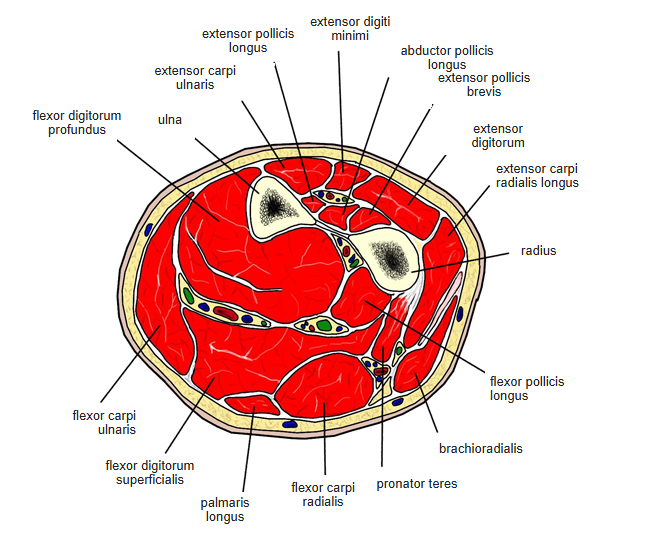
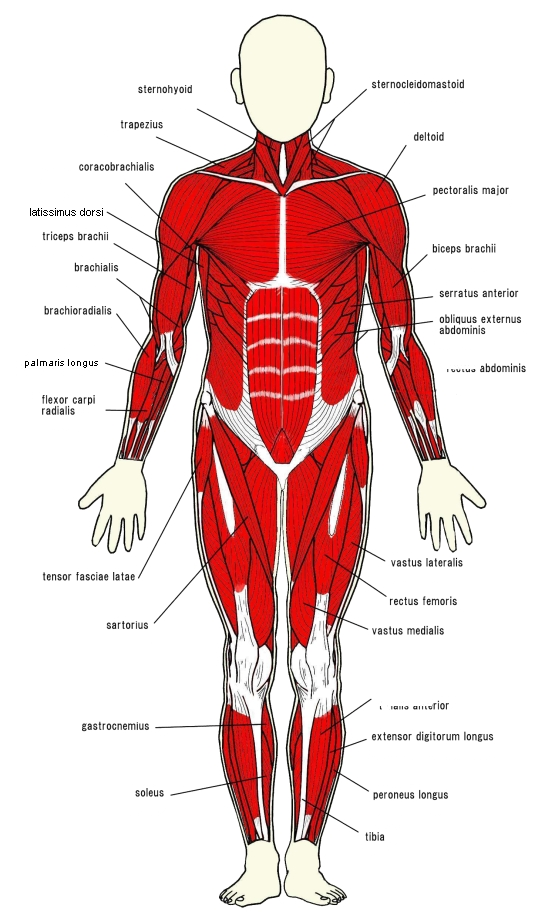
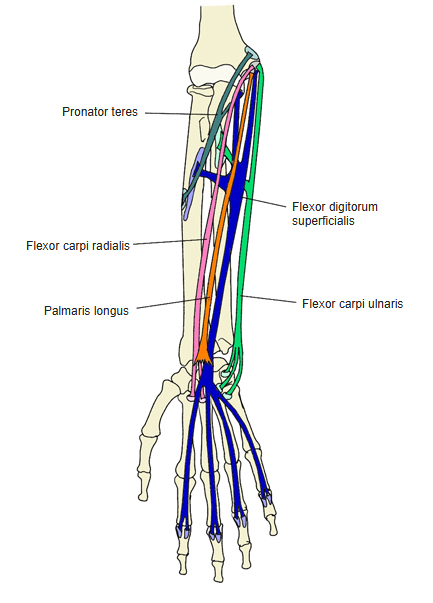
Origin / insertion
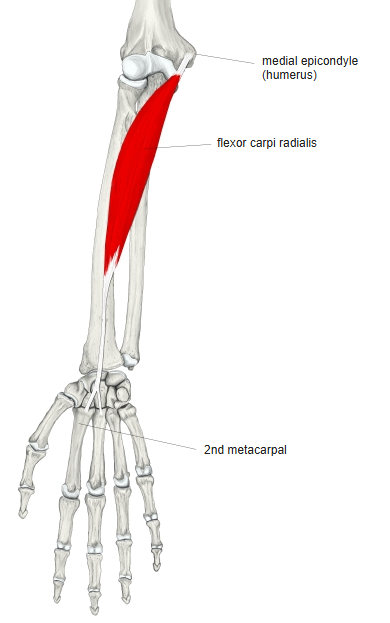
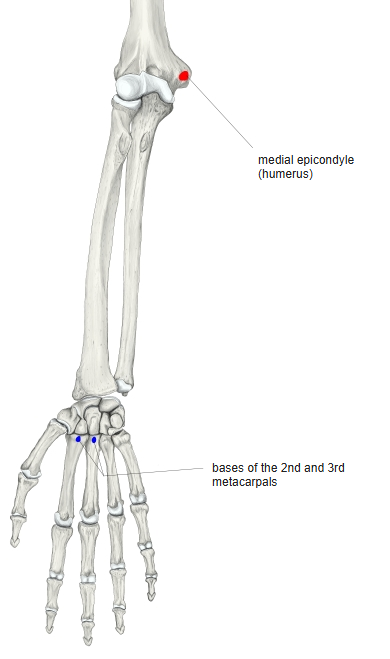
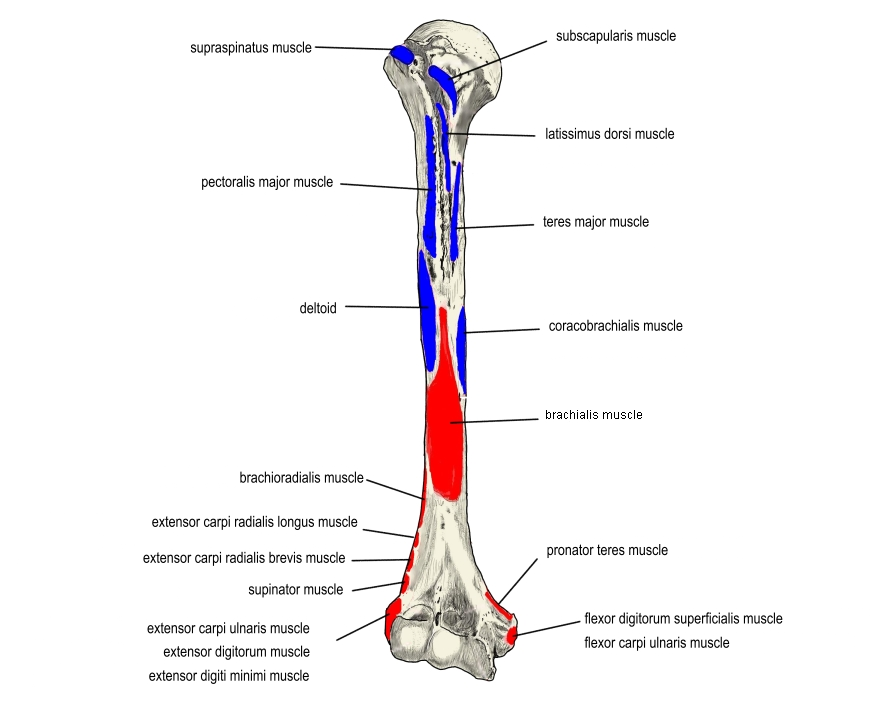
- Origin: medial epicondyle of the humerus (common flexor tendon), antebrachial fascia and adjacent intermuscular septa
- Insertion: base of the 2nd metacarpal, with a slip to the base of the 3rd metacarpal; some sources also describe a slip to the trapezium
Action
- Flexes and abducts (radially deviates) the hand at the wrist; also assists in pronating the forearm and flexing the elbow
Innervation
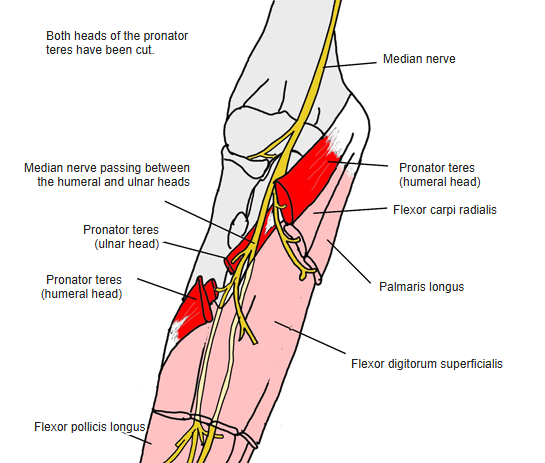
- Median nerve (C6, C7; sometimes C8)
Blood supply
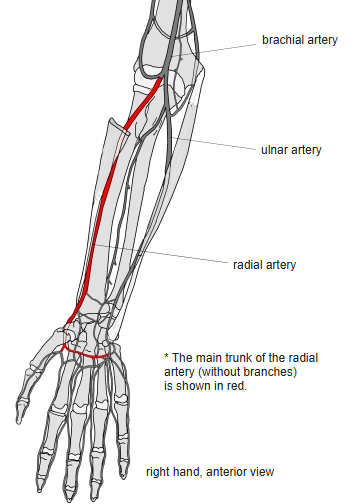
- Branches of the radial and ulnar arteries (sources differ on which is the main supply)
Anatomical variations
- Part of the origin may come from the radius; the tendon may insert partly onto the trapezium, scaphoid or 3rd–4th metacarpals
- Rarely, a deep part forms a separate muscle, the flexor carpi radialis brevis (profundus)
- Le Double found insertion anomalies in 29 of 105 specimens, most often on the trapezium
Related terms
- Palmaris longus
- Pronator teres
- Flexor carpi ulnaris
- Medial epicondyle of the humerus
- Median nerve
- Radial artery
References and sources
- Further reading: Flexor carpi radialis muscle, Wikipedia.