Latin: musculus flexor digitorum longus
Overview
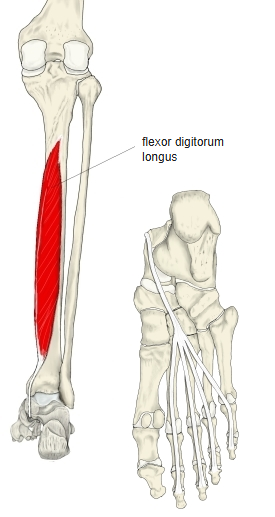
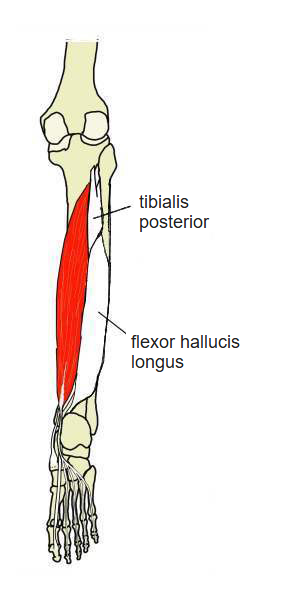
- A deep muscle on the tibial side of the back of the leg; thin and pointed at its origin, becoming broader as it descends.
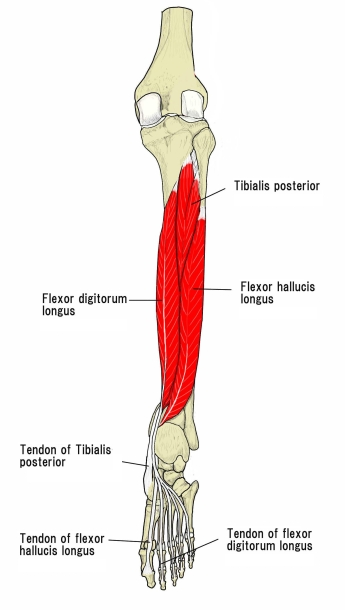
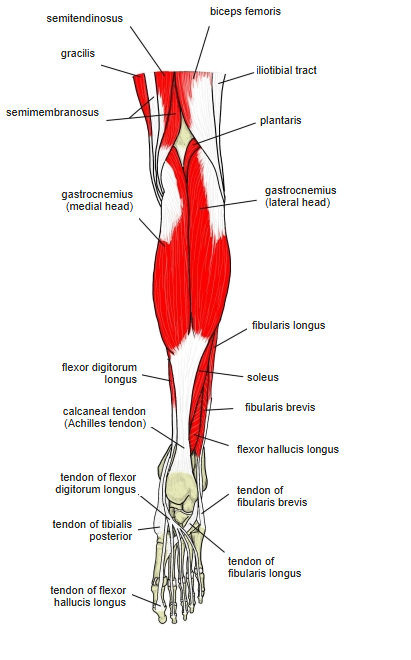
- Its tendon runs behind the medial malleolus in a sheath, crosses the tibialis posterior tendon above the malleolus and passes into the sole along the sustentaculum tali.
- In the sole it crosses superficial to the flexor hallucis longus tendon, which sends it a slip; the quadratus plantae then attaches to it.
- Its tendons pierce those of the flexor digitorum brevis at the proximal phalanges (the "perforating" flexor).
- Continuous in places with the flexor hallucis longus, tibialis posterior, gastrocnemius and soleus.
Position in the classification
Lower Limb › Leg › Flexor group › Others
- Flexor digitorum longus
- Flexor hallucis longus
- Tibialis posterior
- Popliteus
- Plantaris
Illustrations
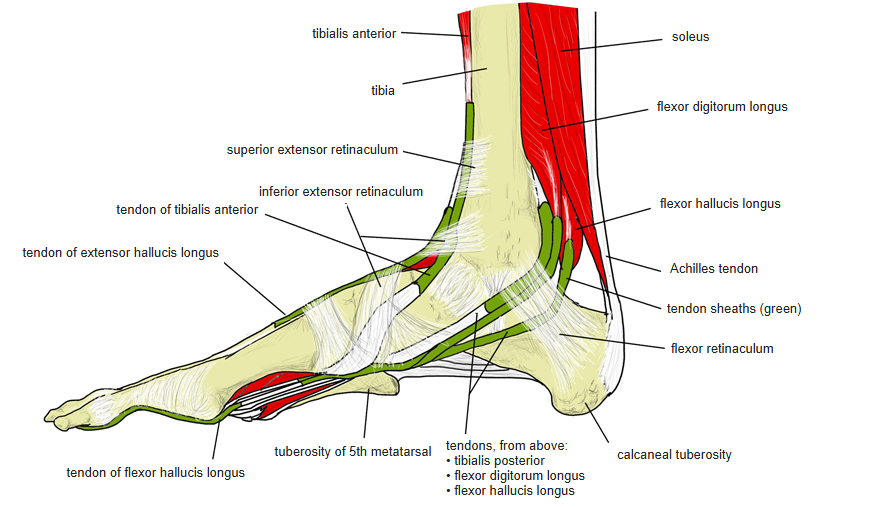
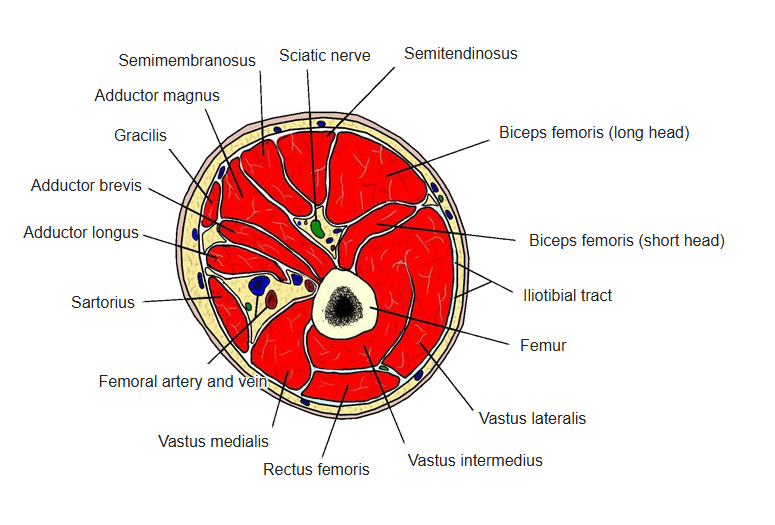
Origin / insertion
- Origin: posterior surface of the tibia below the soleal line and the interosseous membrane
- Some sources: no interosseous membrane, but part of the tendinous arch of the soleus
- Other sources: tibia to within 7–8 cm of its lower end, and the fascia covering the tibialis posterior (no interosseous membrane)
- Insertion: bases of the distal phalanges of toes 2–5, after piercing the tendons of the flexor digitorum brevis
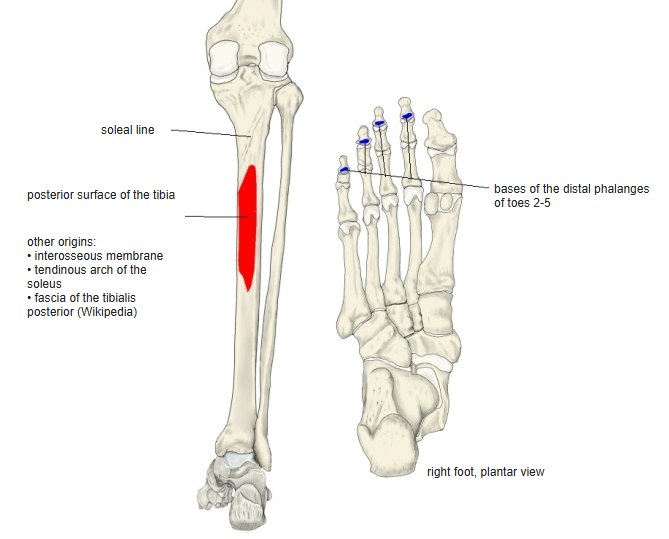
Action
- Flexes toes 2–5
- Plantar flexes the foot
Innervation
- Tibial nerve (L5–S2; some sources L4–S1)
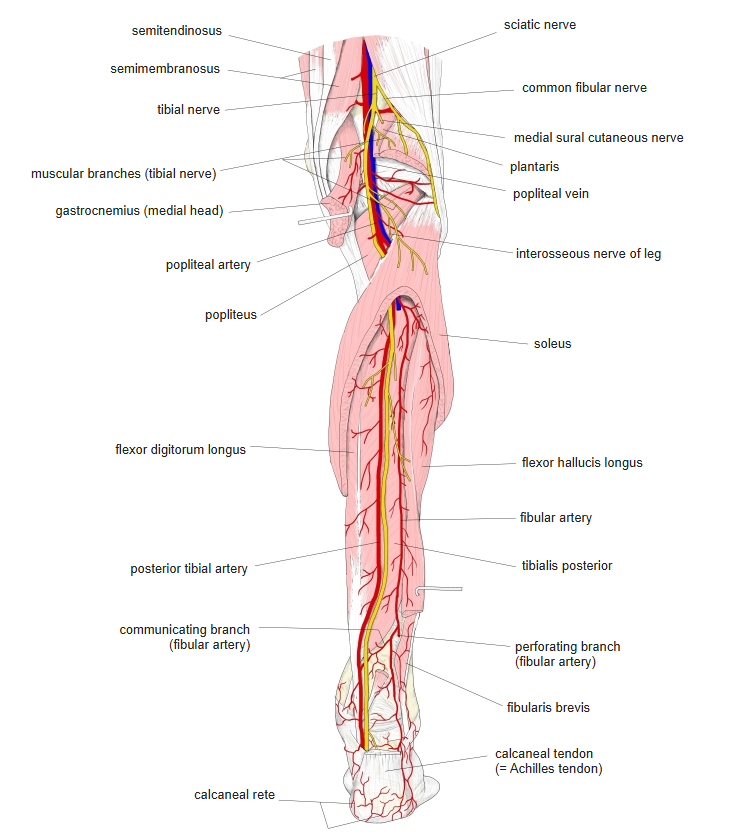
Blood supply
- Posterior tibial artery
Related terms
- Flexor hallucis longus
- Tibialis posterior
- Flexor digitorum brevis
- Quadratus plantae
- Tibia
- Tibial nerve
References and sources
- Further reading: Flexor digitorum longus muscle, Wikipedia.