Latin: musculus palmaris longus
Overview
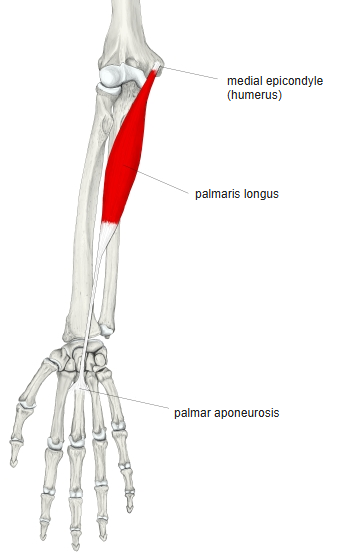
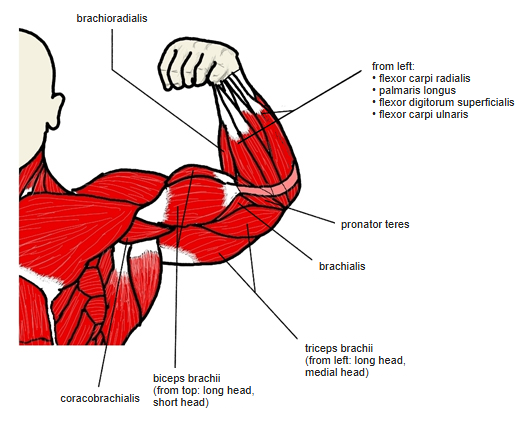
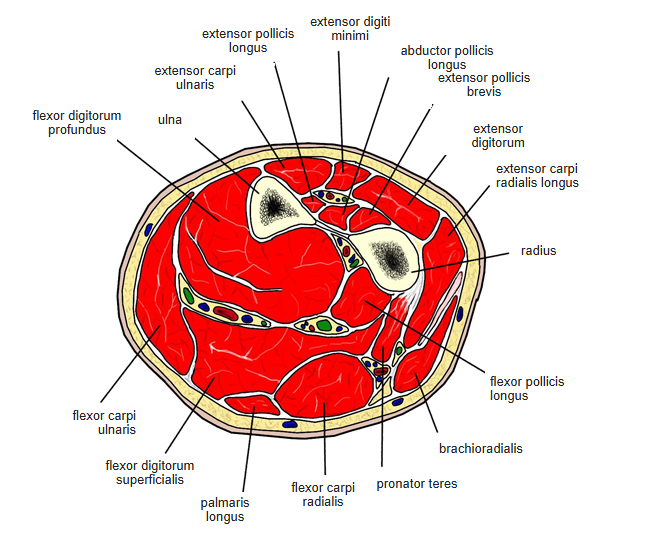
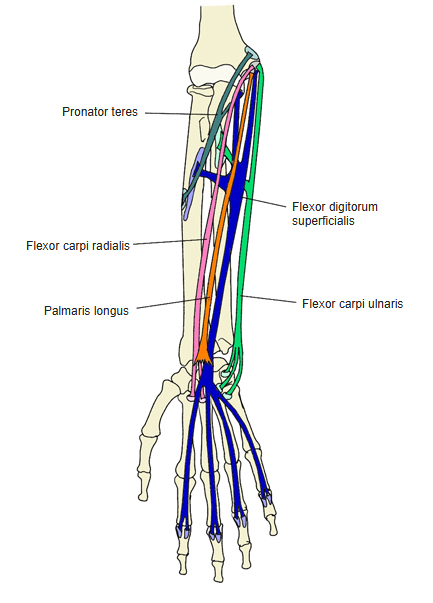
- A slender, spindle-shaped muscle with a long tendon running down the middle of the front of the forearm; easy to see and feel.
- Often absent: about 14% overall (Wikipedia), less often in some populations; the palmar aponeurosis is still present.
- Very variable in form: may have two heads, an intermediate tendon, or the belly may lie low or in the middle.
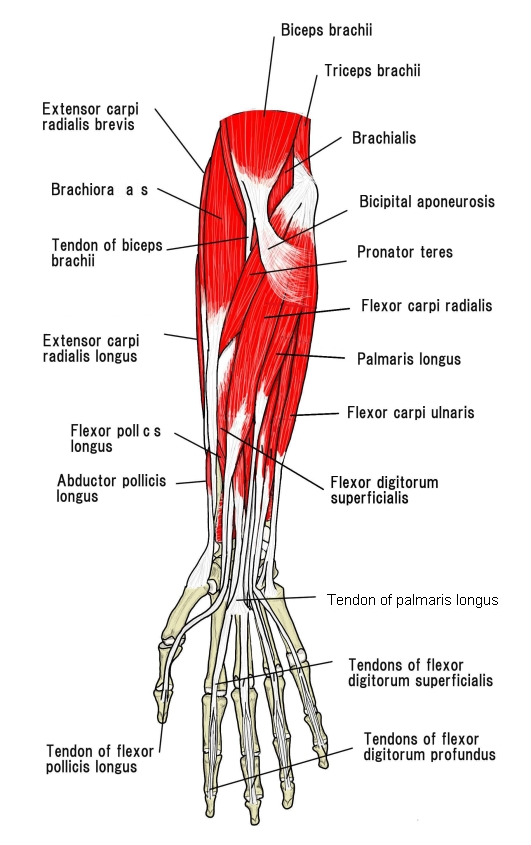
- Continuous in places with the flexor carpi ulnaris, flexor digitorum superficialis, flexor carpi radialis and biceps brachii.
Position in the classification
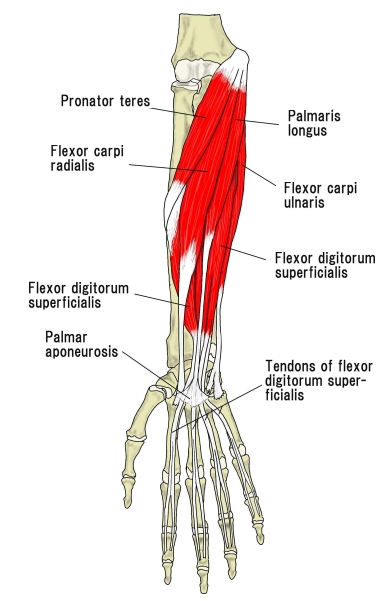
Upper Limb › Forearm › Flexor group › First layer
- Pronator teres
- Flexor carpi radialis
- Palmaris longus
- Flexor carpi ulnaris
Illustrations
Origin / insertion
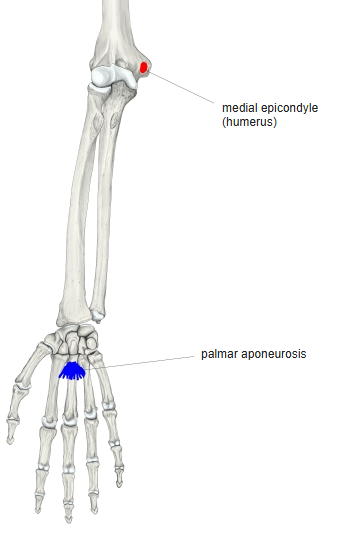
- Origin: medial epicondyle of the humerus and antebrachial fascia
- Insertion: palmar aponeurosis
Action
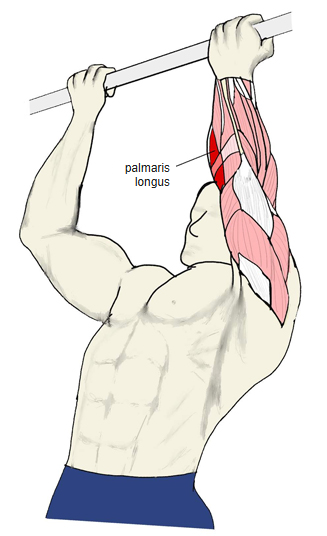
- Tenses the palmar aponeurosis and flexes the wrist
Innervation
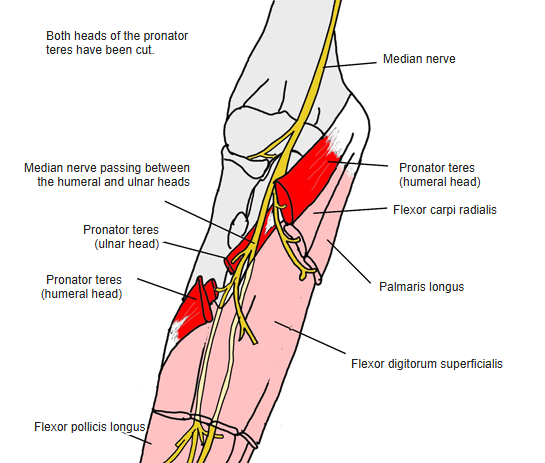
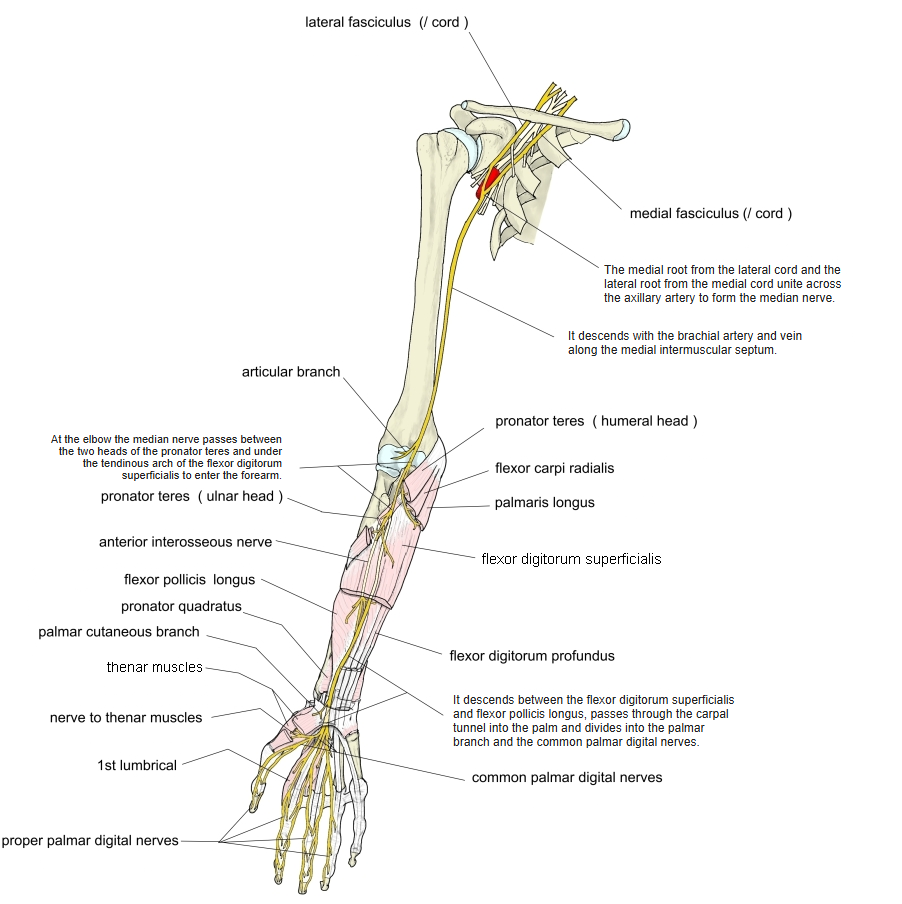
- Median nerve (C8; may include C7 and/or T1)
Blood supply
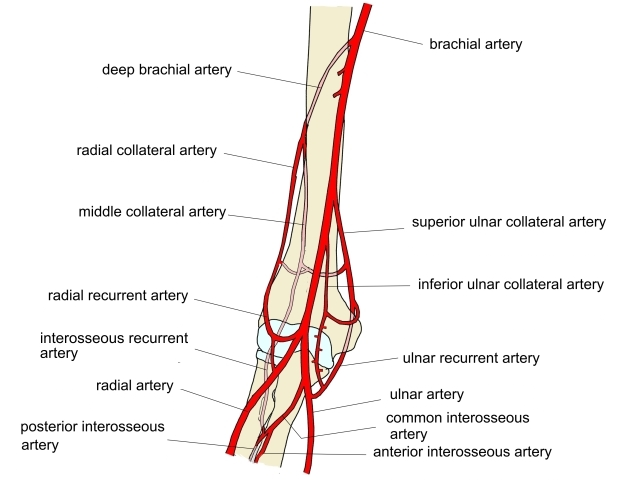
- Branches of the ulnar artery
Related terms
- Flexor carpi radialis
- Flexor carpi ulnaris
- Flexor digitorum superficialis
- Palmar aponeurosis
- Median nerve
References and sources
- Further reading: Palmaris longus muscle, Wikipedia.