Cell nucleus (Latin: nucleus)
Also called: nucleus
The cell nucleus, usually just called the nucleus, is the large, membrane-bound organelle that holds the cell's DNA and controls which genes are used.
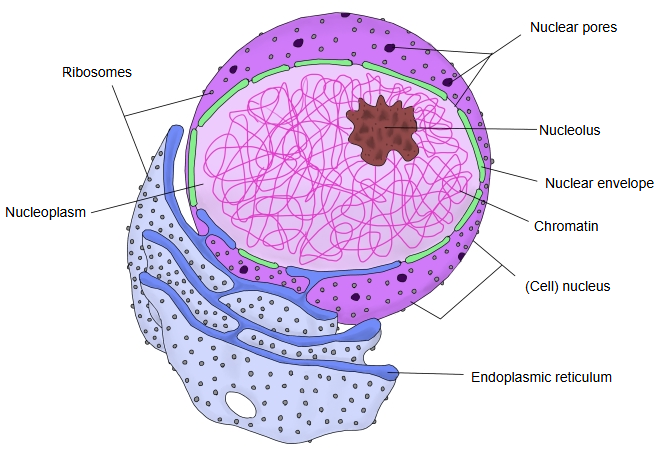
· It is enclosed by the nuclear envelope, a double membrane pierced by nuclear pores through which material passes between the nucleus and the cytoplasm.
· Inside lie the nucleoplasm, the chromatin (DNA wound around histone proteins) and one or more nucleoli, where ribosomal RNA is made and ribosomes are assembled.
· It stores the genetic information, copies genes into messenger RNA, and so decides what the cell becomes and how it works.
· Most cells have one nucleus. Mature red blood cells have none; skeletal muscle fibres have hundreds, and osteoclasts have several. Some cardiac muscle cells and liver cells have two.
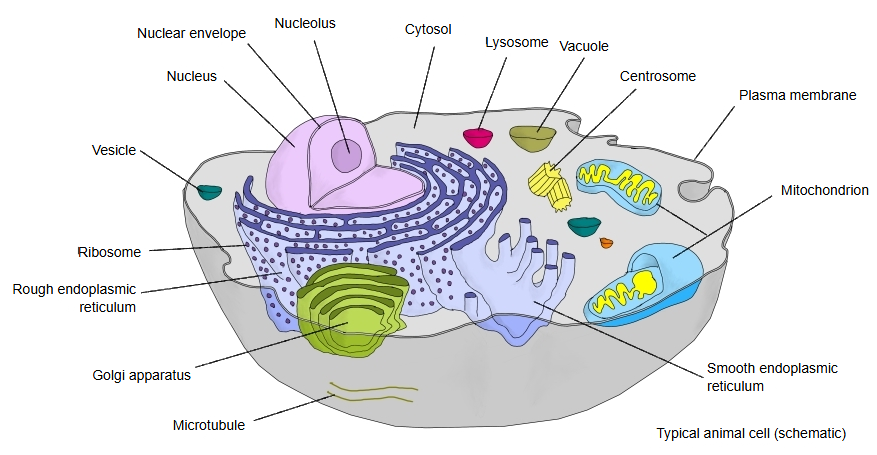
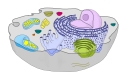 Typical animal cell
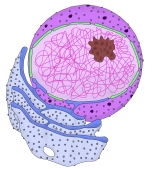 Structure of the nucleus
Related terms
References and sources
- Further reading: Cell nucleus, Wikipedia.
- Federative International Programme for Anatomical Terminology (FIPAT). Terminologia Anatomica, 2nd ed. (TA2), 2019.