Periodontium (Latin: periodontium)
Also called the periodontal tissues or the supporting tissues of the teeth
The periodontium is the four kinds of tissue around the teeth that support them.
Soft tissues: the gingiva and the periodontal ligament; hard tissues: the cementum and the alveolar bone
Periodontium
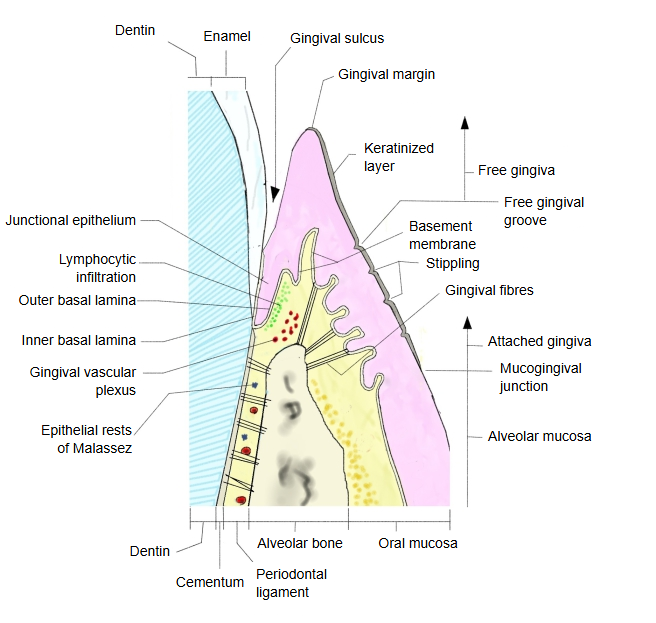
- Gingiva : the part of the oral mucosa around the teeth, the 'gums'. Includes the attached gingiva, the interdental papillae and the free gingiva.
- Periodontal ligament : the fibrous connective tissue, with vessels and nerves, between the root and the alveolar bone; also called the periodontal membrane.
- Cementum : one of the dental tissues: a thin bone-like layer covering the root. Two kinds: acellular and cellular cementum.
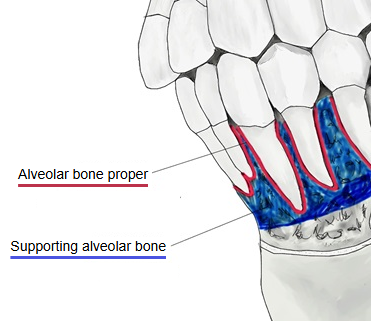
- Alveolar bone : the bone that holds the roots: the alveolar bone proper lining the socket (dental alveolus) and the supporting alveolar bone around it.
Note: cementum is also counted as one of the hard tissues of the tooth itself (the dental tissues), so some texts list it under both headings; sources differ on whether it belongs to the periodontium.
Together these tissues hold each tooth in its socket, absorb the forces of chewing and seal the tissues around the neck of the tooth against the mouth. Inflammation limited to the gingiva is gingivitis; when it spreads to the deeper supporting tissues it is periodontitis. See also the Teeth page.
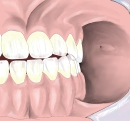 Teeth and gingiva
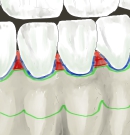 Parts of the gingiva
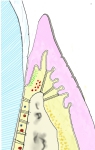 Free gingiva (section)
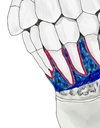 Alveolar bone
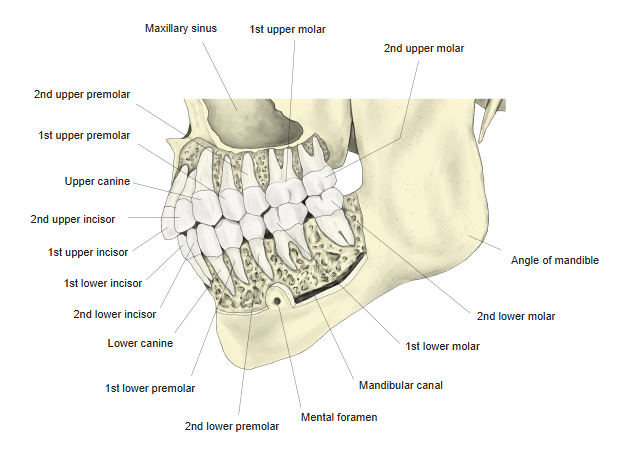
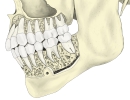 Roots of the teeth in the jaws
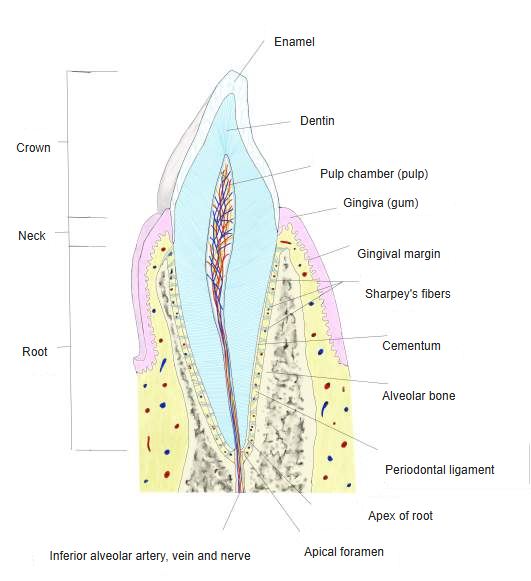
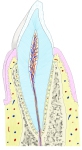 Incisor (longitudinal section)
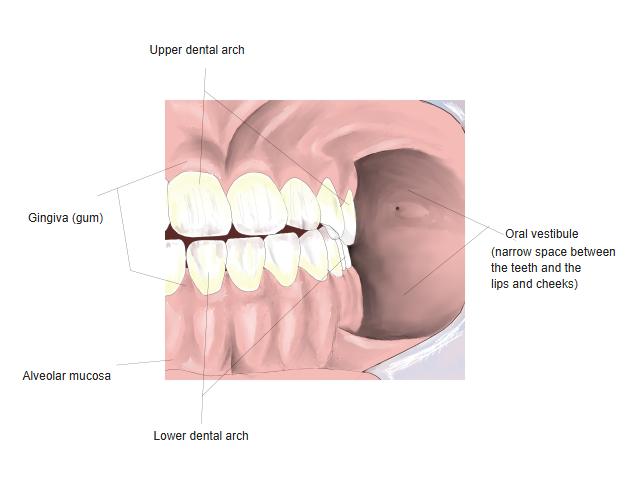
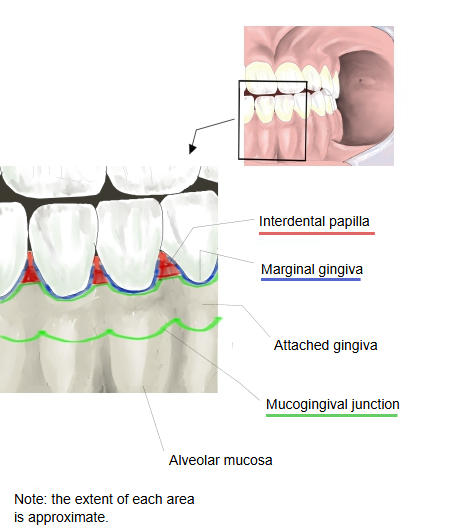
Related terms
- Gingiva
- Periodontal ligament
- Alveolar bone
- Acellular cementum
- Cellular cementum
- Dental alveoli
- Teeth
References and sources
- Further reading: Periodontium, Wikipedia.
- Federative International Programme for Anatomical Terminology (FIPAT). Terminologia Anatomica, 2nd ed. (TA2), 2019.