Latin: musculus adductor pollicis
Overview
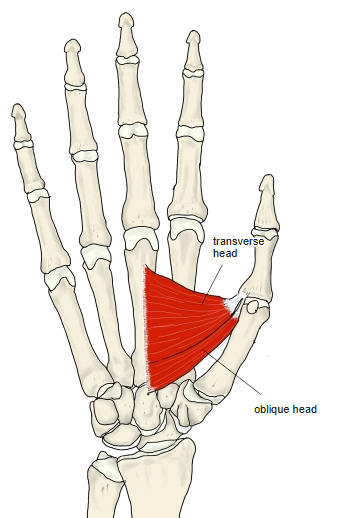
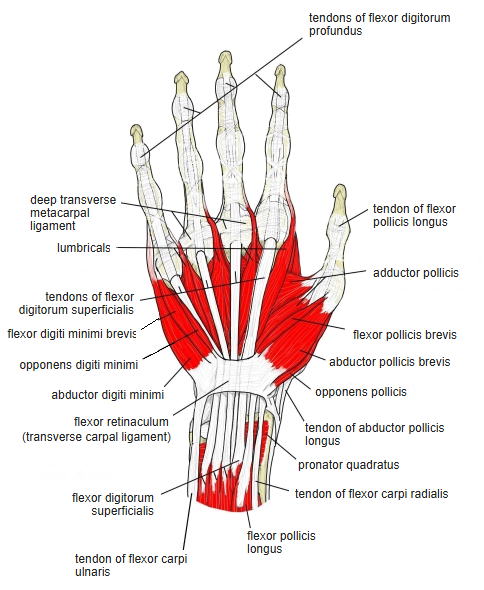
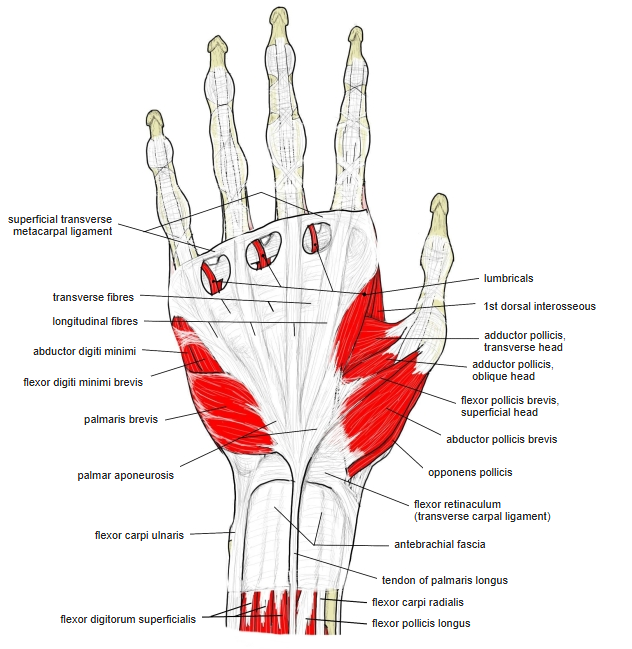
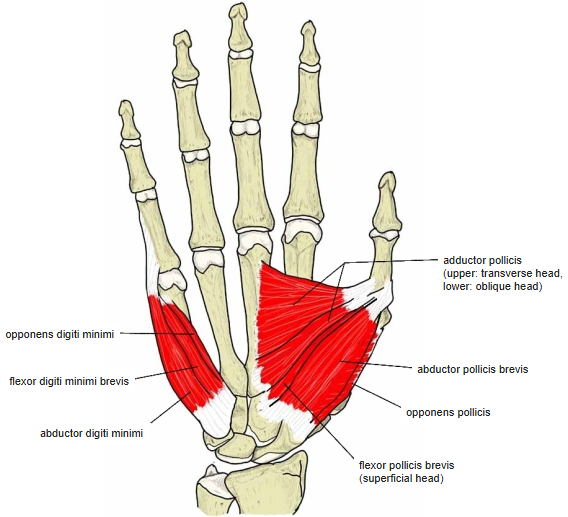
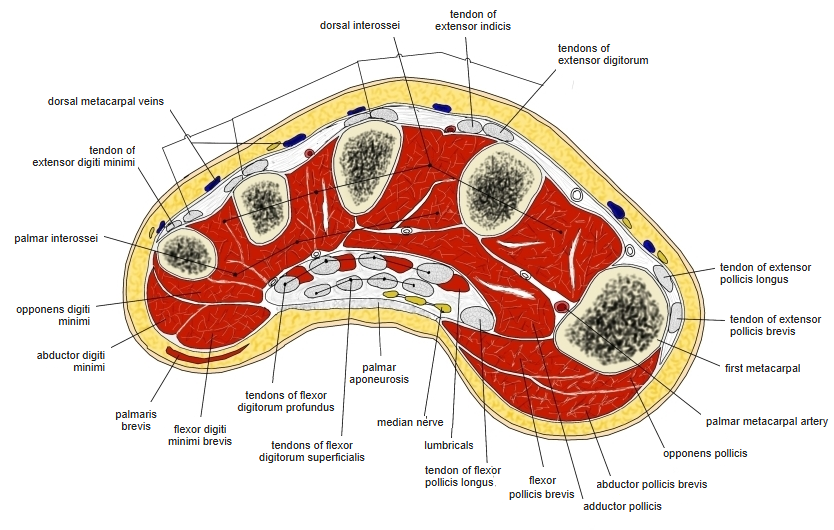
- A flat, triangular, fan-shaped muscle deep in the palm, with an oblique and a transverse head.
- Lies deep to the long flexor tendons and the 1st–2nd lumbricals.
- Can be felt faintly when the thumb is pressed against the little finger, but is difficult to distinguish from the thenar muscles.
Position in the classification
Upper Limb › Hand › Thenar muscles
- Adductor pollicis
- Abductor pollicis brevis
- Flexor pollicis brevis
- Opponens pollicis
Illustrations
Origin / insertion
- Origin (sources differ):
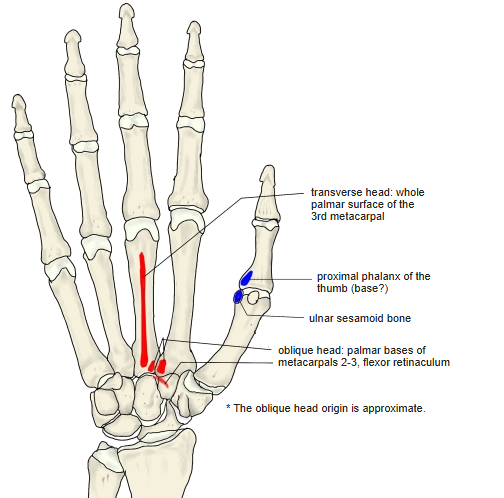
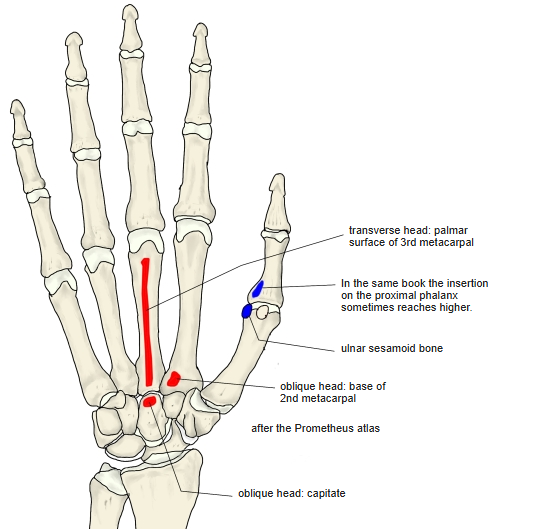
- Oblique head: capitate, the bases of the 2nd and 3rd metacarpals, the intercarpal ligaments and the sheath of the flexor carpi radialis tendon (Gray’s Anatomy); sources differ in detail — some give the flexor retinaculum, and some also include the trapezoid
- Transverse head: distal two-thirds of the palmar surface of the 3rd metacarpal
- Insertion: ulnar side of the base of the proximal phalanx of the thumb, by way of the ulnar sesamoid bone
Action
- Adducts the thumb (returns it to the plane of the palm, towards the index finger), mainly at the carpometacarpal joint
- Flexes the metacarpophalangeal (MCP) joint of the thumb
Innervation
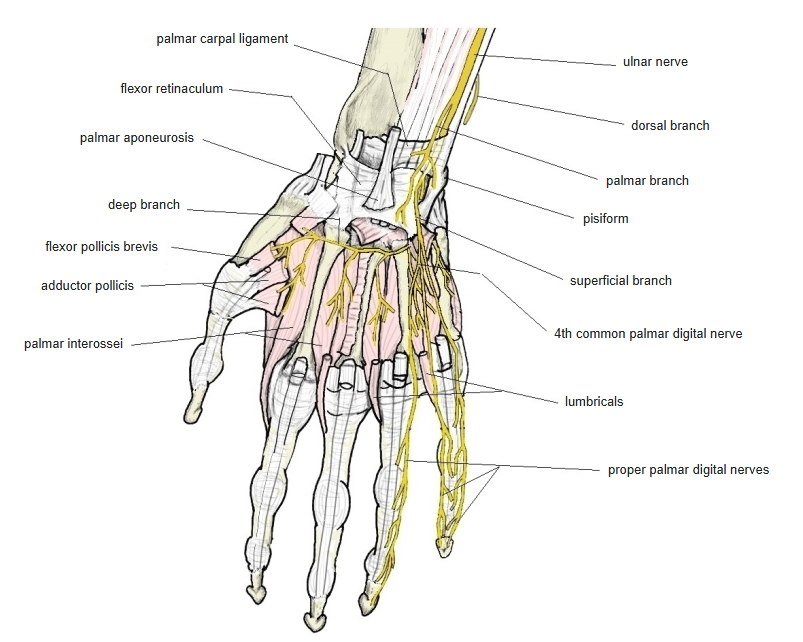
- Deep branch of the ulnar nerve (C8, T1)
Blood supply
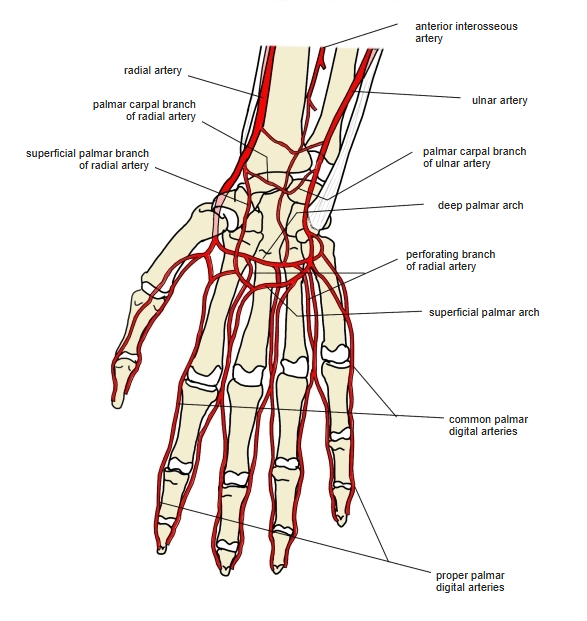
- Deep palmar arch
Related terms
- Flexor pollicis brevis
- Opponens pollicis
- Abductor pollicis brevis
- Dorsal interossei (hand)
- Ulnar nerve
References and sources
- Further reading: Adductor pollicis muscle, Wikipedia.