Sacroiliac joint (Latin: articulatio sacroiliaca)
What is the sacroiliac joint?
Bones
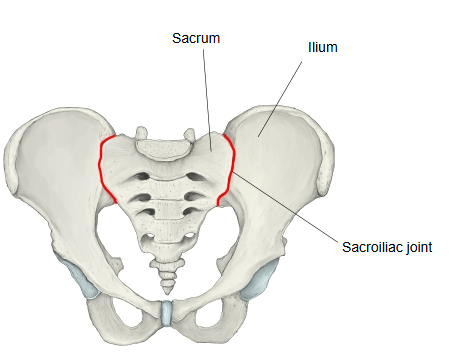
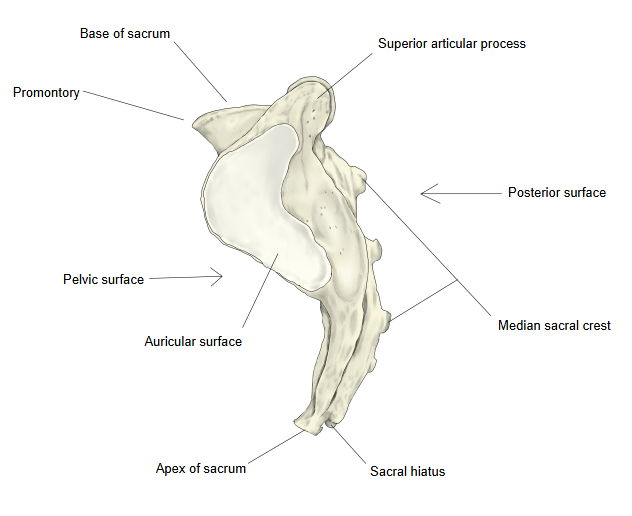
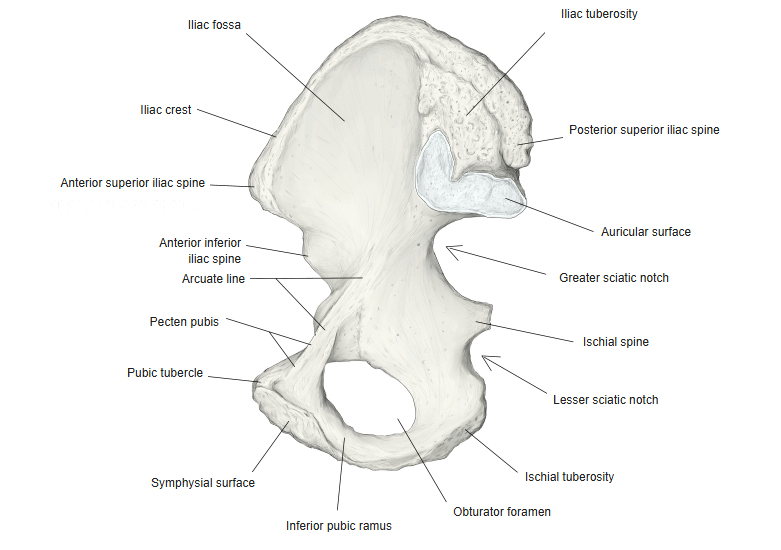
Sacroiliac joint: ilium (auricular surface) ⇔ sacrum (auricular surface)
Ligaments
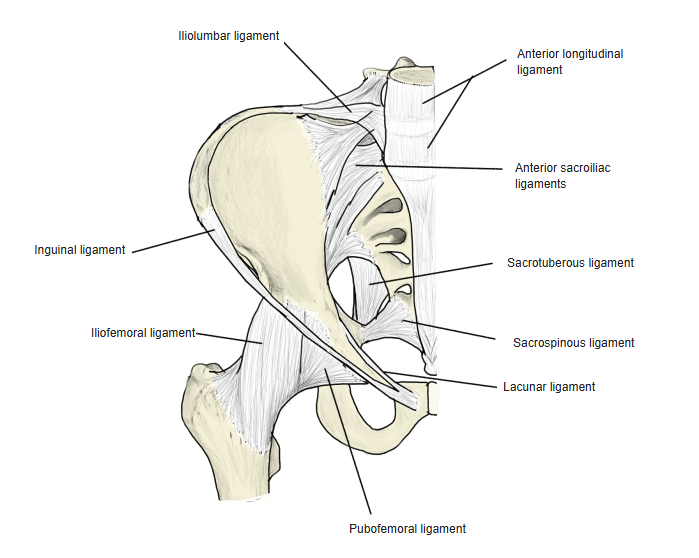
| Ligament | |
|---|---|
| 1 | Anterior sacroiliac ligament |
| 2 | Posterior sacroiliac ligament |
| 3 | Interosseous sacroiliac ligament |
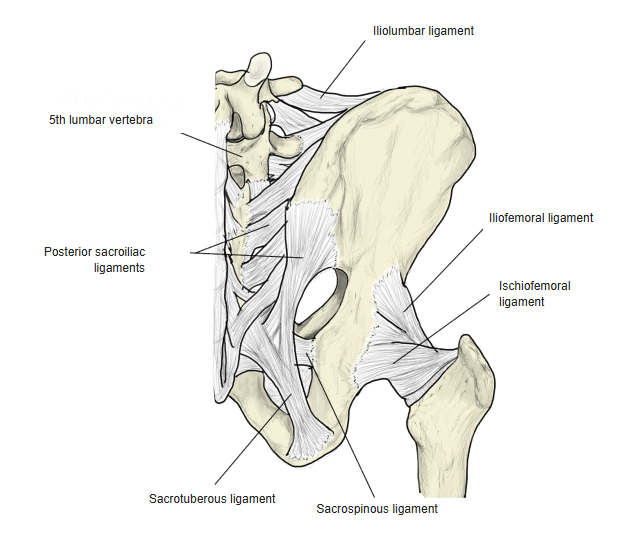
More about the joint
The sacroiliac joint is formed by the auricular surface of the sacrum and the auricular surface of the ilium. Both surfaces are covered with cartilage, and a narrow joint cavity containing synovial fluid lies between them. The surfaces are uneven, and the joint capsule is surrounded by strong ligaments, so the joint can hardly move. The bare auricular surfaces of the sacrum and ilium are markedly irregular, but once covered by articular cartilage they show no extreme ridges and hollows, so the shape of the surfaces is probably not the main factor that stops movement. In general, the upper two-thirds of the sacral auricular surface is hollowed into a groove running along its long axis, and the auricular surface of the hip bone has a matching ridge, so the two interlock. The deep layer of the articular cartilage is hyaline cartilage, while its surface layer is fibrocartilaginous. With age, and especially in men, the joint cavity is said to disappear in places.
Besides the three ligaments above, the joint is also stabilised by the iliolumbar ligament, the sacrotuberous ligament and the sacrospinous ligament.