Latin: Anastomosis
Overview
- A connection between two blood vessels.
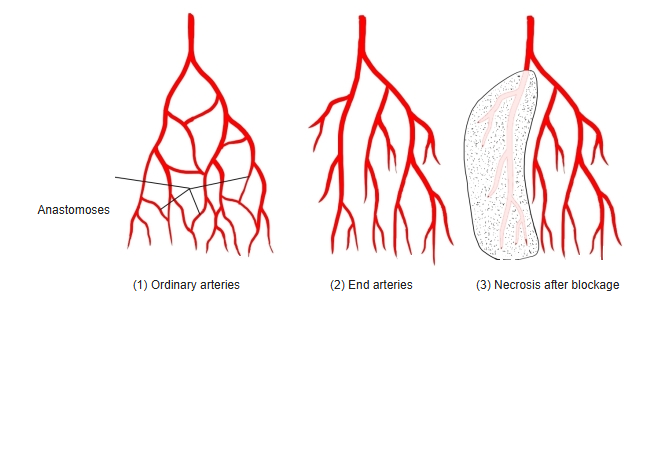
- Arterial anastomosis: branches of different arteries join, so a region has more than one route of supply (e.g. around joints, the palmar arches, the cerebral arterial circle).
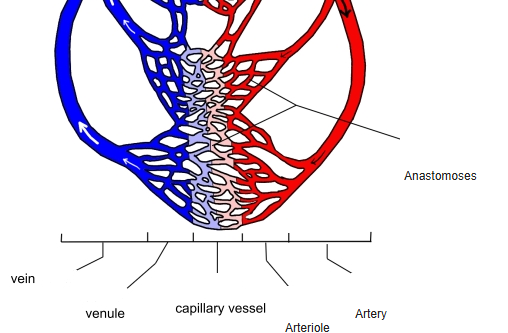
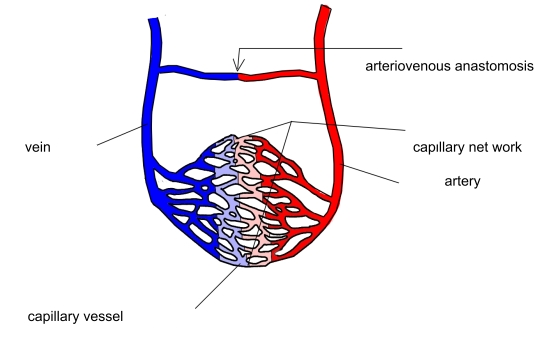
- Arteriovenous anastomosis: a direct channel from an arteriole to a venule that bypasses the capillaries (skin of the fingers, nose, ears).
- Venous anastomosis: veins joined into networks and plexuses (very common).
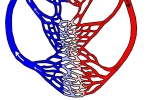
Arteries, capillaries and veins 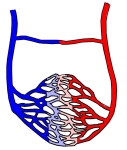
Arteriovenous anastomosis
End arteries
- Arteries whose branches do not join their neighbours are end arteries (e.g. central artery of the retina, many arteries of the brain, kidney, spleen).
- Blocking an end artery causes death of the tissue it supplies (infarction).
- Functional end arteries have anastomoses too small to keep the tissue alive if the main artery is blocked (e.g. coronary arteries).
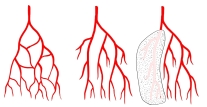
Types of arterial branching
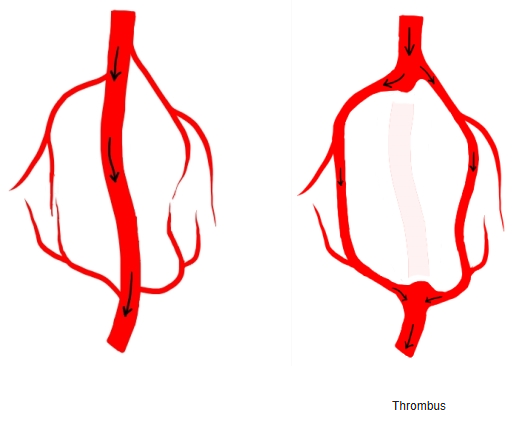
Collateral circulation
- When a main artery is slowly narrowed, anastomoses between its branches and neighbouring arteries enlarge and carry blood around the block.
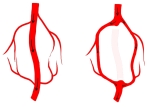
Collateral circulation 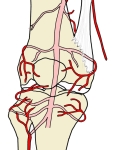
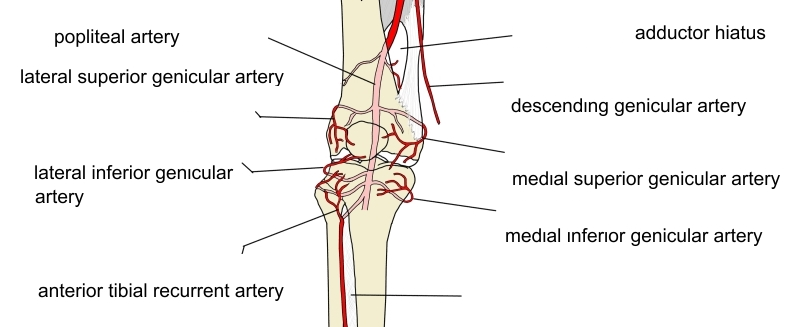
Arterial anastomoses around the knee
References and sources
- Further reading: Anastomosis, Wikipedia.