Latin: Circulatio sanguinis
Overview
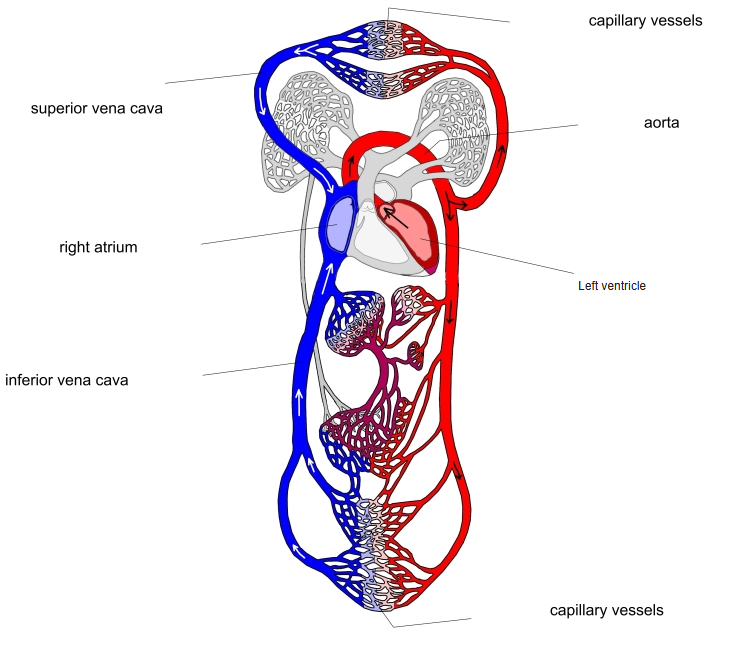
- Blood moves in two circuits joined in series through the heart.
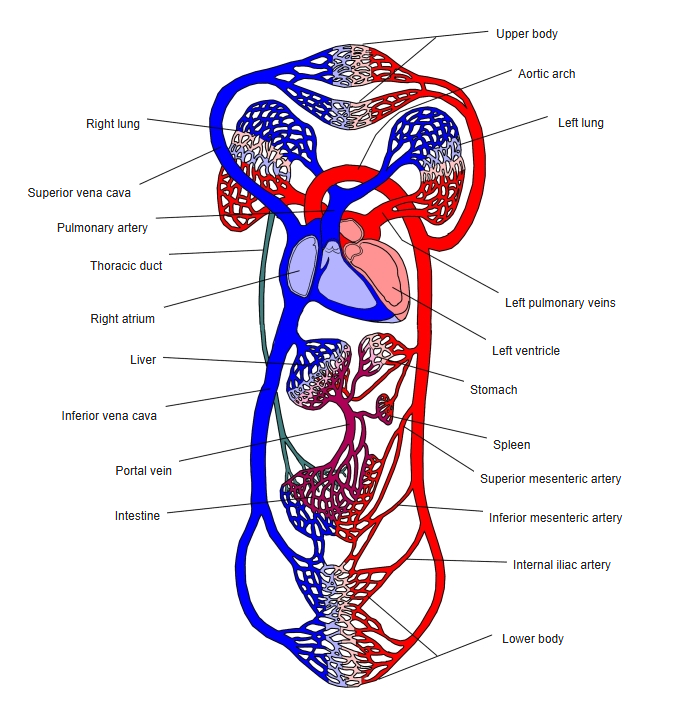
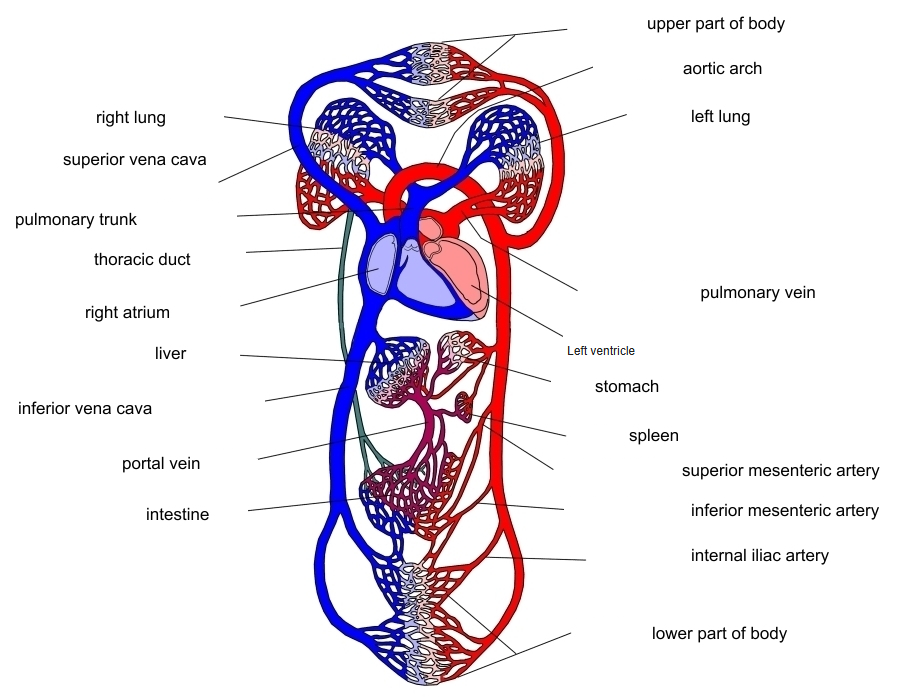
- Systemic circulation: left ventricle → aorta → arteries → capillaries of the body → veins → venae cavae → right atrium.
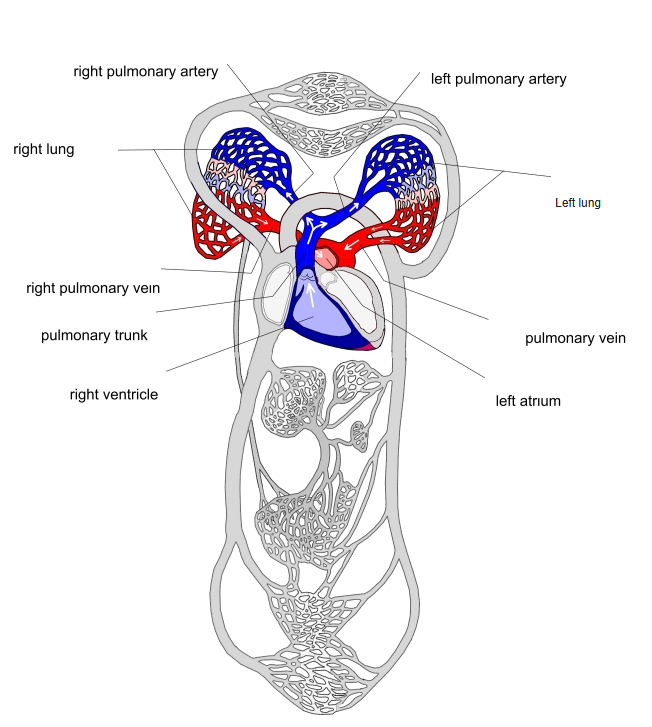
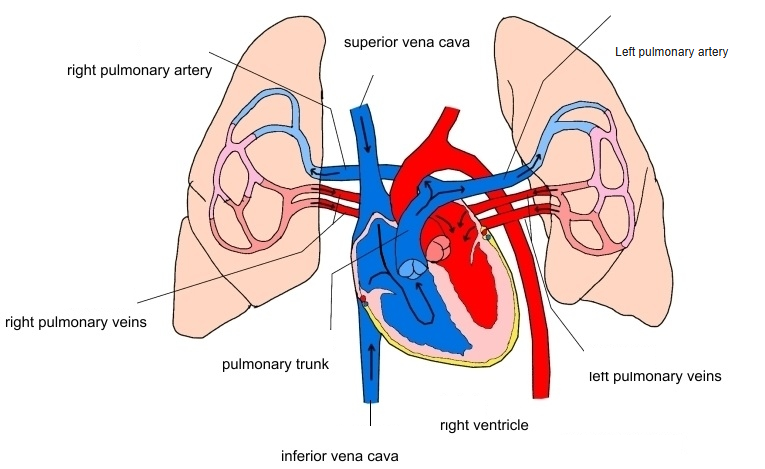
- Pulmonary circulation: right ventricle → pulmonary trunk → lungs → pulmonary veins → left atrium.
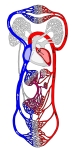
Systemic and pulmonary circulation 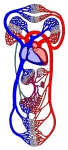
Overview of the circulation 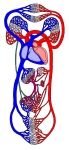
Main blood vessels of the body
Pulmonary circulation
- The pulmonary arteries carry deoxygenated blood; the pulmonary veins carry oxygenated blood – the reverse of the systemic vessels.
- Pressure is much lower than in the systemic circulation.
Pulmonary circulation 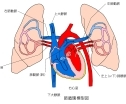
Heart and great vessels in the pulmonary circulation
Portal circulation
- A portal system links two capillary beds in series without passing through the heart.
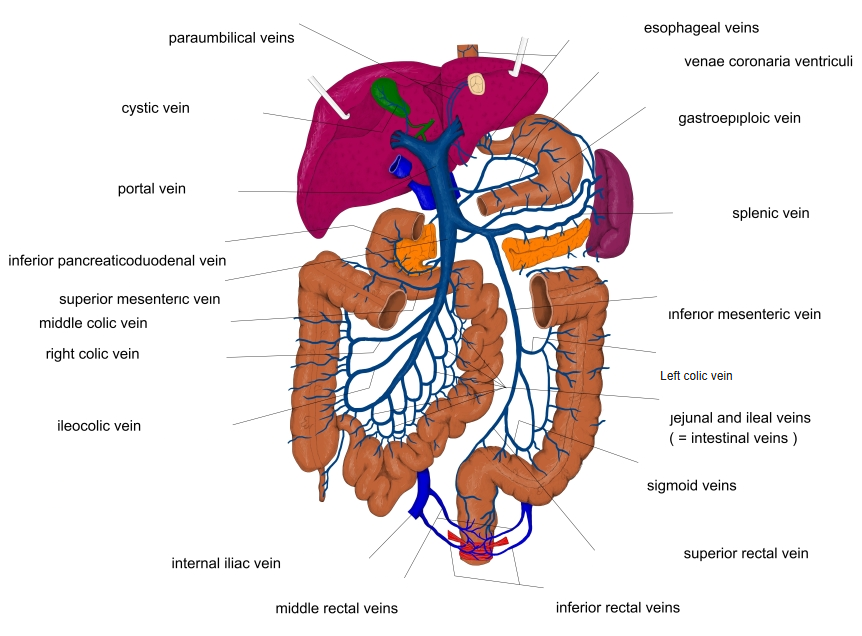
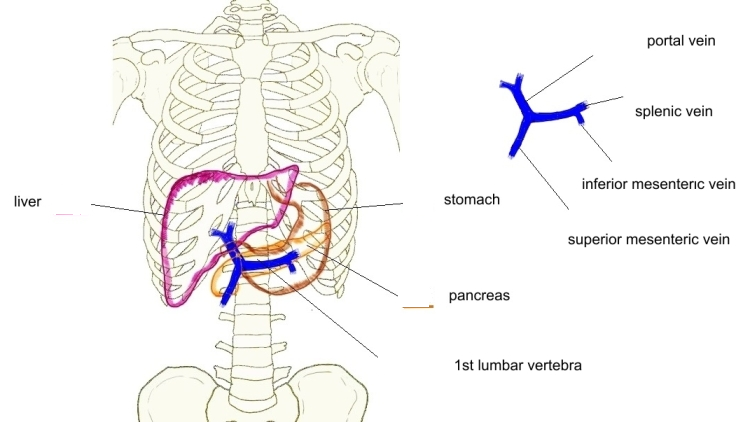
- The hepatic portal system: blood from the stomach, intestines, spleen and pancreas collects in the portal vein and passes through the liver before reaching the inferior vena cava.
- Another example is the hypophysial portal system between the hypothalamus and the anterior pituitary.
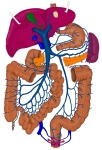
Hepatic portal system 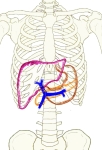
Portal vein and its main tributaries 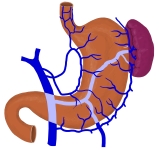
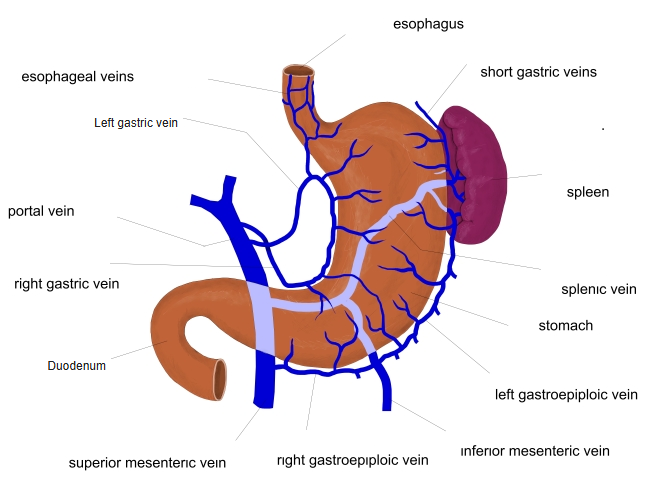
Veins of the stomach and spleen
Fetal circulation
- Before birth oxygenated blood comes from the placenta through the umbilical vein; the ductus venosus, foramen ovale and ductus arteriosus let most blood bypass the liver and lungs.
- These shunts close after birth.
References and sources
- Further reading: Circulation, Wikipedia.