Latin: Vena iliaca communis
Overview
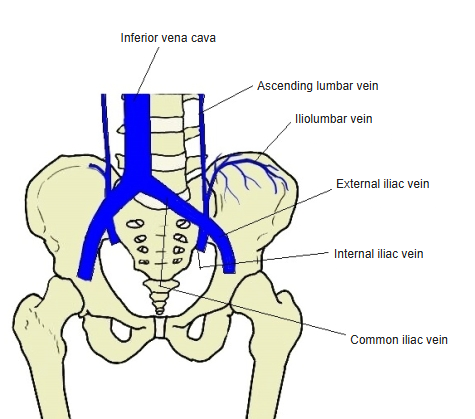
- Two short veins (right and left) that return blood from the lower limbs, pelvis and lower abdominal wall.
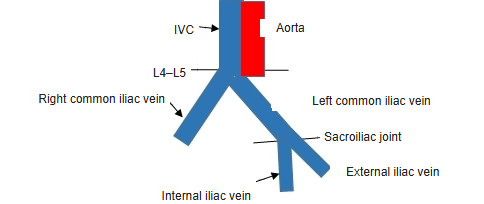
- Each is formed by the external iliac vein (lower limb) and the internal iliac vein (pelvis).
- They join at L5 to form the inferior vena cava.
- The left vein is longer, because the IVC lies to the right of the midline.

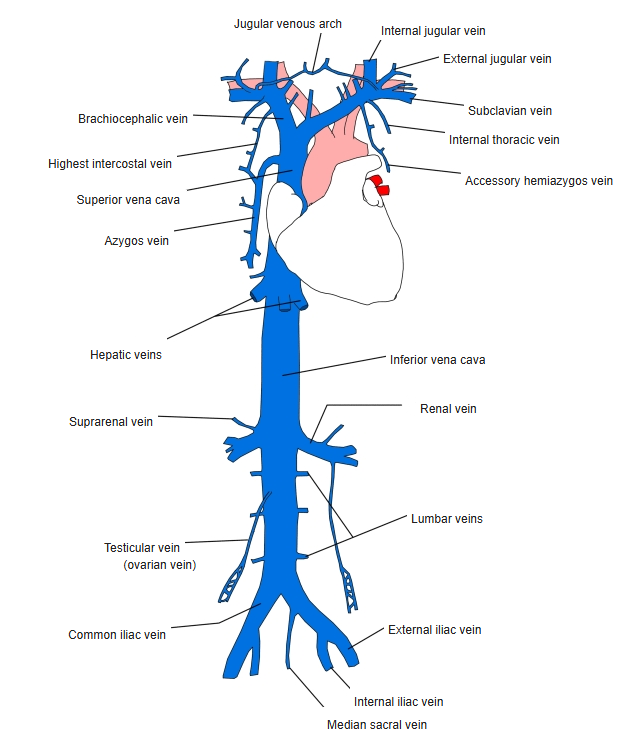
Venae cavae and their tributaries 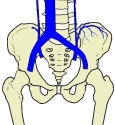
Iliolumbar vein
Relations
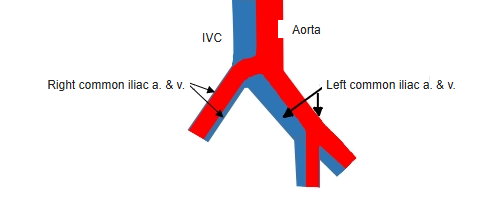
- The right common iliac artery crosses in front of the junction of the two veins.
- Each vein lies behind and slightly medial to the artery of the same name.
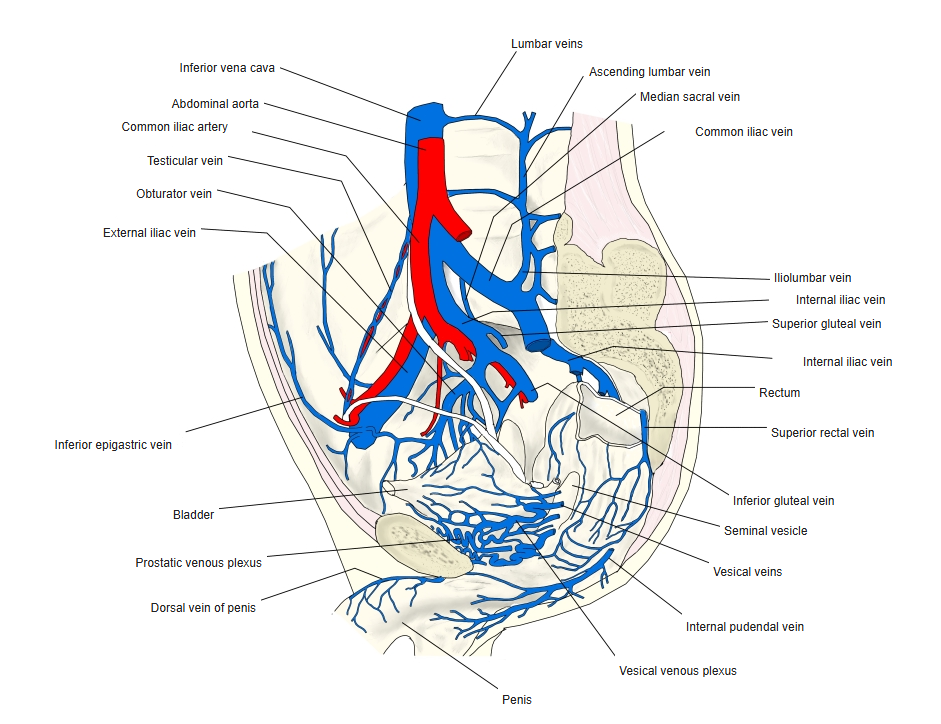
Veins of the male pelvis
References and sources
- Further reading: Common iliac vein, Wikipedia.