Latin: Arteria vertebralis
Overview
- The first branch of the subclavian artery.
- Ascends through the transverse foramina of the cervical vertebrae and enters the skull through the foramen magnum.
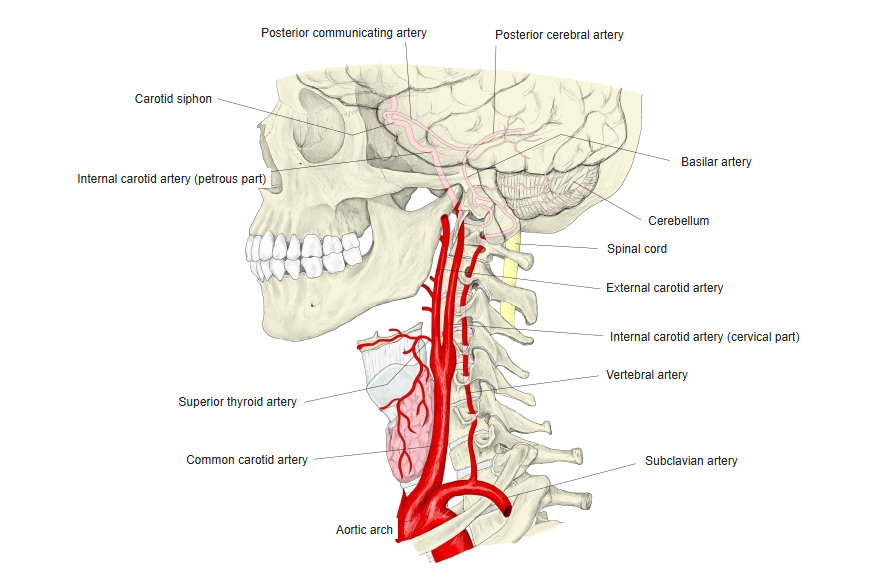
- The two vertebral arteries join to form the basilar artery, which supplies the brainstem, cerebellum and back of the cerebrum.
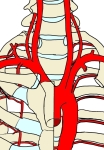
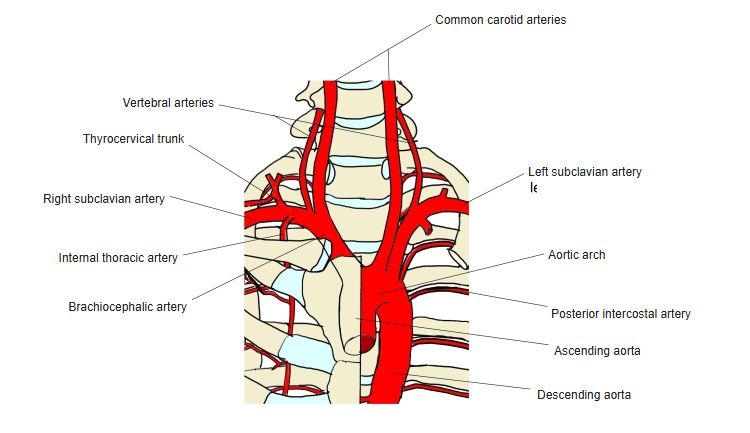
Origin of the vertebral arteries 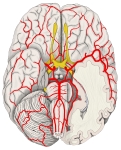
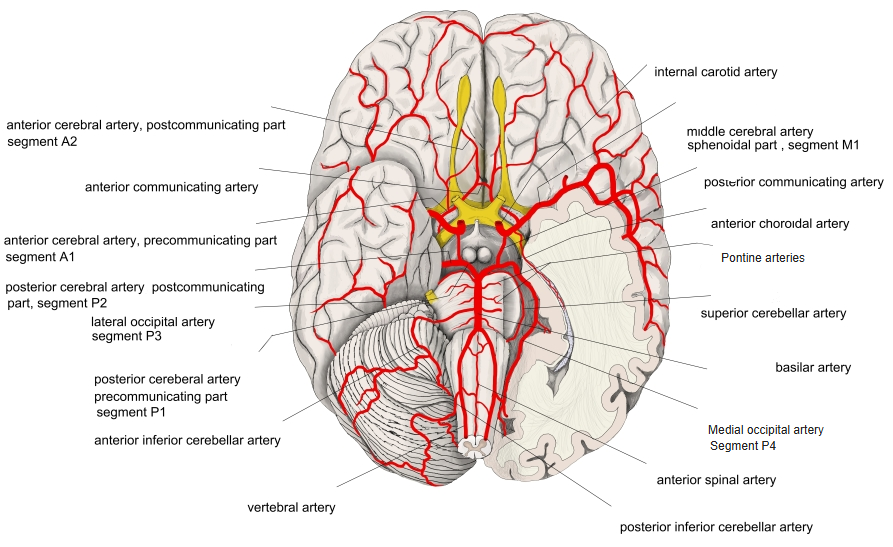
Arteries at the base of the brain
Course
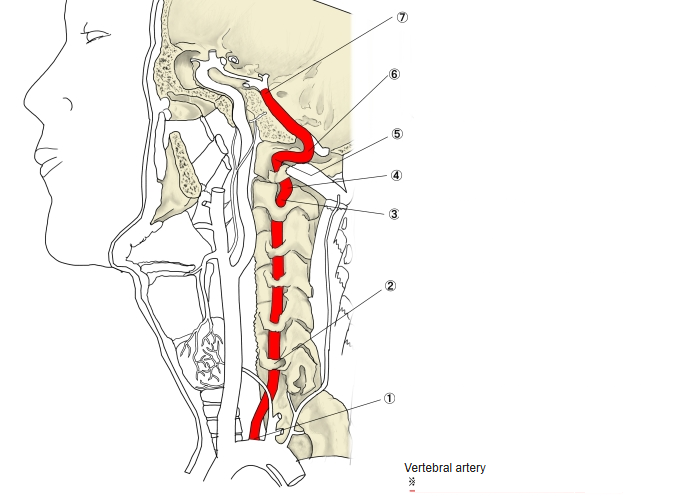
- Arises from the upper side of the subclavian artery and ascends to the transverse foramen of C6 (usually not C7).
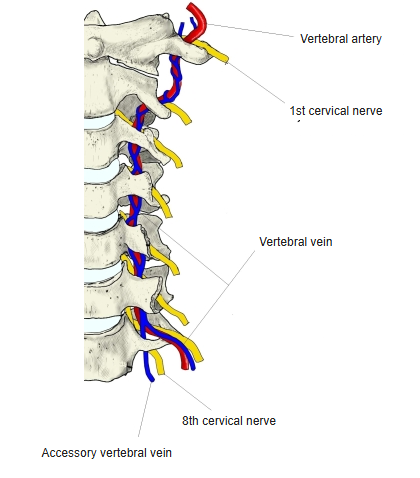
- Passes upward through the transverse foramina of C6–C1, then winds backward around the lateral mass of the atlas.
- Pierces the dura mater, enters the skull through the foramen magnum and joins its partner at the lower border of the pons.
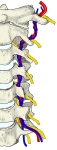
Vertebral artery in the cervical spine 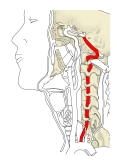
Course of the vertebral artery 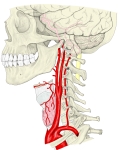
Common, external and internal carotid arteries 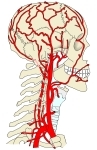
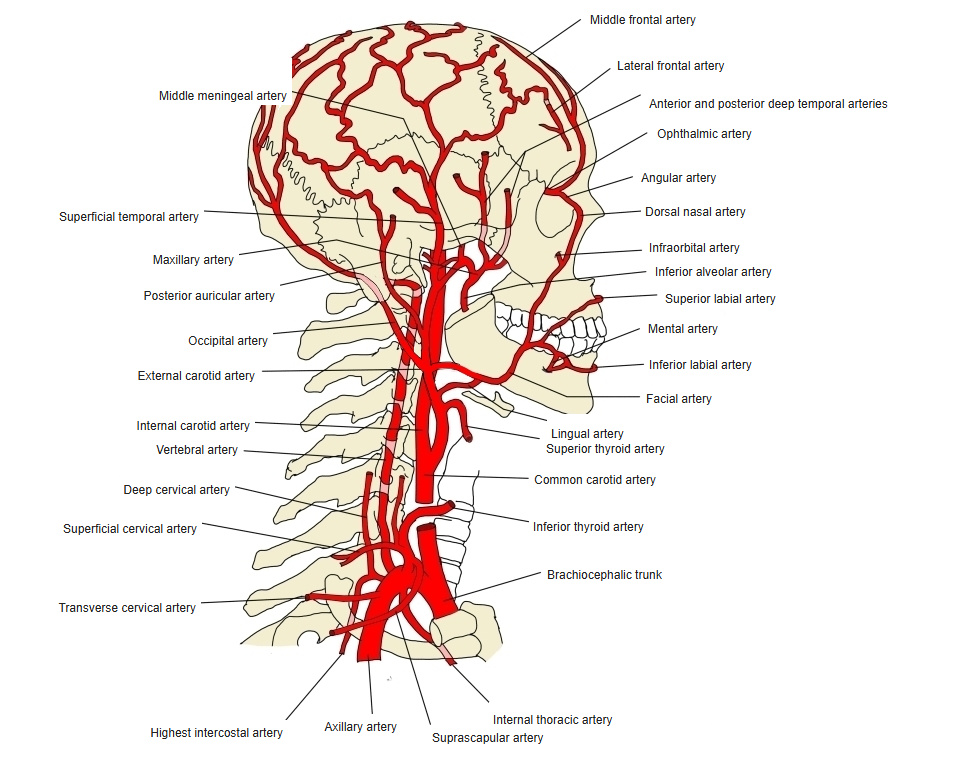
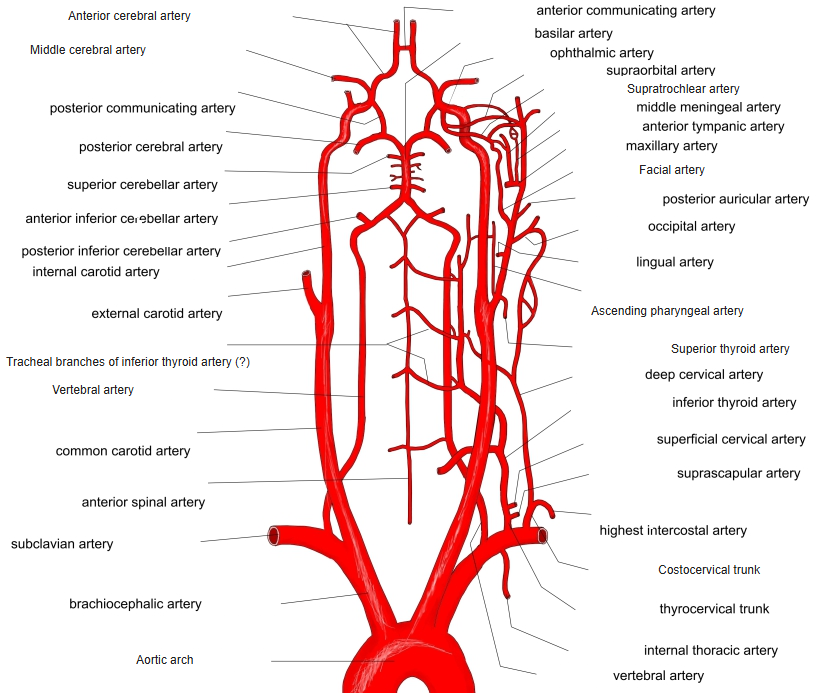
Arteries of the head and neck
Branches
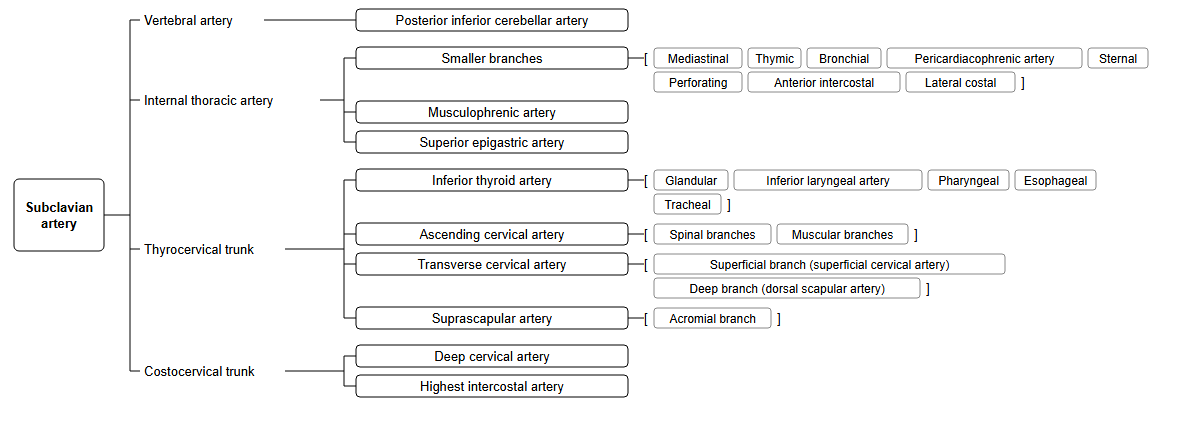
- In the neck: spinal and muscular branches.
- In the skull: meningeal branches, anterior and posterior spinal arteries, and the posterior inferior cerebellar artery.
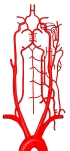
Arteries of the neck and brain (diagram)
Clinical notes
- Turning the head can narrow the artery where it winds around the atlas; this can matter in people with atherosclerosis.
- Its course through bone makes it vulnerable in neck injuries (vertebral artery dissection).
References and sources
- Further reading: Vertebral artery, Wikipedia.