Transverse foramen (Latin: foramen transversarium)
Rarely, the foramen is doubled on one or both sides.
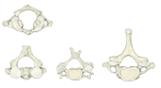 Cervical vertebrae (superior)
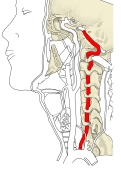 Course of the vertebral artery
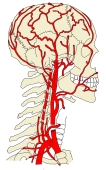 Arteries of the head and neck
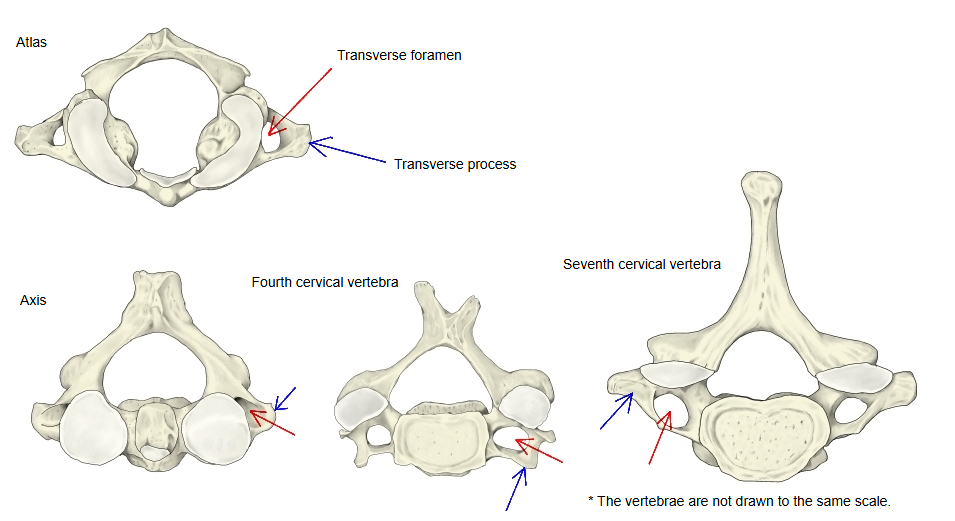
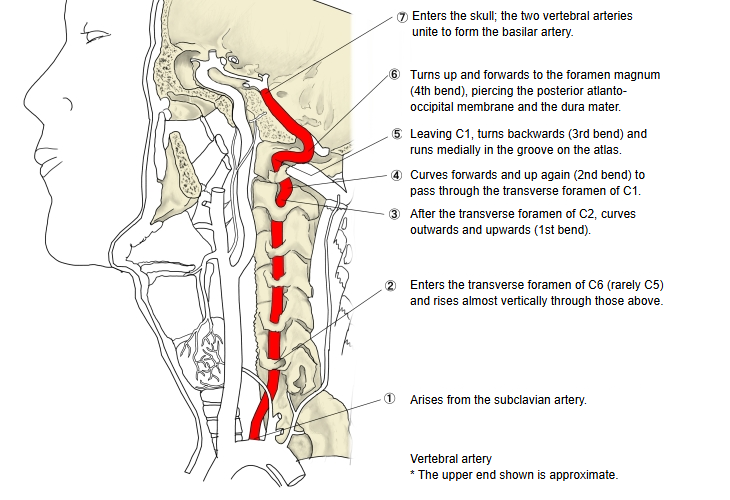
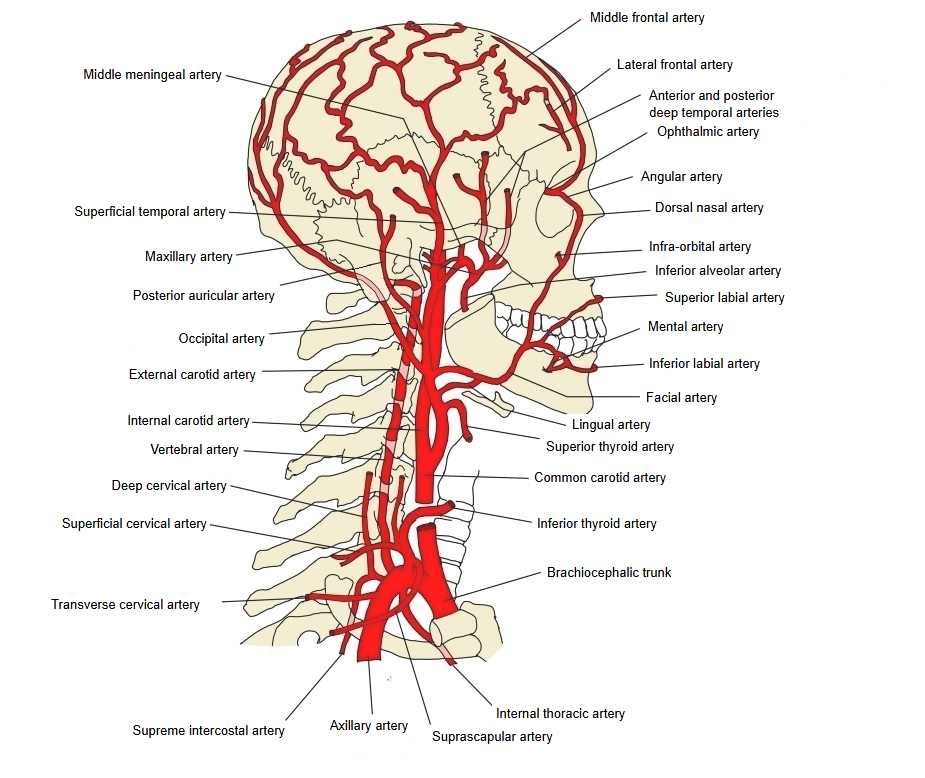
The vertebral artery usually enters the transverse foramen of the sixth cervical vertebra (occasionally the fifth or seventh) and climbs through the foramina of C6 to C1, accompanied by the vertebral veins and a sympathetic nerve plexus. In the atlas the foramen is large and placed far laterally; the artery then curves backwards over the posterior arch of the atlas to enter the skull.
The foramen of the seventh cervical vertebra (vertebra prominens) is small and normally transmits only vertebral veins, not the artery.
A double (accessory) transverse foramen is a normal variant, seen most often at C6 and less often above and below; the accessory foramen is always the smaller one. In one study of 363 cervical vertebrae, about 1.6% had accessory foramina, mostly on one side only; no vertebra lacked the foramen. Rarely the foramen is incomplete or absent.
Where it is found
Related terms
References and sources
- Further reading: Cervical vertebrae, Wikipedia.
- Further reading: Vertebral artery, Wikipedia.
- Federative International Programme for Anatomical Terminology (FIPAT). Terminologia Anatomica, 2nd ed. (TA2), 2019.