Cartilaginous joint (Latin: junctura cartilaginea)
Also called Cartilaginous junction
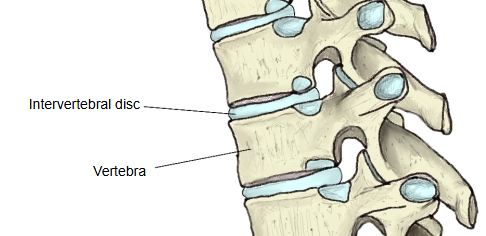
joint
- Symphysis : (fibrocartilaginous joint) e.g. the pubic symphysis.
- Synchondrosis : (hyaline cartilaginous joint) e.g. the spheno-occipital synchondrosis.
In a cartilaginous joint the bones are united entirely by cartilage, hyaline cartilage or fibrocartilage. It allows more movement than a fibrous joint but much less than a synovial joint; slightly movable joints of this kind are also called amphiarthroses. Cartilaginous joints also form the growth regions of immature long bones and the joints between the vertebral bodies with their intervertebral discs.
· Synchondrosis (primary cartilaginous joint): the bones are joined by hyaline cartilage, often temporary, e.g. the epiphyseal cartilage of growing bones and the spheno-occipital synchondrosis. Many synchondroses turn into bone (synostosis) after growth ends.
· Symphysis (secondary cartilaginous joint): the bones are covered with hyaline cartilage and joined by fibrocartilage, e.g. the pubic symphysis and the joints between vertebral bodies (intervertebral symphysis). Symphyses lie in the midline and are slightly movable.
Related terms
- Perichondrium
- Amphiarthrosis
- Pubic symphysis
- Sternal synchondroses
- Manubriosternal joint
- Epiphyseal cartilage
- Costal cartilage
References and sources
- Further reading: Cartilaginous joint, Wikipedia.
- Further reading: Symphysis, Wikipedia.
- Further reading: Synchondrosis, Wikipedia.
- Federative International Programme for Anatomical Terminology (FIPAT). Terminologia Anatomica, 2nd ed. (TA2), 2019.