Epiphyseal closure
Also called Growth plate closure
What is epiphyseal closure?
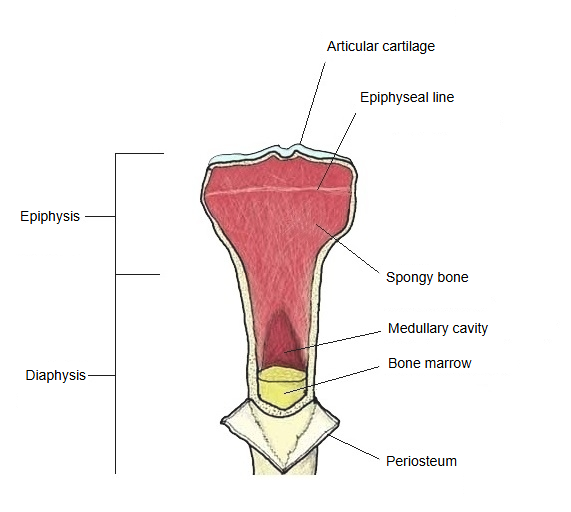
When the epiphyseal cartilage has been completely replaced by bone (epiphyseal closure), the bone stops growing in length and the epiphysis is joined to the diaphysis. What is seen on radiographs and in sections as the epiphyseal line, a thin line of denser bone, is the closed epiphyseal cartilage. In long bones closure mostly happens between about 12 and 25 years of age; sources differ on the exact ages.
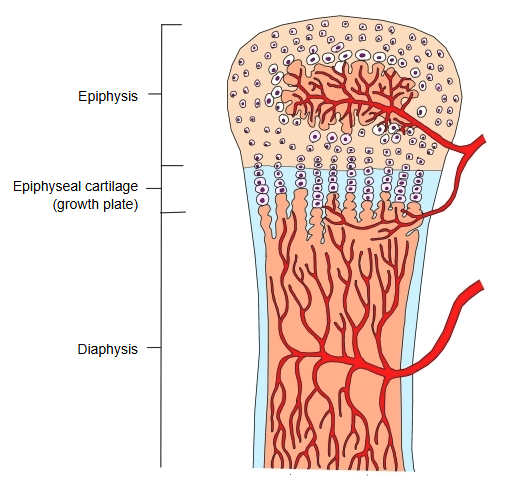
The epiphyseal plate (growth plate) is a plate of cartilage near each end of a long bone, between the epiphysis and the metaphysis, the widened part of the shaft. While the body grows, its cartilage cells keep dividing; the older cells move towards the diaphysis, where the cartilage is replaced by bone, so the bone lengthens as long as the plate is present. Towards the end of growth cell division slows and stops, the whole plate turns into bone and growth in length ends; the epiphyseal line is all that remains of it. The timing differs between bones and between the sexes (earlier in females), and because the order of closure is fairly regular, radiographs of the growth plates are used to estimate skeletal age.
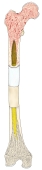 Adult femur (cut-away view)
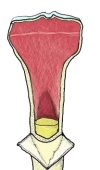 Upper end of tibia (section)
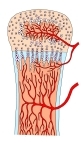 Growing long bone (model)
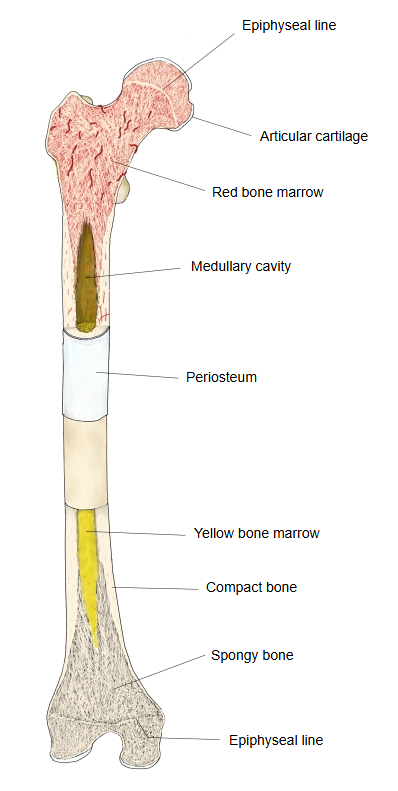
Related terms
References and sources
- Further reading: Epiphyseal plate, Wikipedia.
- Further reading: Ossification, Wikipedia.
- Federative International Programme for Anatomical Terminology (FIPAT). Terminologia Anatomica, 2nd ed. (TA2), 2019.