Epiphyseal line (Latin: linea epiphysialis)
Also called the epiphyseal scar
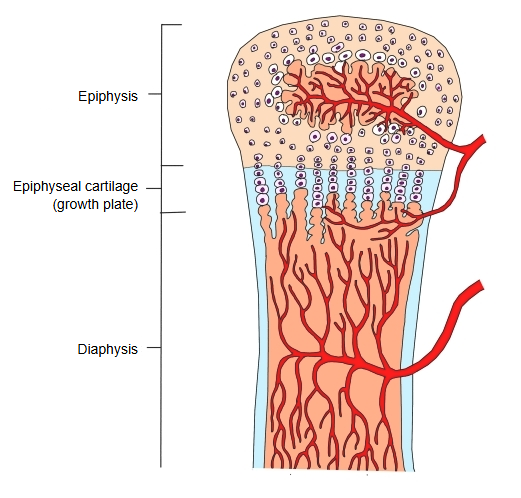
The epiphyseal line is the state in which the epiphyseal cartilage of a long bone has been completely replaced by bone.
The complete replacement of the epiphyseal cartilage by bone, which ends growth in length, is called epiphyseal closureIn long bones it happens mostly between about 12 and 24-25 years of age, depending on the bone and the sex; sources differ on exact ages
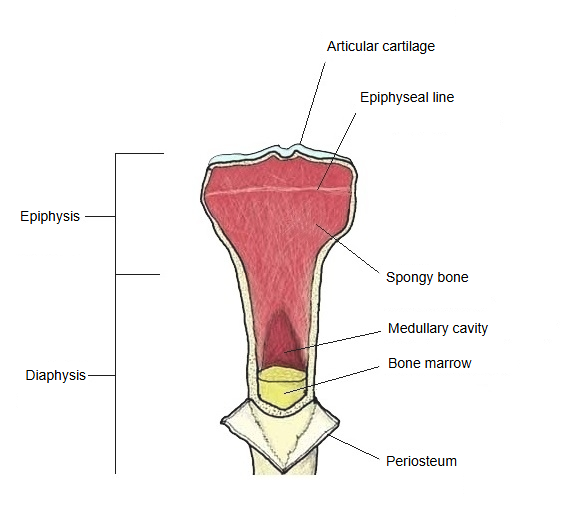
After the growth plate has closed, a single thin line remains visible on radiographs; this scar of the former plate is the epiphyseal line. It is also seen as a line of denser bone in a cut bone.
So the epiphyseal line marks the junction of the epiphysis and the diaphysis of a long bone, where the two have fused: it is the remnant of the epiphyseal plate. It may fade with age and is not always seen. Examples are the lines at the ends of the femur and the tibia.
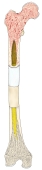 Adult femur (cut-away view)
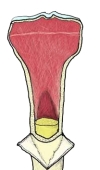 Upper end of tibia (section)
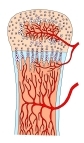 Growing long bone (model)
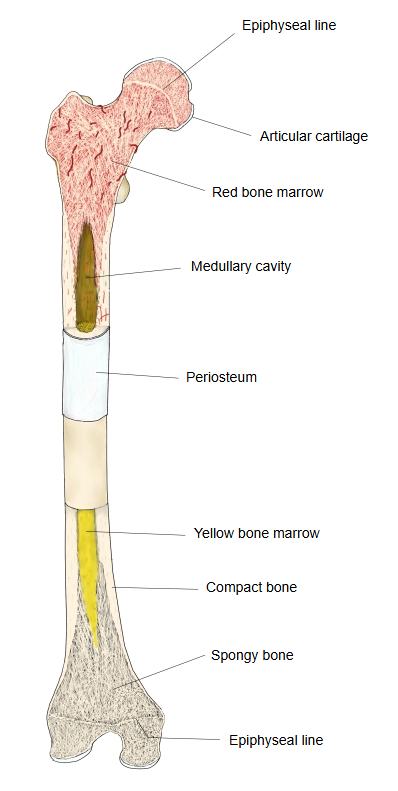
Related terms
References and sources
- Further reading: Epiphyseal plate, Wikipedia.
- Federative International Programme for Anatomical Terminology (FIPAT). Terminologia Anatomica, 2nd ed. (TA2), 2019.