Filum terminale (Latin: filum terminale)
Also called the terminal filum
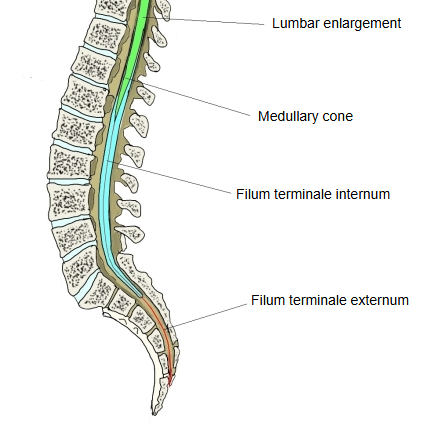
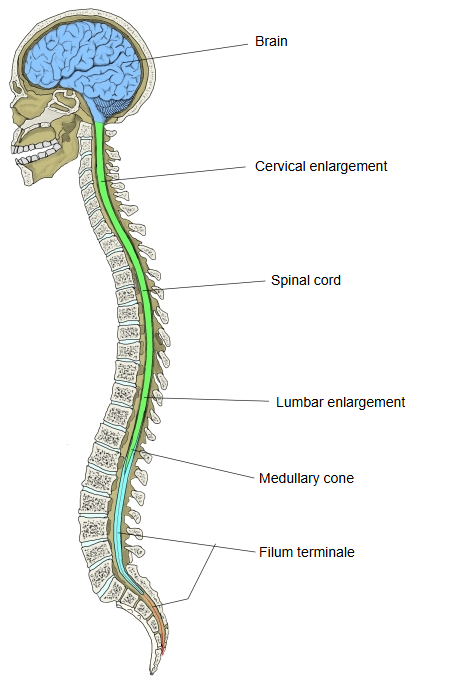
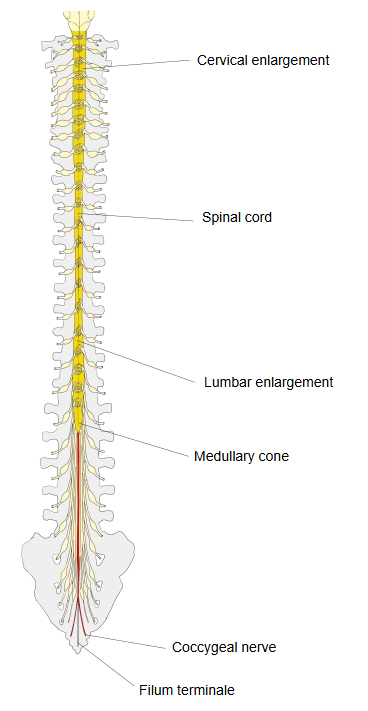
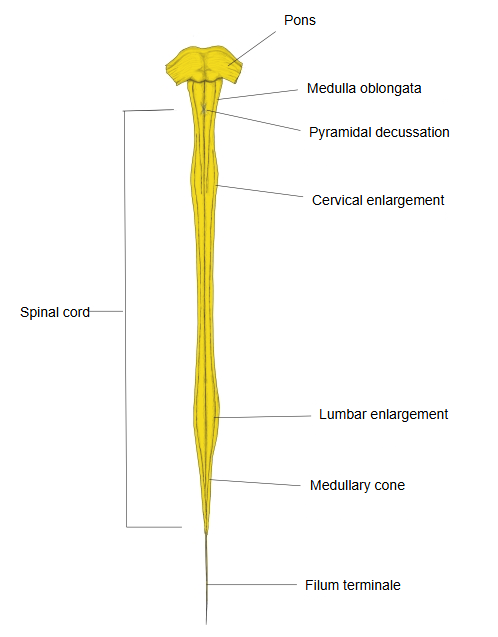
The filum terminale is a tough strand of fibres that runs down from the tip of the medullary cone to the coccyx.
Medullary cone: the cone-shaped part of the spinal cord below the lumbar enlargement
It is a strand of connective tissue, mainly pia mater; its upper end still contains some spinal cord tissue.
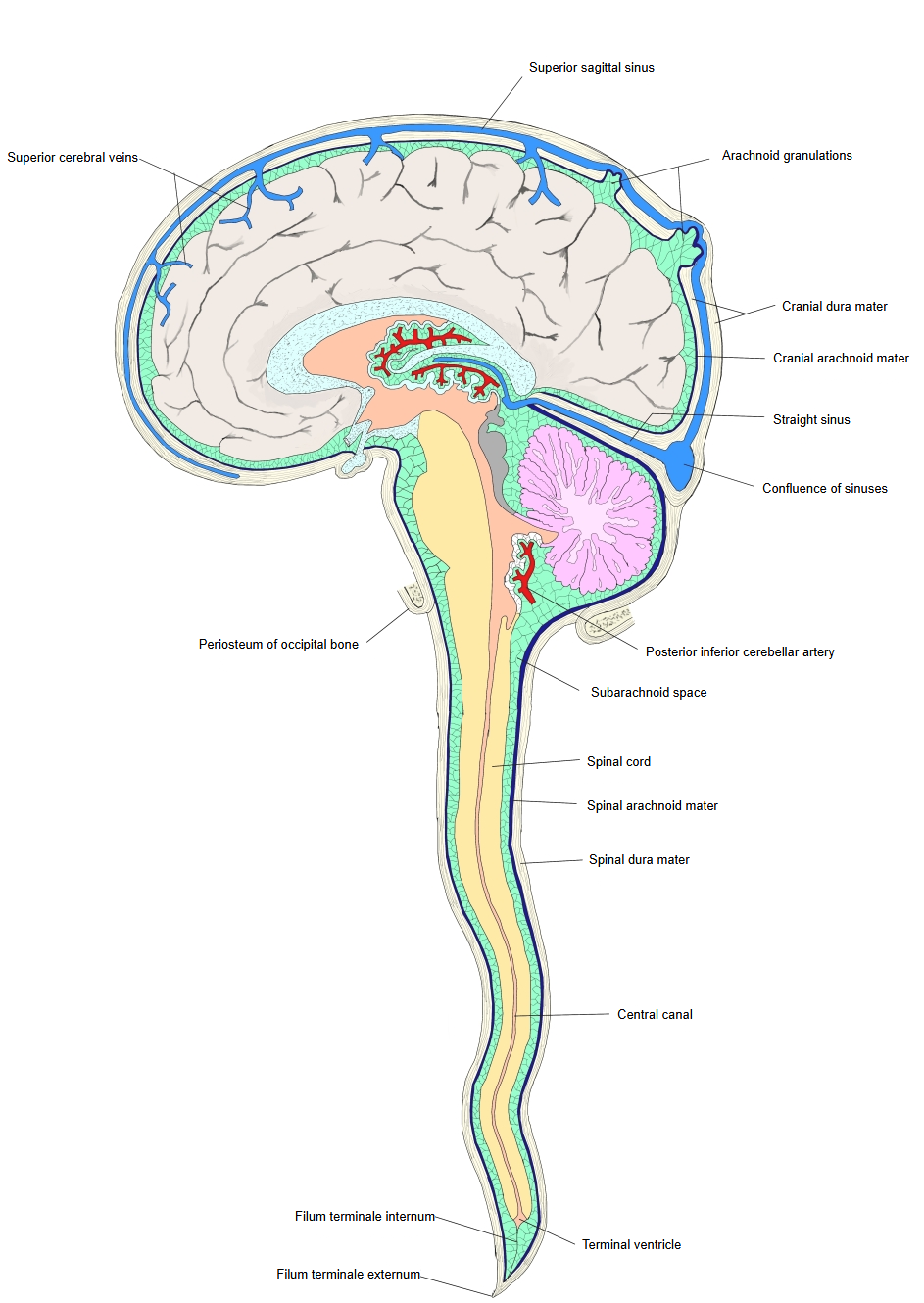
The central canal of the cord continues a few centimetres into its upper part
The filum terminale is divided into an upper part, the pial part (filum terminale internum), and a lower part, the dural part (filum terminale externum).
Filum
terminale
terminale
- Pial part : the upper, longer part (about 15 cm of the roughly 20 cm); it lies together with the cauda equina inside the sac of the spinal dura mater, down to about the second sacral vertebra.
- Dural part : the rest, below the dural sac; covered by dura, it reaches the back of the coccyx (first coccygeal segment).
It starts at the tip of the medullary cone, at about the level of the first or second lumbar vertebra, and is roughly 20 cm long in adults; sources give slightly different lengths. Inside the dural sac it runs among the nerve roots of the cauda equina in the subarachnoid space and can be told apart by its bluish-white, shiny look.
It anchors the lower end of the spinal cord and the dural sac. A short, thick or fatty filum can hold the cord down (tethered cord syndrome).
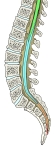 Lower end of the spinal cord
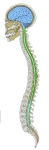 Brain and spinal cord (lateral view)
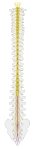 Spinal cord (posterior view)
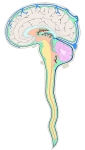 Brain, spinal cord and meninges (median section)
 Spinal cord (isolated)
Reference websites
[Wikipedia]
· Filum terminale, Wikipedia.
Related terms
- Medullary cone
- Pial part of filum terminale
- Spinal cord
- Dura mater
- Subarachnoid space
- Coccyx
- Coccygeal vertebrae
References and sources
- Further reading: Filum terminale, Wikipedia.
- Federative International Programme for Anatomical Terminology (FIPAT). Terminologia Anatomica, 2nd ed. (TA2), 2019.