Hilum of lung (Latin: hilum pulmonis)
Also called Pulmonary hilum
See the hilum and root of the lung in the explanation of the lung.
· The root of the lung is made of the main bronchus, pulmonary artery, pulmonary veins, bronchial vessels, nerves, lymph vessels and bronchopulmonary lymph nodes. Around the hilum the visceral pleura turns back into the mediastinal pleura; below the hilum this fold continues as the pulmonary ligament.
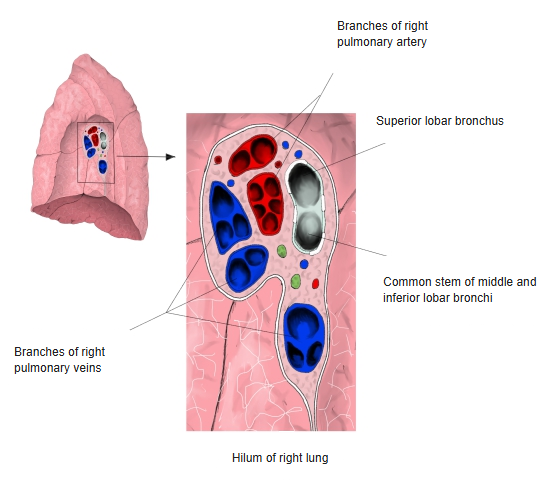
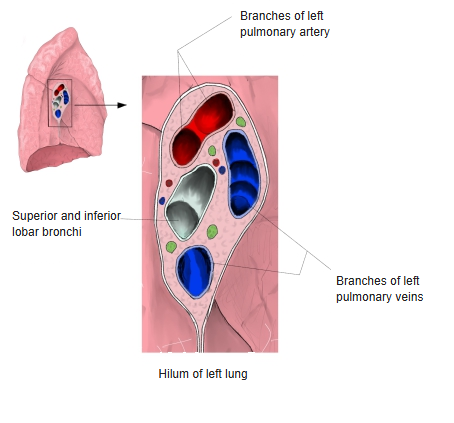
· From back to front, the bronchus lies furthest back, the pulmonary artery in front of it and the pulmonary veins furthest forward. On the right, the superior lobar bronchus lies above the pulmonary artery; on the left, the pulmonary artery is the highest structure. The pulmonary veins lie lowest on both sides.
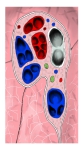 Hilum of right lung
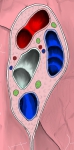 Hilum of left lung
Note: "hilum" is the area on the lung surface; "root" is the bundle of structures that passes through it. Some texts use the two words loosely for each other.
Related terms
References and sources
- Further reading: Root of the lung, Wikipedia.
- Federative International Programme for Anatomical Terminology (FIPAT). Terminologia Anatomica, 2nd ed. (TA2), 2019.