Laryngeal saccule (Latin: sacculus laryngis)
Also called Saccule of larynx or the appendix of laryngeal ventricle
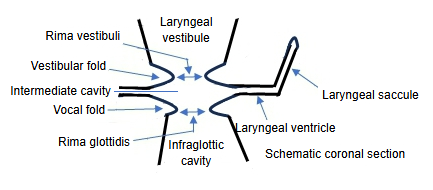
· In monkeys and apes it is greatly enlarged and forms the laryngeal air sacs.
Its function is not fully understood. Its main features are:
· It is surrounded by loose connective tissue.
· This connective tissue may contain lymphoid tissue.
· It is lined by pseudostratified (ciliated) columnar epithelium and contains many mucous glands.
It rises from the front part of the ventricle between the vestibular fold and the thyroid cartilage, sometimes as high as the upper border of the cartilage. Its mucus, from the laryngeal glands, probably helps to lubricate the vocal folds; small muscle fibres around it may squeeze the mucus out. An abnormal air-filled enlargement of the saccule is called a laryngocele.
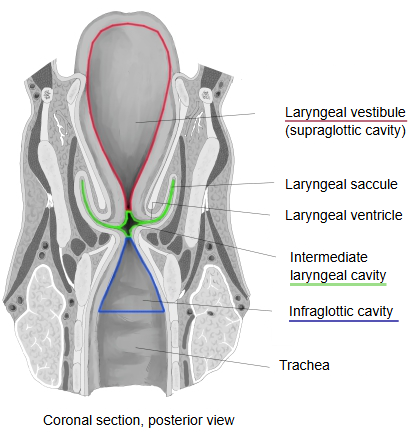
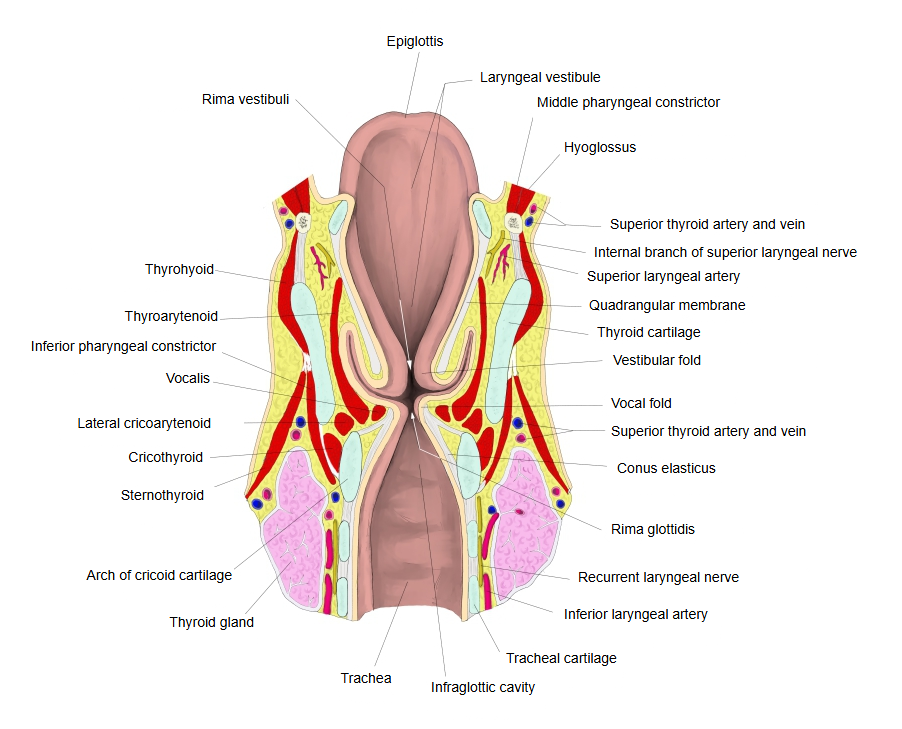
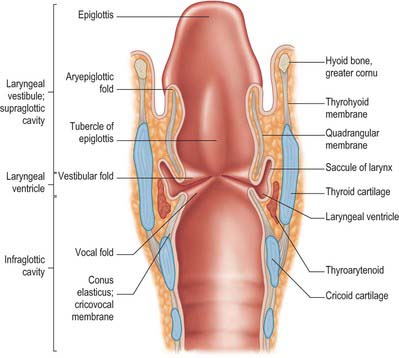
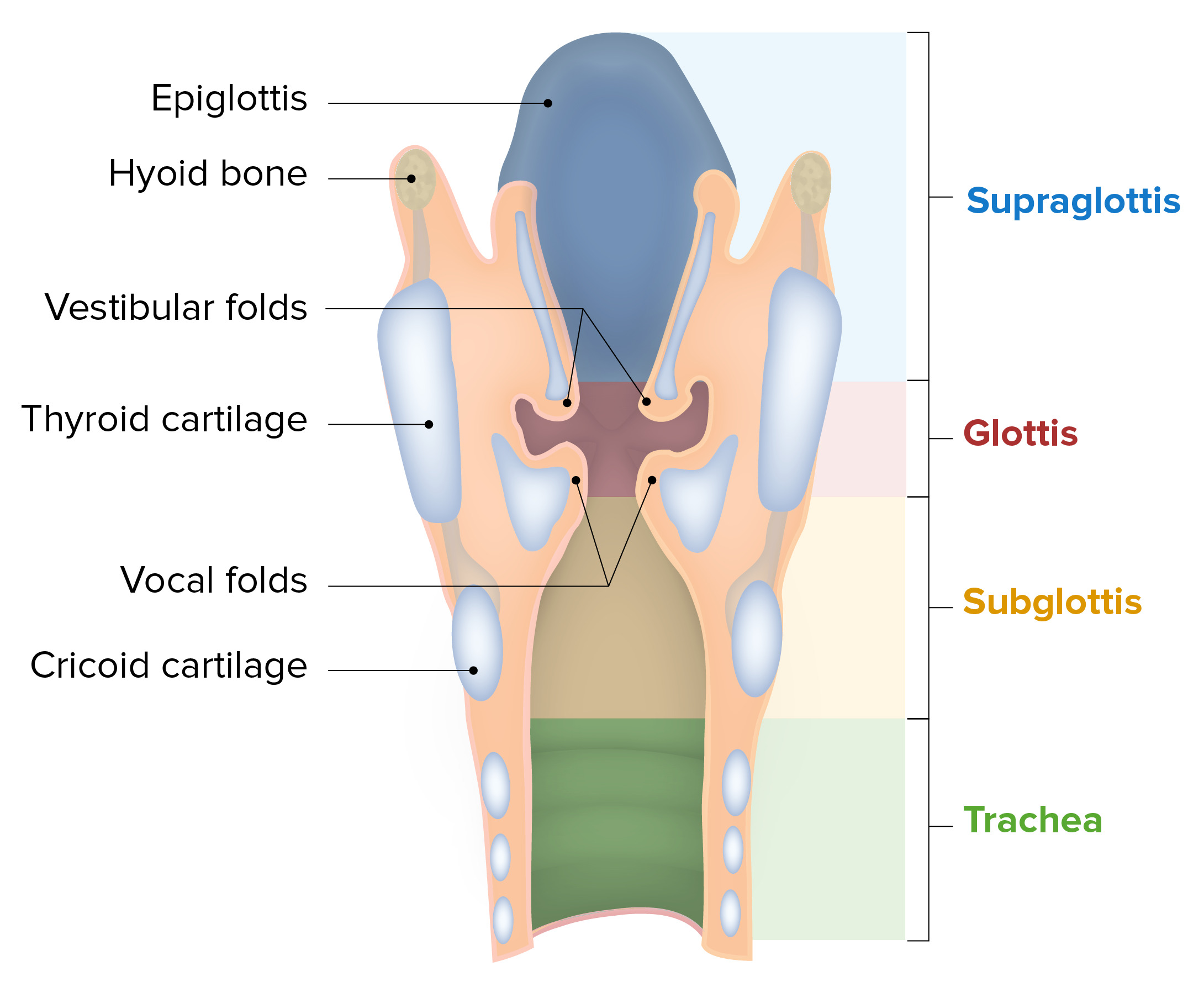
 Parts of the laryngeal cavity (coronal section)
 Larynx (coronal section)
Reference websites
[Wikipedia]
· Laryngeal saccule, Wikipedia.
[Websites with illustrations]
· Coronal section of the larynx (Clinical Gate)
· Components and regions of the larynx (Lecturio)
Where it is found
Related terms
References and sources
- Further reading: Laryngeal saccule, Wikipedia.
- Federative International Programme for Anatomical Terminology (FIPAT). Terminologia Anatomica, 2nd ed. (TA2), 2019.