Membranous common crus (Latin: crus membranaceum commune)
Also called the common membranous limb.
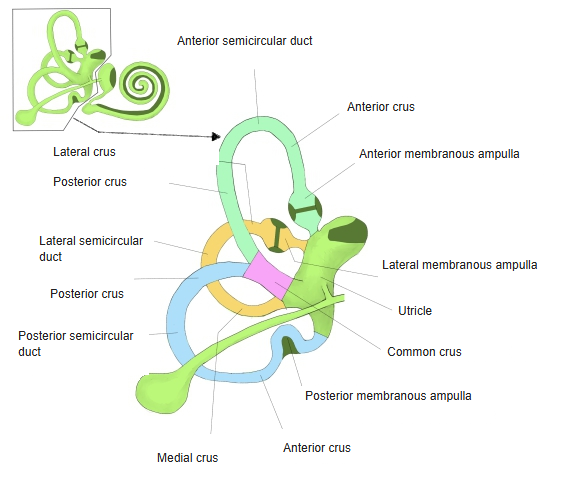
The membranous common crus is the single duct formed where the simple (non-ampullary) limbs of the anterior and posterior semicircular ducts join before they open into the utricle.
Simple limb: the end of a semicircular duct that has no ampullaUtricle: one of the two sacs in the middle of the membranous labyrinth
- Anterior duct : ampullary limb → anterior membranous ampulla → utricle; simple limb → membranous common crus → utricle.
- Lateral duct : ampullary limb → lateral membranous ampulla → utricle; simple limb → directly into the utricle.
- Posterior duct : ampullary limb → posterior membranous ampulla → utricle; simple limb → membranous common crus (with the anterior duct) → utricle.
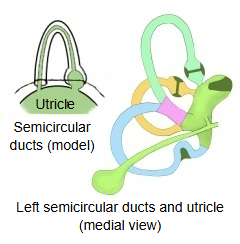
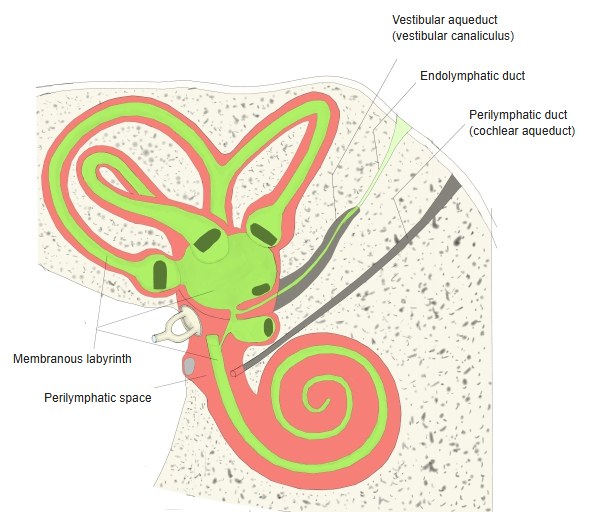
Like the rest of the membranous labyrinth, it contains endolymph and lies inside the bony common crus of the bony labyrinth, surrounded by perilymph. Because the anterior and posterior ducts share it, the three ducts open into the utricle by five openings: three ampullary limbs, the common crus and the simple limb of the lateral duct.
Some authors regard the common crus not as a part of the ducts but as a tubular extension of the utricle itself, a superior sinus of the utricle. On that view the semicircular ducts open into the utricle by six openings instead of five. Sources differ.
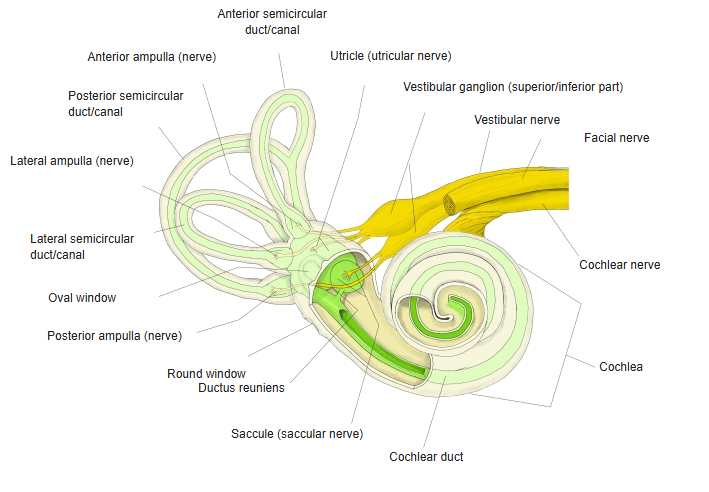
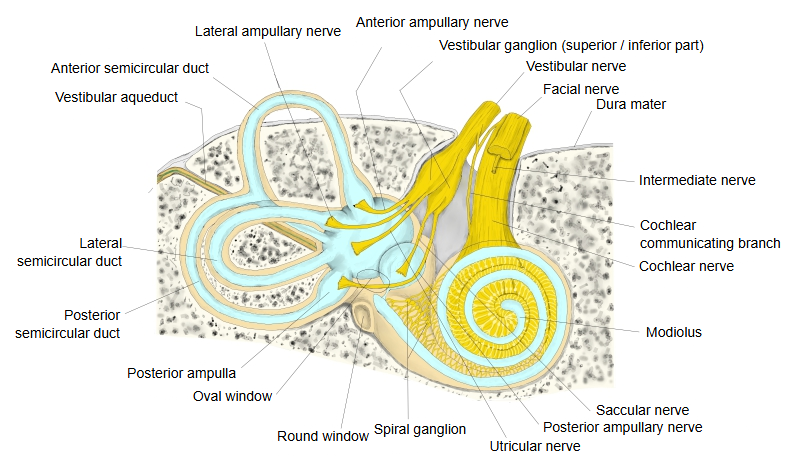
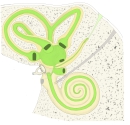 Bony and membranous labyrinth
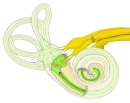 Labyrinth and nerves
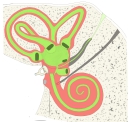 Perilymphatic space and membranous labyrinth
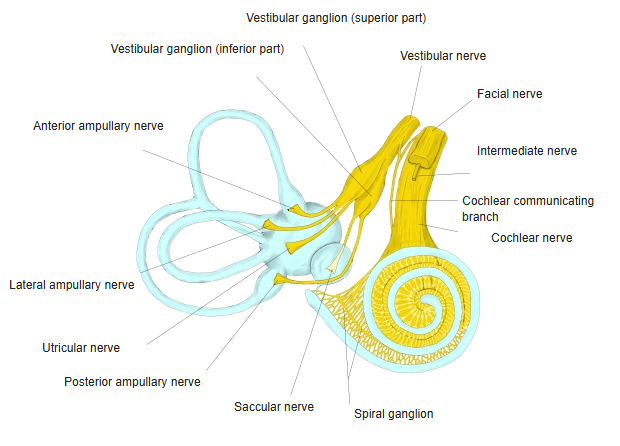
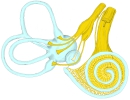 Membranous labyrinth and nerves
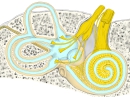 Labyrinth and nerves
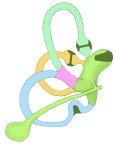 The three membranous semicircular ducts
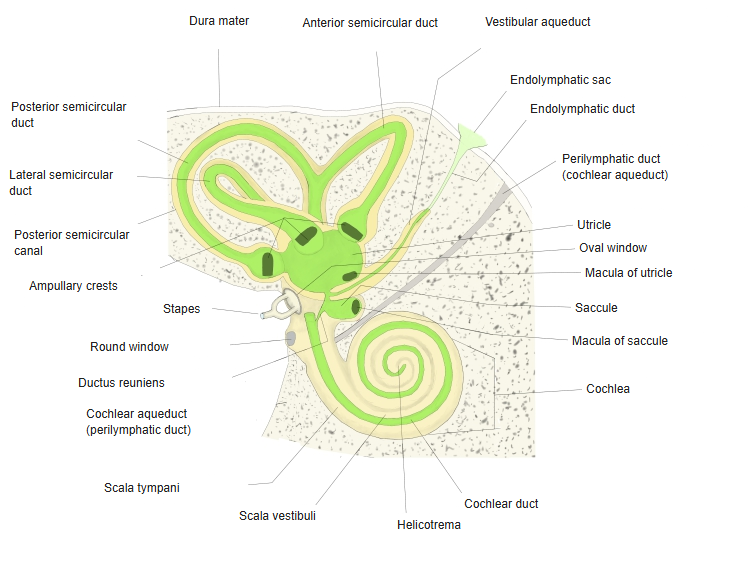
Related terms
- Semicircular ducts
- Membranous labyrinth
- Utricle
- Anterior semicircular duct
- Posterior semicircular duct
- Lateral semicircular duct
- Membranous ampullae
References and sources
- Further reading: Semicircular canals, Wikipedia.
- Further reading: Membranous labyrinth, Wikipedia.
- Federative International Programme for Anatomical Terminology (FIPAT). Terminologia Anatomica, 2nd ed. (TA2), 2019.