Posterior membranous ampulla (Latin: ampulla membranacea posterior)
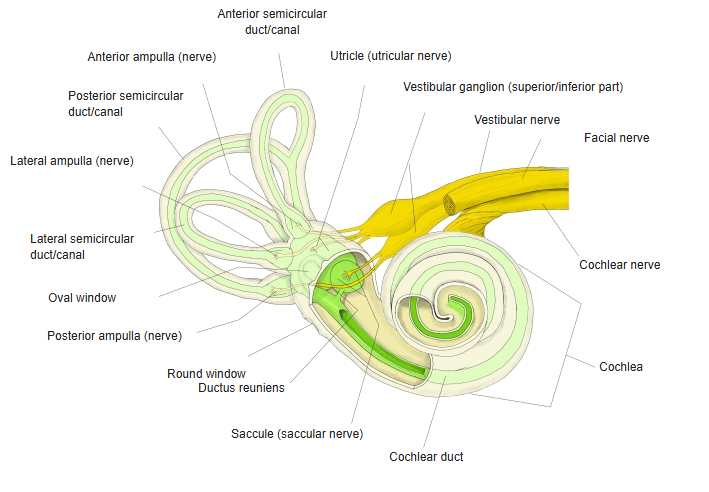
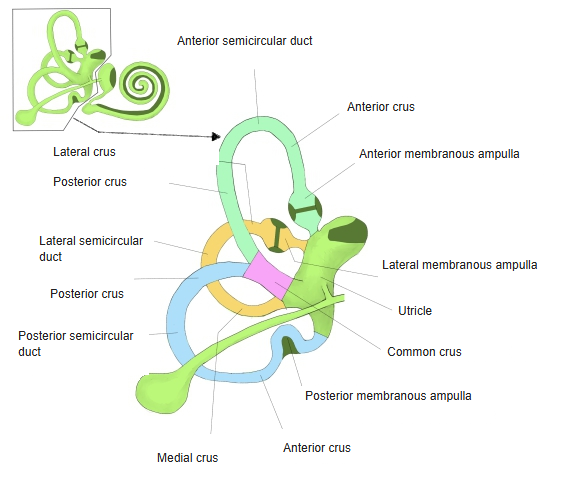
· The anterior and lateral membranous ampullae lie almost side by side at the top, but the posterior membranous ampulla lies apart from them, lower down at the back of the utricle.
- Anterior duct : ampullary limb → anterior membranous ampulla → utricle; simple limb → membranous common crus → utricle.
- Lateral duct : ampullary limb → lateral membranous ampulla → utricle; simple limb → directly into the utricle.
- Posterior duct : ampullary limb → posterior membranous ampulla → utricle; simple limb → membranous common crus (with the anterior duct) → utricle.
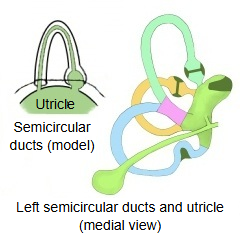
- Anterior semicircular duct : (= superior semicircular duct) the uppermost. Of its two limbs, the ampullary limb forms the anterior membranous ampulla just before it opens into the utricle; the simple limb joins that of the posterior duct to form the membranous common crus.
- Lateral semicircular duct : the most lateral. Its ampullary limb forms the lateral membranous ampulla just before it opens into the utricle; its simple limb opens into the utricle on its own.
- Posterior semicircular duct : the lowest. Its ampullary limb forms the posterior membranous ampulla just before it opens into the utricle; its simple limb joins that of the anterior duct to form the membranous common crus.
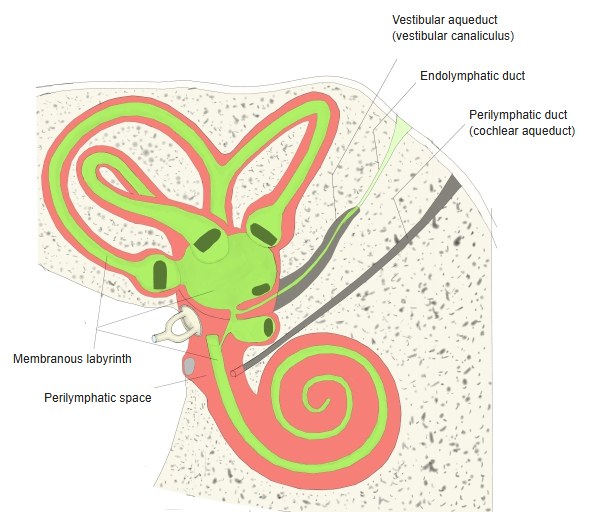
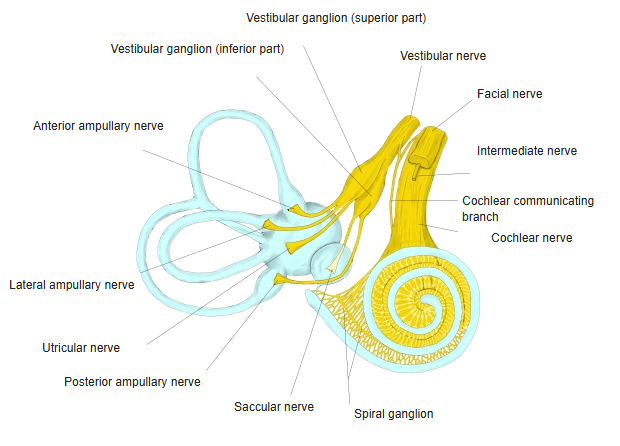
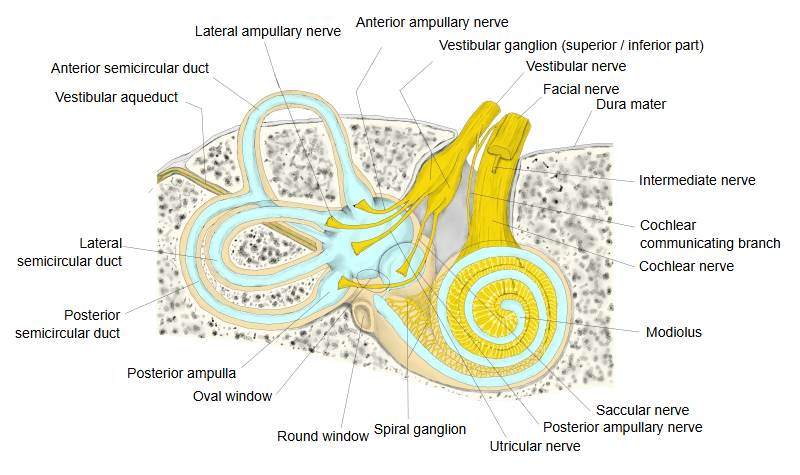
The ducts are filled with endolymph and are fixed to the walls of the bony semicircular canals by strands of connective tissue. The posterior membranous ampulla sits inside the posterior bony ampulla of the posterior semicircular canal, surrounded by perilymph. Across its inner wall runs the ampullary crest, covered with hair cells whose hair bundles project into the gelatinous cupula; on the outer surface the ampullary groove marks the line of the crest, and the nerve fibres enter there. The crest is supplied by the posterior ampullary nerve, from the inferior part of the vestibular nerve; the nerve reaches the ampulla through a small canal of its own, the singular canal (from the foramen singulare).
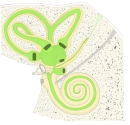 Bony and membranous labyrinth
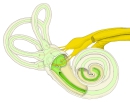 Labyrinth and nerves
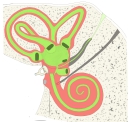 Perilymphatic space and membranous labyrinth
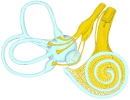 Membranous labyrinth and nerves
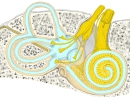 Labyrinth and nerves (detail)
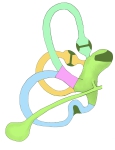 The three semicircular ducts
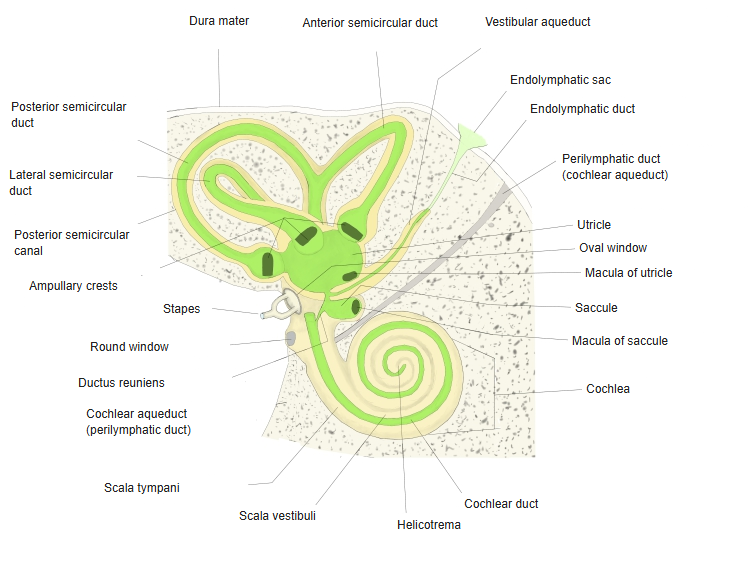
Related terms
- Semicircular ducts
- Lateral membranous ampulla
- Posterior bony ampulla
- Ampullary crest
- Ampullary groove
- Utricle
- Posterior ampullary nerve
References and sources
- Further reading: Semicircular canals, Wikipedia.
- Further reading: Crista ampullaris, Wikipedia.
- Federative International Programme for Anatomical Terminology (FIPAT). Terminologia Anatomica, 2nd ed. (TA2), 2019.