Nucleus (neuroanatomy) (Latin: nucleus)
Also called the nerve nucleus or the plural nuclei
· A cluster of nerve cell bodies in the peripheral nervous system is called a ganglion (see peripheral ganglion).
Number
Sources rarely give an exact number of nuclei.
The brain is usually said to contain hundreds of distinguishable nuclei, which vary widely in shape and size. Some, such as the thalamus and hypothalamus, are themselves made up of dozens of smaller nuclei.
Where gray matter is found
The main sites of gray matter are the following.
of the central
nervous system
- Cerebral and cerebellar cortex : the thin surface layer of the cerebrum and of the cerebellum.
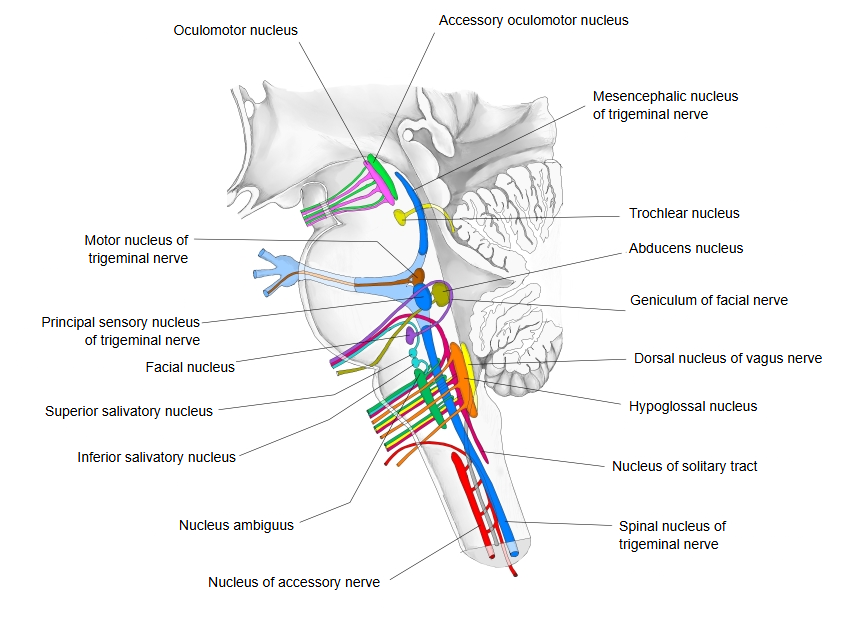
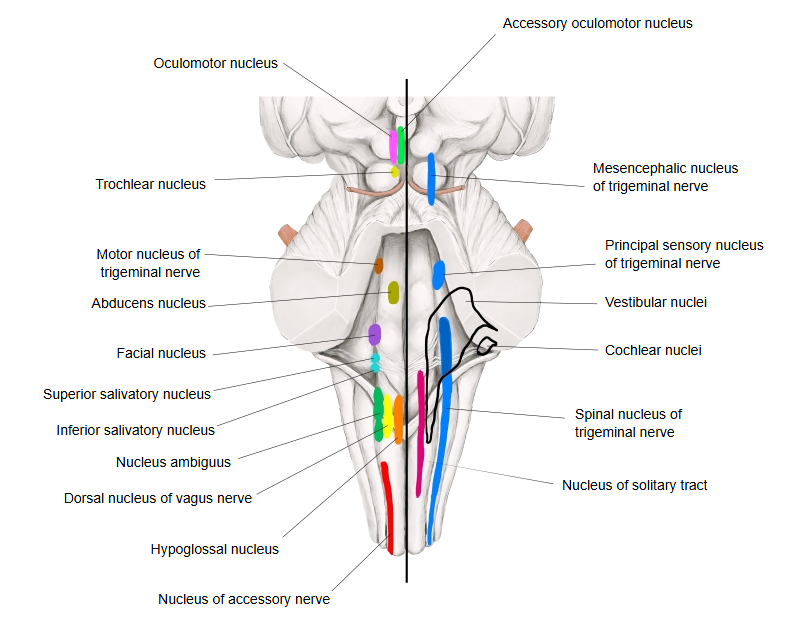
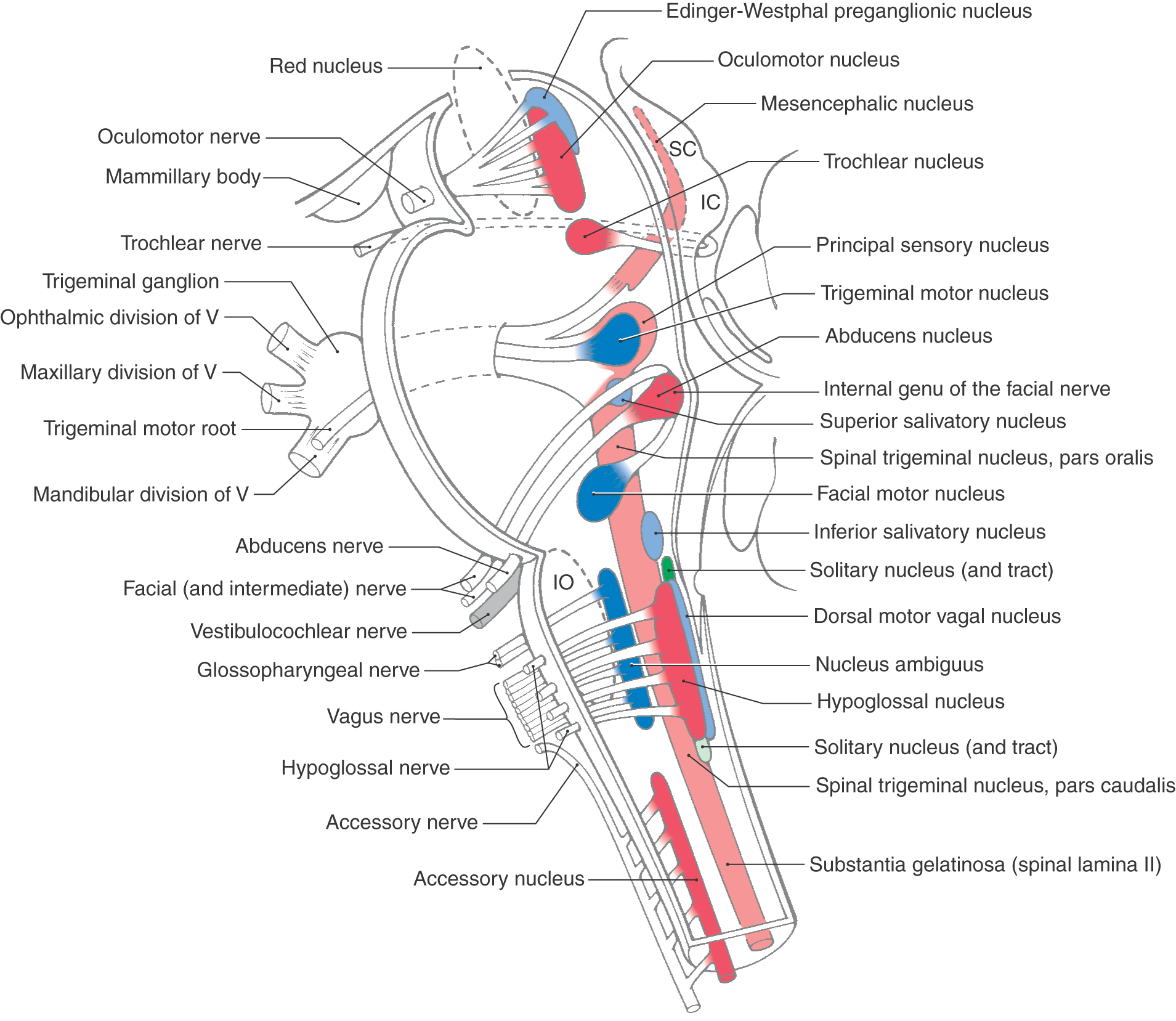
- Nuclei : lumps of gray matter inside the central nervous system, each with its own name; for example the nucleus ambiguus, the salivatory nuclei and the spinal nucleus of the trigeminal nerve.
- Gray columns : the gray matter in the centre of the spinal cord, H-shaped in cross-section: two anterior and posterior horns joined by a cross-bar.
Gray matter is where the cell bodies of nerve cells are gathered; it contains no, or only very few, myelinated nerve fibres.
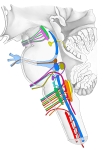 Brainstem, median section (seen from the left)
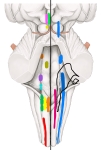 Brainstem, posterior view (cerebellum removed)
Reference websites
[Wikipedia]
· Nucleus (neuroanatomy), Wikipedia.
· Cranial nerve nucleus, Wikipedia.
[Websites with illustrations]
· Cranial nerve nuclei in the brainstem (illustration) (Clinical Gate)
Related terms
References and sources
- Further reading: Nucleus (neuroanatomy), Wikipedia.
- Federative International Programme for Anatomical Terminology (FIPAT). Terminologia Anatomica, 2nd ed. (TA2), 2019.