Posterior surface of patella (Latin: facies posterior patellae)
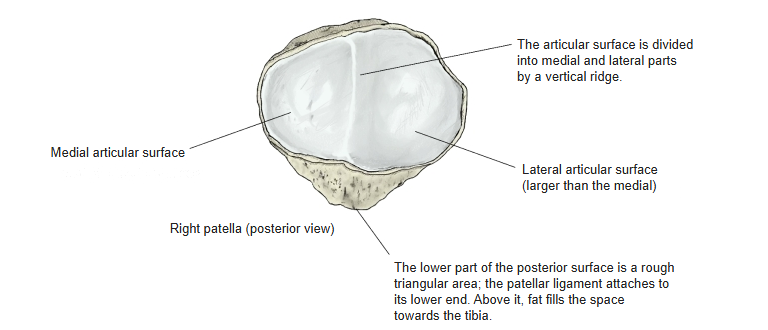
One of the surfaces of the patella: the surface that articulates with the femur. It can be divided into the articular surface and a rough triangular area below it. The articular surface is divided by a vertical ridge into a medial part and a lateral part (larger than the medial). The patellar ligament is attached to the lower part of the rough area, and above that, fatty tissue fills the space between the patella and the tibia.
Surfaces
of the
patella
of the
patella
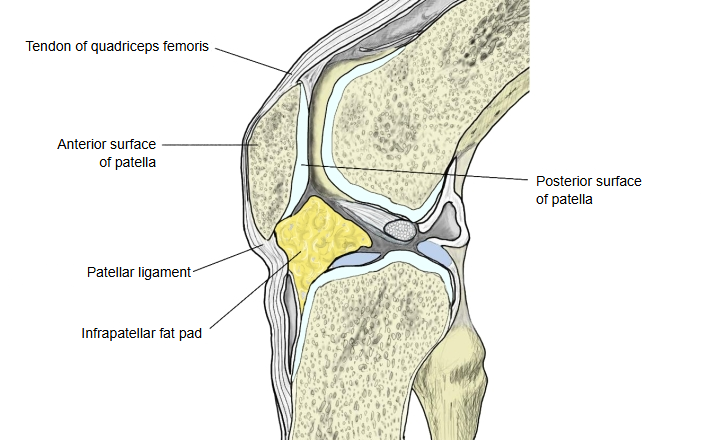
- Anterior surface : the tendon of the quadriceps femoris and the patellar ligament are attached to it. A rough, convex surface, marked by vertical ridges made by the fibres of the quadriceps tendon and pierced by small openings for blood vessels.
- Posterior surface : articulates with the femur. It is divided into the large articular surface and the triangular rough area below it.
Articular surface: divided by a vertical ridge into a smaller medial part and a larger lateral part.
Rough area: the patellar ligament is attached to its lower end; above that, fatty tissue (the infrapatellar fat pad) lies between the patella and the tibia.
The articular surface takes up about the upper three-quarters of the posterior surface. It is covered by thick cartilage and glides on the patellar surface of the femur. The lower quarter, near the apex, is non-articular.
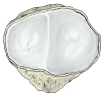 Right patella (posterior)
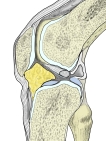 Right knee (sagittal section)
Reference websites
[Wikipedia]
· Patella, Wikipedia.
Where it is found
Related terms
- Articular surface of patella
- Medial articular facet of patella
- Lateral articular facet of patella
- Anterior surface of patella
- Apex of patella
- Patellar surface of femur
- Patella
References and sources
- Further reading: Patella, Wikipedia.
- Further reading: Patellofemoral joint, Wikipedia.
- Federative International Programme for Anatomical Terminology (FIPAT). Terminologia Anatomica, 2nd ed. (TA2), 2019.