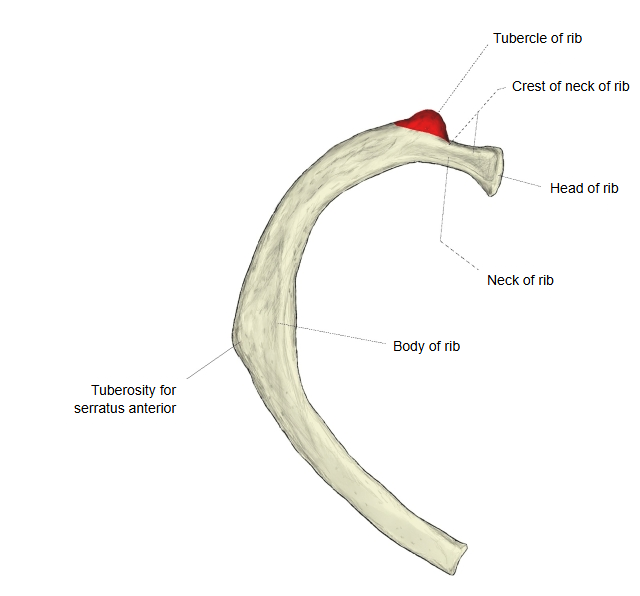
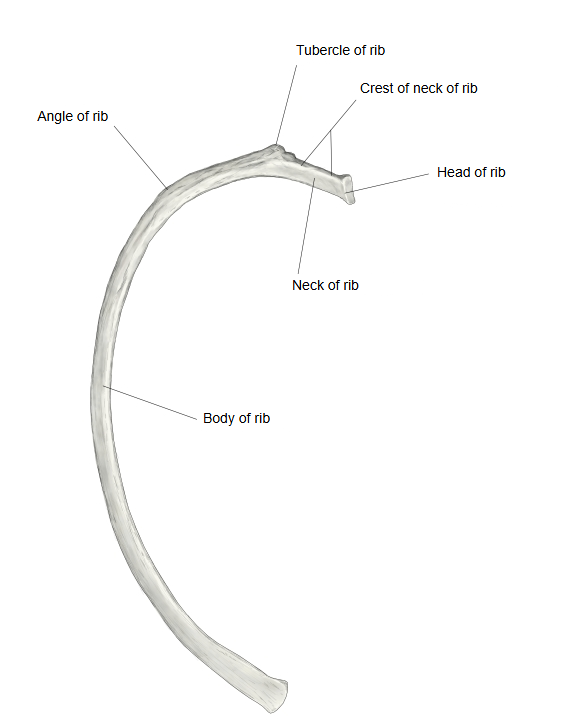
Tubercle of rib (Latin: tuberculum costae)
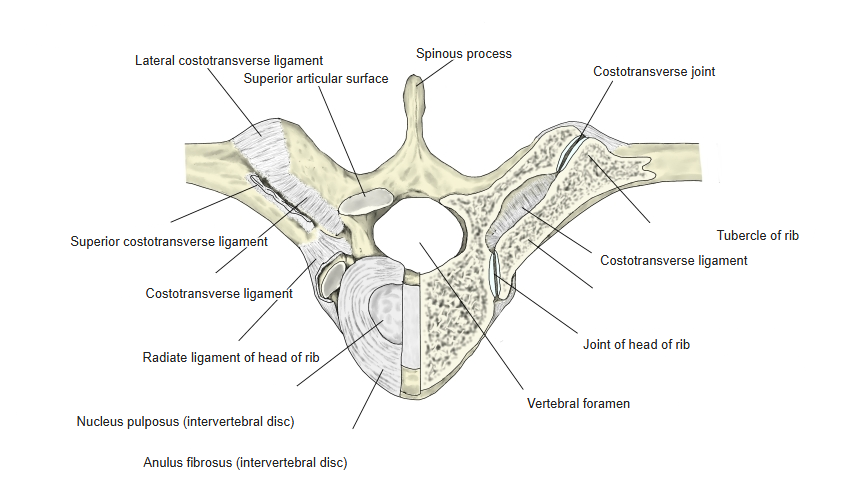
· It articulates with the transverse process of a thoracic vertebra by its articular facet of the tubercle. ⇒ costotransverse joint
· Ligament attached: lateral costotransverse ligament
Medical dictionaries describe it as follows.
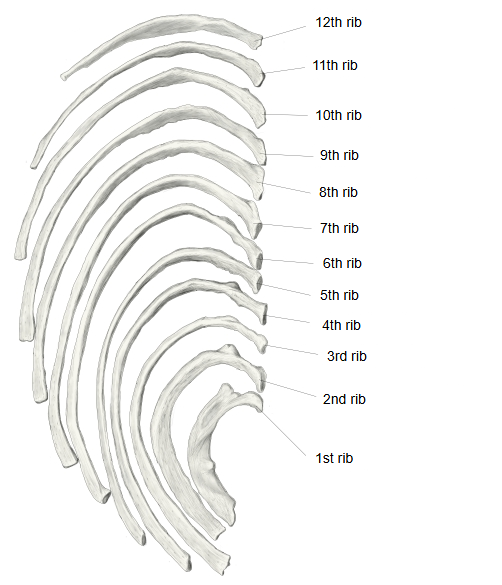
It is the knob on the back of a rib where the neck joins the body. Its lower, medial part carries the articular facet of the tubercle, which meets the transverse costal facet on the transverse process of the vertebra of the same number, forming the costotransverse joint. Its upper, lateral part is rough and gives attachment to the lateral costotransverse ligament. Ribs 11 and 12 have no articular facet on the tubercle, as they do not articulate with the transverse processes. Just lateral to the tubercle the body bends forwards at the angle of the rib.
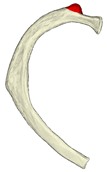 Right 2nd rib (superior view)
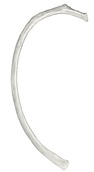 Right 5th rib (superior view)
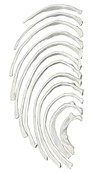 Right ribs 1–12 (superior view)
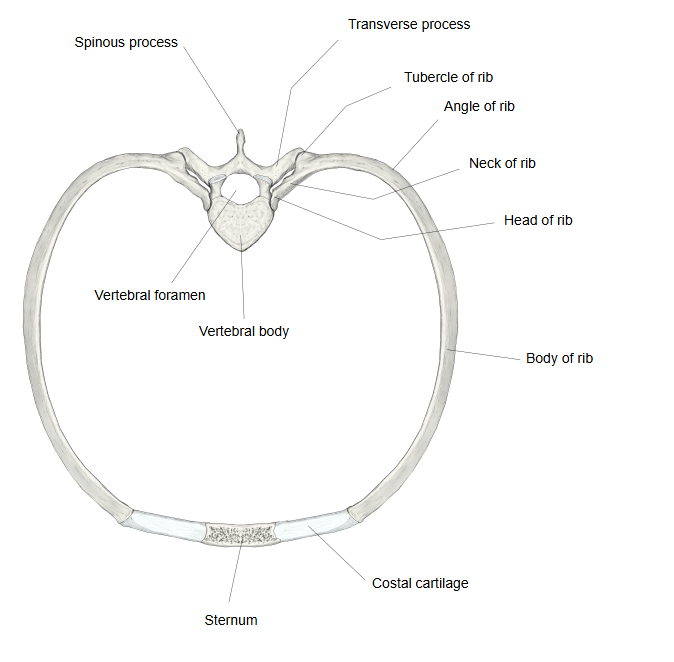 A pair of ribs with their vertebra (superior view)
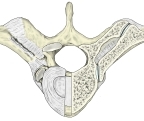 Costovertebral joints (superior view)
Where it is found
Related terms
References and sources
- Further reading: Rib, Wikipedia.
- Further reading: Costotransverse joint, Wikipedia.
- Federative International Programme for Anatomical Terminology (FIPAT). Terminologia Anatomica, 2nd ed. (TA2), 2019.