Latin: musculus buccinator
Overview
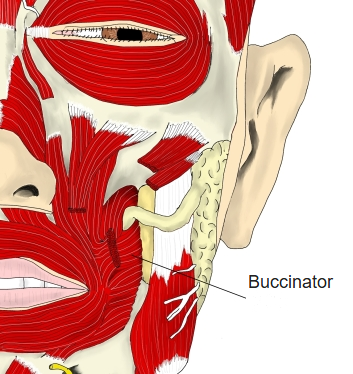
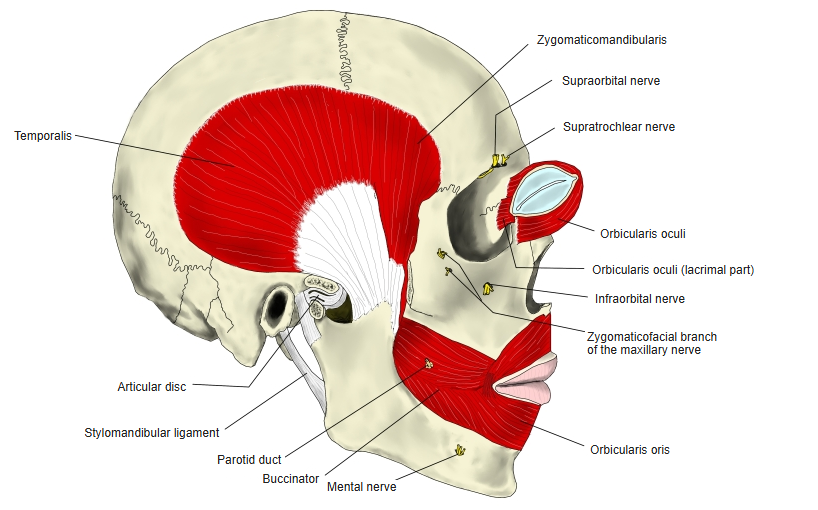
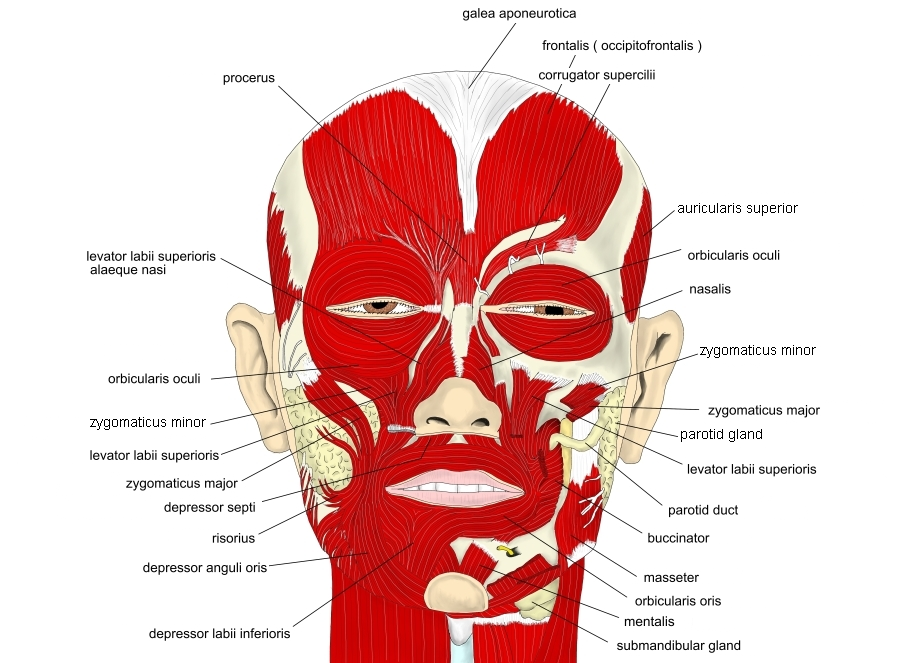
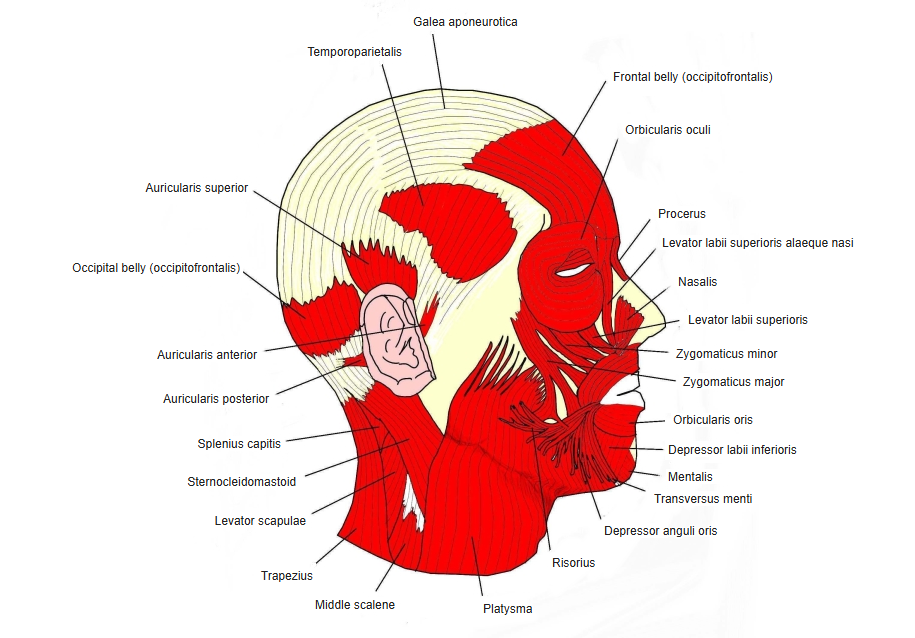
- A thin, quadrilateral facial muscle forming the wall of the cheek between the maxilla and mandible.
- One of the muscles of facial expression around the mouth; the parotid duct pierces it opposite the upper second molar.
- At the angle of the mouth its fibres cross and continue into the orbicularis oris.
Position in the classification
Head › Facial muscles › Muscles around the mouth and cheek
Illustrations
Origin / insertion
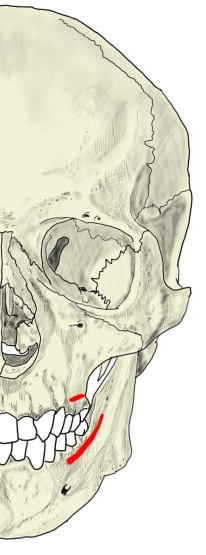
- Origin: outer surfaces of the alveolar processes of the maxilla and mandible opposite the molar teeth, the buccinator crest of the mandible behind the third molar, and the pterygomandibular raphe
- Insertion: angle of the mouth, continuing into the orbicularis oris (the central fibres cross, those from below passing to the upper lip and those from above to the lower lip; the uppermost and lowermost fibres run straight into the corresponding lip)
Action
- Pulls the angle of the mouth laterally and presses the cheek against the teeth (keeps food between the teeth when chewing)
- When the cheeks are filled with air, expels it between the lips (e.g. playing a trumpet); assists sucking in infants
Innervation
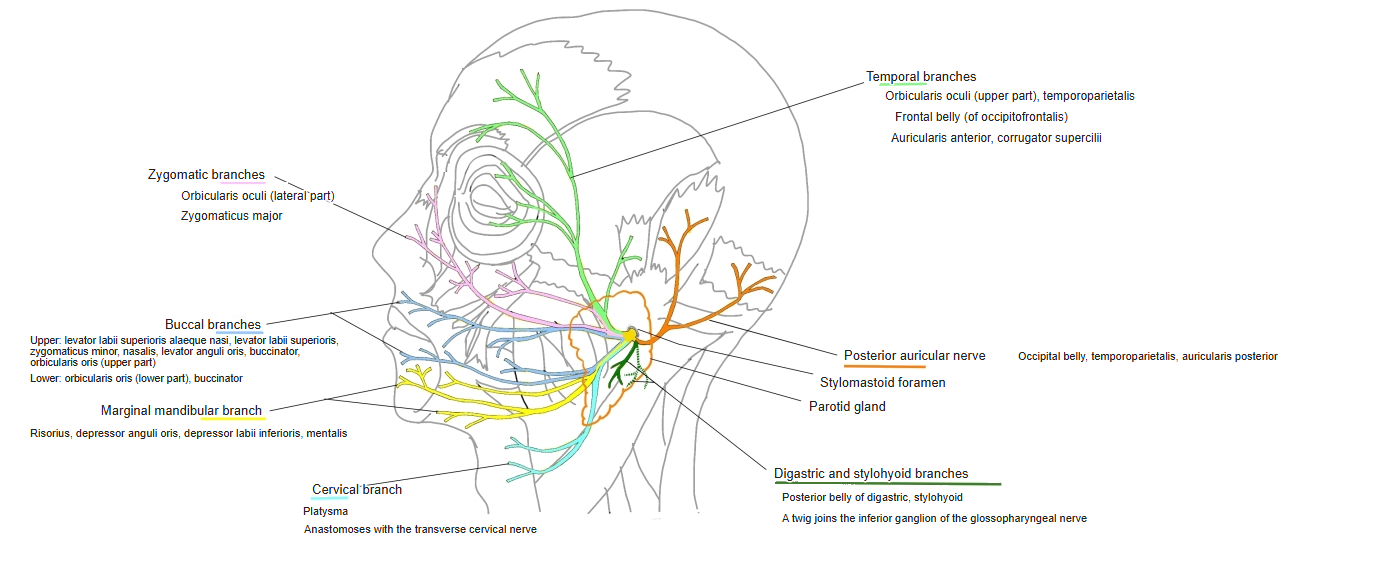
- Motor: buccal branches of the facial nerve
- Sensory (to the skin and mucous membrane of the cheek): buccal nerve, a branch of the mandibular nerve (V3)
Blood supply
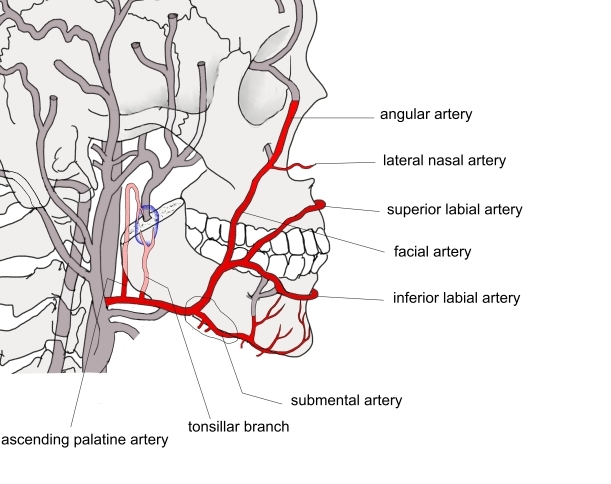
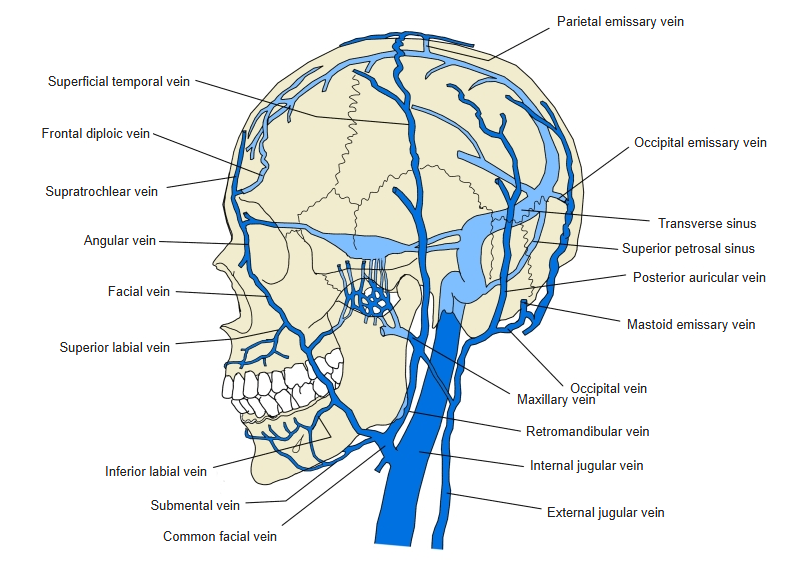
- Buccal artery (from the maxillary artery)
Compiled from standard anatomy references.
Related terms
- Orbicularis oris
- Superior constrictor
- Parotid duct
- Facial nerve
References and sources
- Further reading: Buccinator muscle, Wikipedia.