Latin: musculus flexor hallucis brevis
Overview
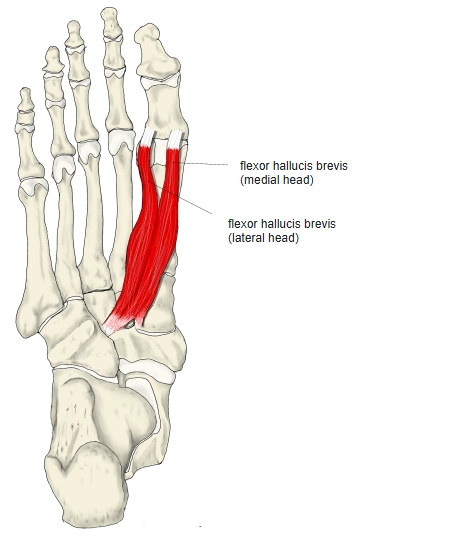
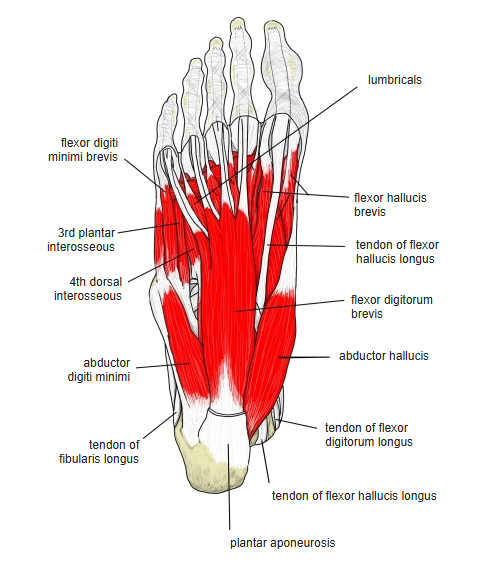
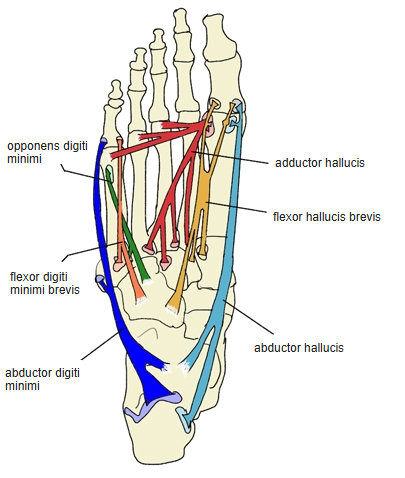
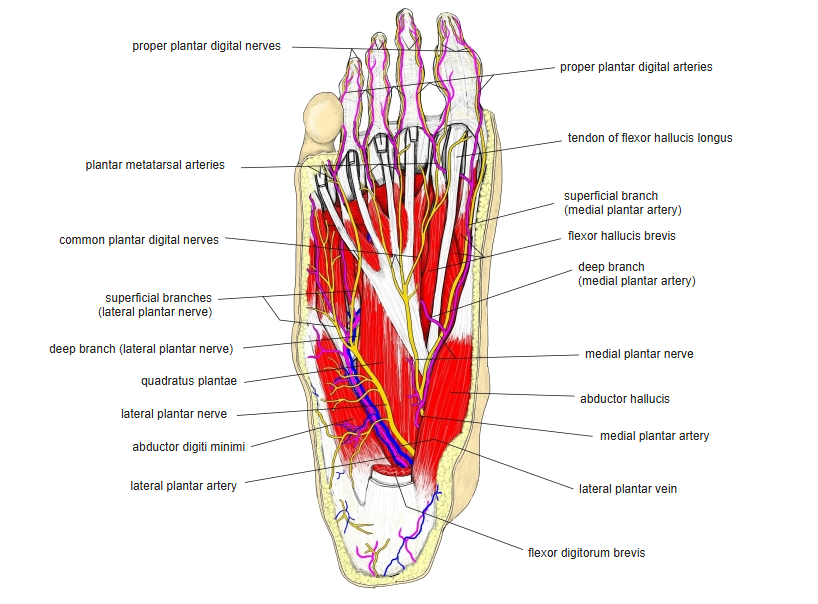
- The muscle divides into medial and lateral heads; the tendon of the flexor hallucis longus runs in the groove between them.
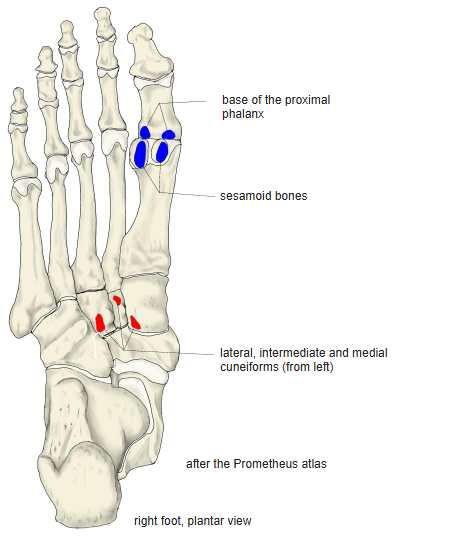
- Each head has a sesamoid bone in its tendon at the first metatarsophalangeal joint.
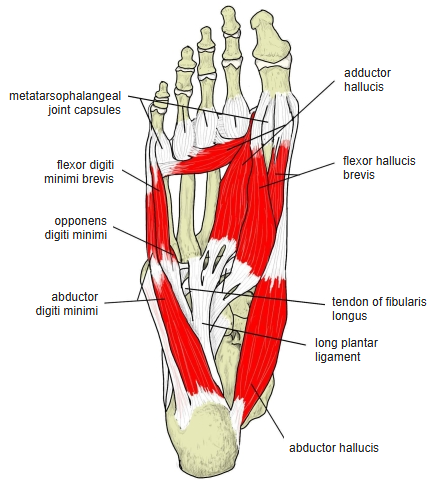
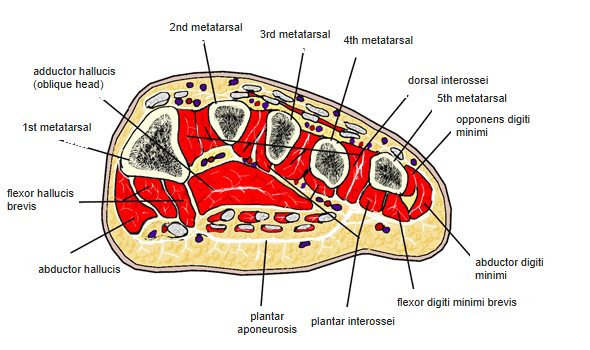
- The medial head blends with the abductor hallucis and the lateral head with the adductor hallucis.
- It helps to support the medial longitudinal arch and contributes to push-off during walking.
Position in the classification
Lower Limb › Foot › Sole of foot › Muscles of the big toe
- Abductor hallucis
- Flexor hallucis brevis
- Adductor hallucis
Illustrations
Origin / insertion
- Origin (sources differ):
- Medial and intermediate cuneiforms, plantar calcaneocuboid ligament, long plantar ligament
- Also given: cuneiforms, plantar calcaneocuboid ligament, tendon of the tibialis posterior
- Medial part of the plantar surface of the cuboid, the adjacent lateral cuneiform and the prolongation of the tibialis posterior tendon
- Insertion:
- Medial head: medial sesamoid bone (with the abductor hallucis) and base of the proximal phalanx of the great toe
- Lateral head: lateral sesamoid bone (with the adductor hallucis) and base of the proximal phalanx of the great toe
Action
- Flexes the great toe at the first metatarsophalangeal joint
Innervation
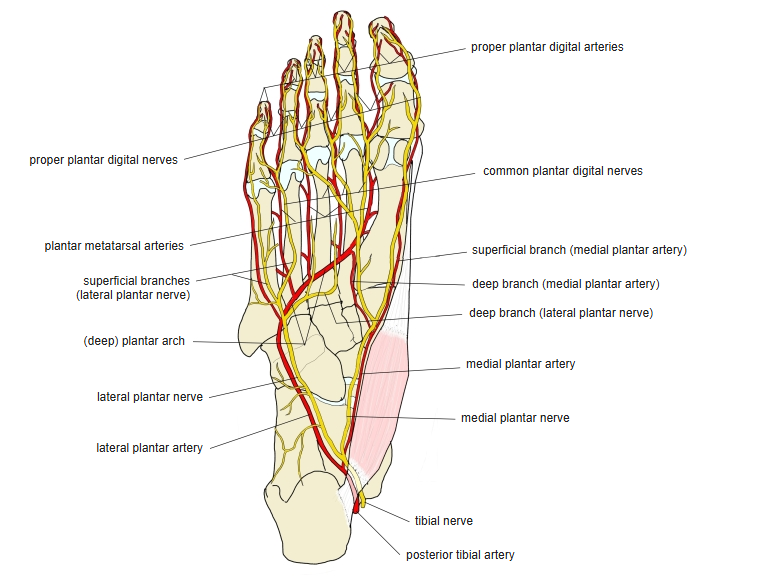
- Medial plantar nerve (L5–S2)
Blood supply
- Medial plantar artery
Anatomical variations
- The origin varies a lot: fibres may come from the calcaneus or long plantar ligament; the cuboid attachment may be absent; a slip may go to the 2nd toe
Related terms
- Abductor hallucis
- Adductor hallucis
- Flexor hallucis longus
- Medial cuneiform
- Sesamoid bone
- Medial plantar nerve
References and sources
- Further reading: Flexor hallucis brevis muscle, Wikipedia.